


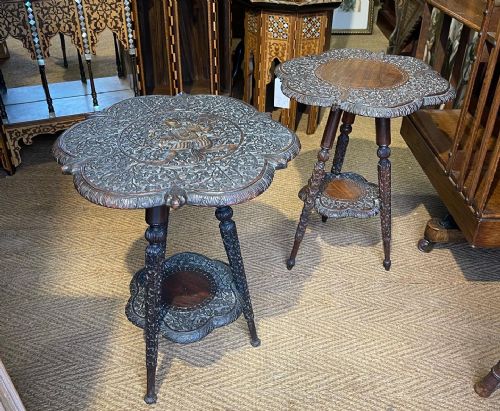

Colonial Carved Pedestal Stand
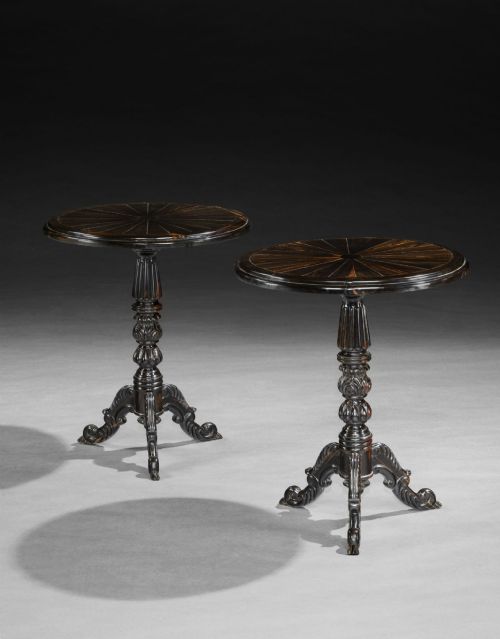
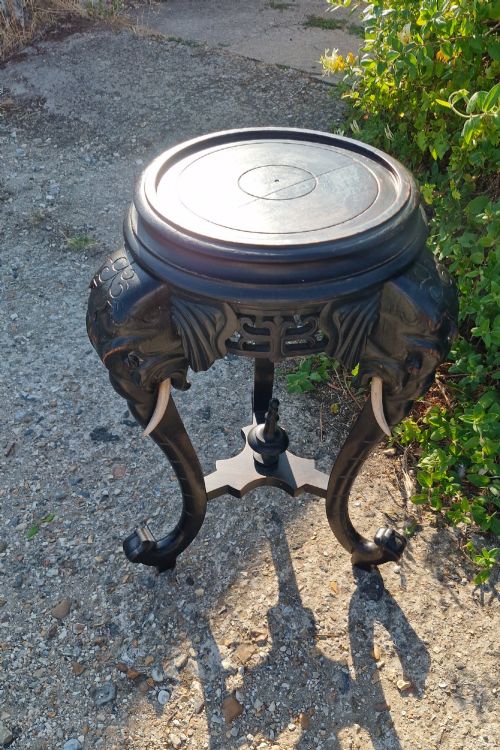
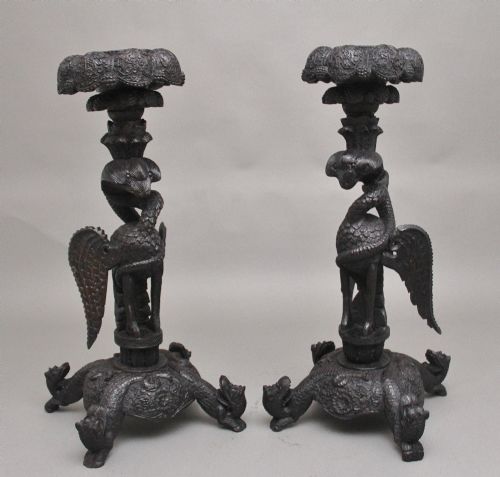
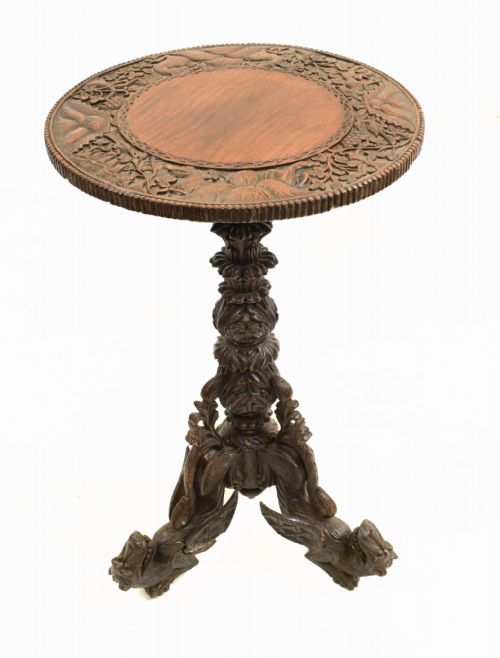
These colonial carved pedestal stand examples are substantial pieces of regional furniture designed to anchor a room.
Colonial Carved Pedestal Stand
A colonial carved pedestal stand brings distinct regional craftsmanship into a room through forms such as side tables, torcheres, and plant stands. The items appearing here span the nineteenth century, the Victorian era, and the early twentieth century, showing deep roots in international trade and empire.
Most encounters involve Anglo-Indian or Burmese origins, often taking the shape of occasional tables, jardinières, or tripod bases. Animal motifs frequently appear, including elephants and camels, alongside geometric and botanical carving.
The materials used across these forms lean heavily towards dense tropical timbers, sometimes accompanied by brass work or painted wooden elements. Buyers select these tables for their utility as plant stands or torchers as much as for their decorative carving.
Materials and construction
The makers of these items worked with heavy, durable woods such as ebony, rosewood, teak, padauk, and general hardwoods. These timbers allowed artisans to execute deep, intricate relief carving across tabletops, pedestals, and legs without compromising structural integrity.
Construction techniques often involved tripod bases, hexagonal tops, and multi-tiered designs suited to holding lamps, plants, or decorative objects. Additional elements like brass fittings and painted wooden components appear alongside the carved woodwork to complete the pieces.
Listings feature woods including teak, ebony, rosewood, and padauk across various side tables and plant stands.
Assessing quality and execution
Quality in a colonial carved pedestal stand rests upon the depth, crispness, and complexity of the carving itself. Pieces featuring figurative work, such as elephants or camels, demonstrate varying degrees of naturalism and sculptural detail in the execution.
The choice of primary timber also dictates the character of the object, with dense hardwoods like ebony and rosewood offering a different visual weight compared to standard teak or painted wood. The structural stability of tripod bases and multi-tiered joints determines how well the stand holds weight over time.
The Colonial Carved Pedestal Stand Glossary
- Torchere
- A tall ornamental stand designed to support a candelabrum or lamp. These tall supports elevate lighting above standard table height.
- Jardiniere
- An ornamental pot or stand for holding plants or flowers. They often feature waterproof liners or raised bases to protect the underlying wood.
- Tripod base
- A support structure resting on three legs. This configuration ensures stability on uneven floor surfaces.
- Padauk
- A heavy tropical hardwood known for its strength and rich grain. Makers utilise this dense material for intricate relief work.
- Anglo-Indian
- A style describing items made in India during the British period, often combining local carving traditions with European furniture forms. These objects reflect a distinct cultural exchange.
Colonial Carved Pedestal Stand: Frequently Asked Questions
What is a colonial carved pedestal stand used for?
These items serve primarily as display surfaces for lamps, plants, and decorative objects within a room. Their sturdy construction accommodates heavier items like jardinières and adjustable oil lamps.
Historically, they filled drawing rooms and parlours as both functional furniture and statements of global connection. Today, buyers utilise them in similar ways to add vertical interest and surface area to living spaces.
How do I identify Anglo-Indian furniture?
Anglo-Indian pieces combine traditional British furniture forms with dense, intricate hand-carvings executed by regional artisans. You will often notice motifs specific to the region, such as elephants or camels, integrated into the wooden structure.
The materials typically consist of heavy tropical timbers like teak, padauk, ebony, and rosewood. These dense woods support deep relief work across table tops, pedestals, and tripod bases.
How should I care for antique hardwood tables?
Maintain these dense timber surfaces by keeping them away from direct heat sources and sudden temperature shifts. Regular dusting with a soft, dry cloth preserves the intricate carved details without building up residue.
Avoid using harsh chemical polishes that can degrade the finish on rosewood, ebony, or teak. Natural waxes applied sparingly will help protect the wood over time.
What periods do these stands come from?
The listings on this page span the nineteenth century, the Victorian era, and the early twentieth century. Makers produced these pieces during periods of active trade and cultural exchange between Britain and regions like India and Burma.
Dates range from mid-century examples up to items made around nineteen hundred and the nineteen-twenties. Each era brings subtle shifts in the complexity of the side tables and plant stands produced.