


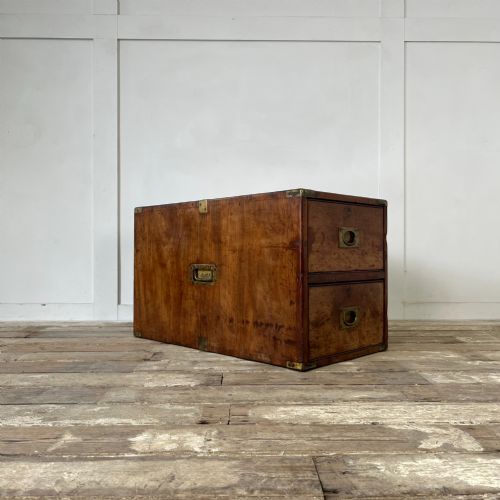


Colonial Campaign Drawers
Colonial campaign drawers are modular wooden chests engineered for transport, combining dense hardwoods with brass fittings.
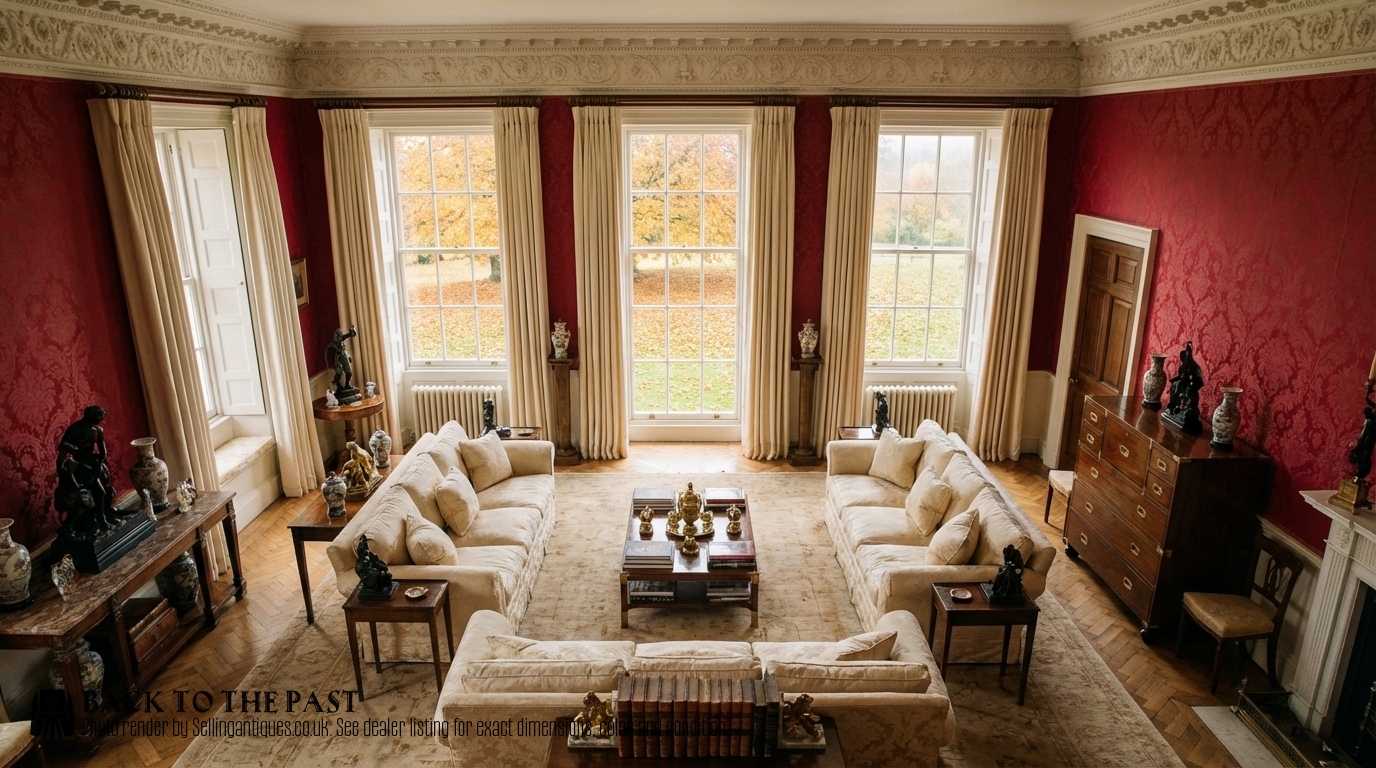
Colonial Campaign Drawers
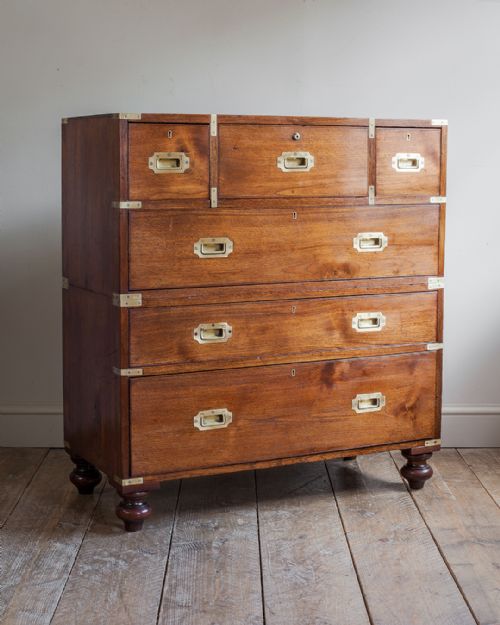
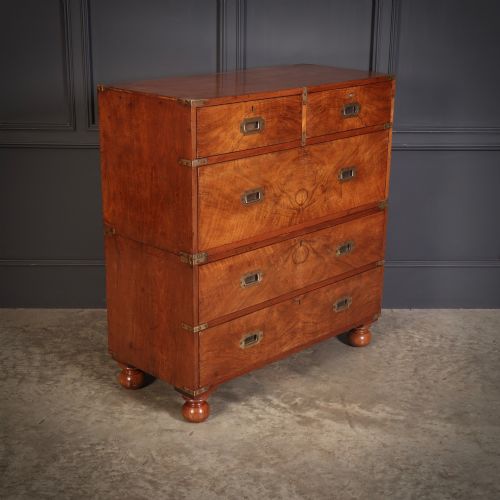
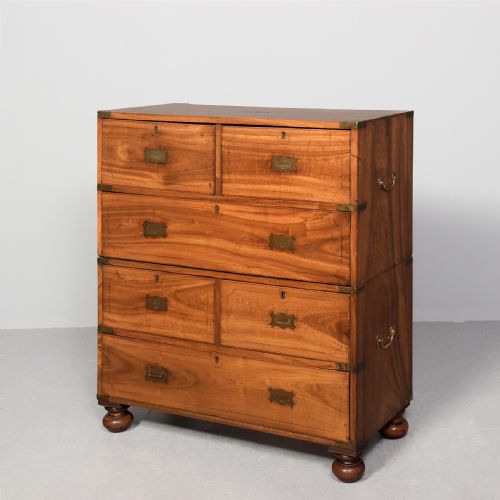
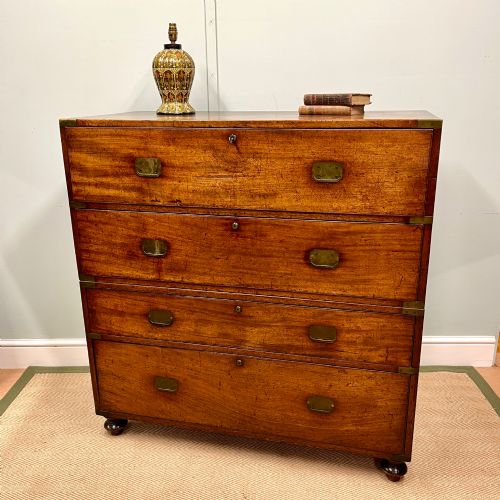
Colonial campaign drawers are portable storage units built in two separate sections to facilitate transit across distant territories. The most common format on this page is the chest of drawers, frequently paired with a fitted secretaire drawer for writing.
Makers constructed these pieces during the Georgian, Victorian, and early twentieth-century periods, spanning dates from the late eighteenth century up to nineteen-twenty. Standard forms range from full-sized tallboy chests and bureaus down to desktop storage and miniature versions.
Regional variations appear across Anglo-Indian, Anglo-Chinese, and English colonial workshops. These pieces served military officers and colonial administrators who required robust furniture that packed down easily.
How they were made
Carpenters utilised dense tropical timbers including teak, mahogany, camphor wood, padouk, cedar, rosewood, and walnut to resist warping in humid climates. Camphor wood served particularly well for its insect-repellent properties.
Joiners integrated brass binding on edges, recessed brass carrying handles, and flush drawer pulls to protect vulnerable corners and prevent snags during transit. Two-part construction allowed stacking and securing with metal side brackets and drop-in pins.
Secretaire bureaus, desktop storage, and full-size two-part chests dominate the available furniture forms.
What varies in quality
The choice of timber and figuring separates standard utility items from elite officer commissions, particularly when utilising highly grained walnut, padouk, or figured mahogany. Superior examples feature well-executed secretaire interiors with pigeonholes and small drawers behind a drop front.
The integration of original brass hardware, flush handles, and corner straps dictates the structural integrity and historical completeness of the piece. Superior craftsmanship shows in tight dovetail joints, clean panelled backs, and the presence of original transportation cases or maker stamps.
Army & Navy·Graves and Sons of Devonport·Arthur Foley & Son of Salisbury
The Colonial Campaign Drawers Glossary
- Secretaire
- A desk disguised as a drawer chest, featuring a drop-front writing surface that conceals small internal compartments. This fitted workspace pulls out or folds down for administrative use.
- Two-part
- A cabinet structure divided horizontally into distinct upper and lower sections. This modular build enabled easier loading onto pack animals or ships.
- Padouk
- A heavy, durable tropical hardwood displaying rich reddish-brown tones. Craftsmen utilised this timber extensively in Anglo-Indian colonial workshops.
- Camphor wood
- An aromatic timber valued for its distinct fragrance and natural resistance to pests. It frequently formed the primary carcase for chests originating from Chinese export workshops.
- Recessed handle
- A pull or handle set flush into the timber surface. This design prevents protrusion beyond the cabinet walls during transit.
Colonial Campaign Drawers: Frequently Asked Questions
Why are these chests built in two parts?
Makers designed these modular sections to ease the physical burden of packing and moving baggage across difficult terrain. Each half stacked securely upon the other using internal alignment pins and exterior brackets.
This construction method reduced the risk of structural damage during frequent transport on ships, trains, and wagons. It also meant officers could manage their belongings in smaller spaces.
What is a secretaire chest?
A secretaire chest combines standard drawer storage with a dedicated writing desk concealed behind the upper drawer facade. The front hinges downward to reveal a fitted interior of small drawers and pigeonholes.
This dual function provided working officers with a secure space for documents and correspondence without requiring a separate writing table in camp.
How do I identify camphor wood?
Camphor wood is recognisable by its distinct, clean aroma and pale reddish-brown grain. Many examples retain this fragrance after centuries of age.
Workshops favoured this timber because the natural oils deterred insects from damaging stored uniforms and documents in tropical climates.
Are all these chests military?
While the style derives from military requirements, the pieces served civil servants, merchants, and colonial administrators living abroad. Officers and officials alike purchased robust, transportable furniture for long overseas postings.
Private commissions often featured finer timbers and more elaborate internal stationery fittings than standard military issue.
How do I date a campaign chest?
Dating relies on timber choice, construction methods, and brass hardware design spanning from the Georgian era through the Victorian period. Earlier Georgian and early nineteenth-century pieces often display fine mahogany and delicate brass insets, while later Victorian examples frequently utilise teak and heavy iron or brass mounts.
Maker stamps and trade labels inside the drawers provide definitive chronological markers when present.