
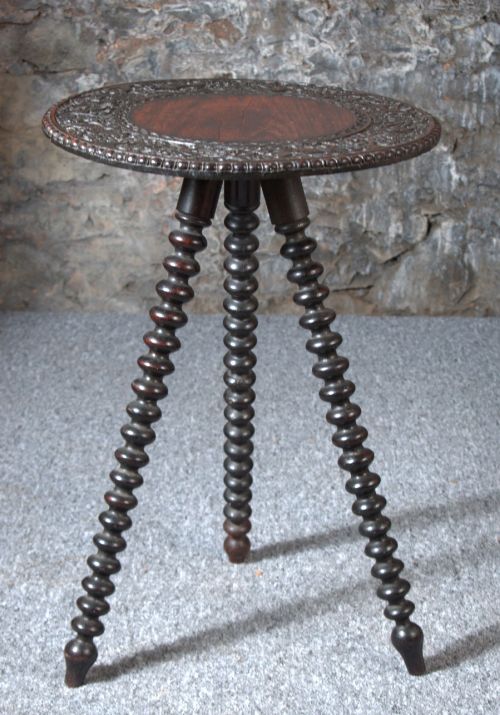


Colonial Anglo Burmese Furniture
Colonial Anglo Burmese furniture brings dense tropical timber carving into domestic spaces through tables, buffets and seating suites.
Colonial Anglo Burmese Furniture
When you search for colonial anglo burmese furniture, you encounter items shaped by nineteenth-century British presence in Burma, ranging from the eighteen-forties to the nineteen-thirties. The most frequent forms on this page are side tables, occasional tables, consoles and tiered buffets, alongside seating suites and chairs.
The aesthetic bridges British furniture forms with vernacular Burmese carving traditions, resulting in heavily decorated surfaces and specific structural types like tilt tops, three-tier buffets and folding chairs. Pieces span various decades, reflecting both nineteenth-century craftsmanship and early twentieth-century production.
Materials and construction
Makers utilised dense Asian timbers, predominantly teak and padauk wood, alongside general hardwoods that withstand intricate hand carving. Surfaces display deep relief work featuring traditional motifs, while specific examples incorporate lacquer or painted finishes on teak.
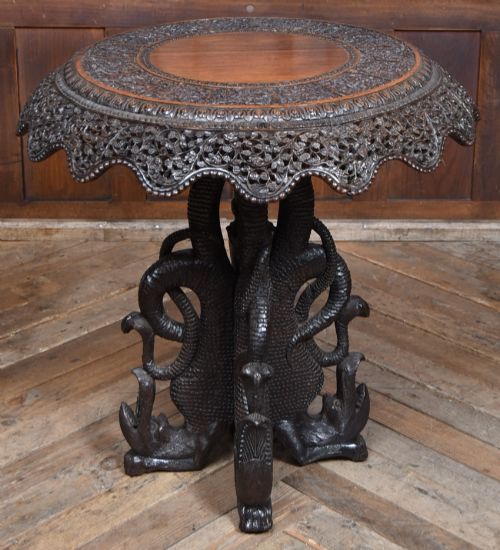
Structural joinery supports substantial weight, seen in multi-tiered sideboards, cabinets and heavy round tables supported by carved legs, such as elephant leg formations.
Several side tables stand upon elephant legs, bringing a literal interpretation of regional wildlife directly into Victorian parlour design.
Assessing quality in carved pieces
Quality rests in the crispness and depth of the hand carving across the timber, distinguishing sharply defined floral and figural motifs from softer, shallower execution. The choice of material also plays a role, with dense padauk and figured teak providing superior weight and grain compared to standard utility hardwoods.
Proportion and structural integrity separate standard utility items from more ambitious conservatory suites and multi-tiered buffets, where balanced weight distribution matches the heavy ornamentation.
The Colonial Anglo Burmese Furniture Glossary
- Padauk wood
- A dense, durable tropical hardwood with a reddish hue used for high-end carved furniture. It takes fine detail well and resists warping.
- Tilt top
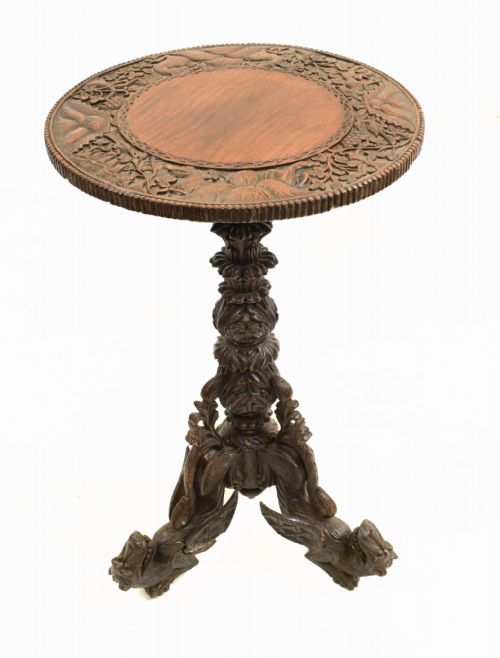
- A tabletop hinged to a central pillar so it can tilt vertically when not in use. This mechanism saved domestic space in nineteenth-century rooms.
- Tiered buffet
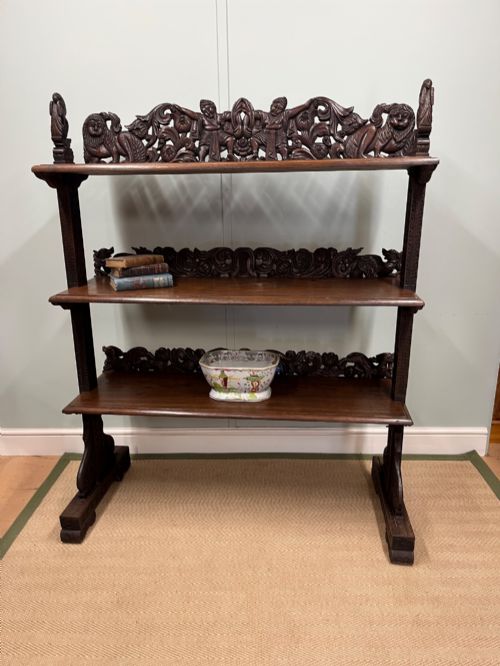
- A multi-level sideboard or serving table designed for display and storage. These pieces utilise vertical space with two or three distinct shelves.
- Conservatory suite
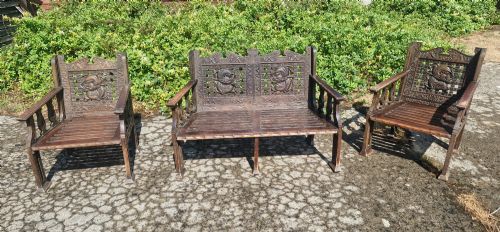
- A matched set of seating and occasional tables intended for light-filled garden rooms. They often feature lighter frames or folding elements.
- Lacquer
- A durable resin finish applied in multiple coats to wooden surfaces. It provides a smooth, protective coating with a distinctive sheen.
Colonial Anglo Burmese Furniture: Frequently Asked Questions
What is colonial anglo burmese furniture?
It is furniture produced during the British colonial period in Burma that combines British furniture forms with traditional Burmese woodcarving. The pieces use local timbers like teak and padauk to create highly decorated domestic items.
You encounter forms ranging from side tables and consoles to tiered buffets and conservatory seating suites, mostly dating from the nineteenth and early twentieth centuries.
How were three tier buffets used?
These multi-level pieces served as display and storage units in dining rooms and living spaces. The graduated shelves held tableware, decorative objects or serving dishes.
Their heavy construction and tiered design allowed households to showcase prized items while utilising vertical wall space effectively.
What woods should I look for?
The primary timbers found in these pieces are teak and padauk wood, alongside general tropical hardwoods. Padauk offers a characteristic dense grain and reddish tone.
Teak provides structural stability and takes heavy hand carving well, appearing in both natural finishes and painted village furniture.
How do I date these pieces?
Dating relies on stylistic clues, construction methods, and recorded production periods spanning from the mid-nineteenth century through the nineteen-thirties. Nineteenth-century examples often feature deep, dense relief carving on heavy teak or padauk.
Later pieces from the early twentieth century may incorporate simpler framing or alternative finishes like lacquer while maintaining traditional Burmese motifs.