
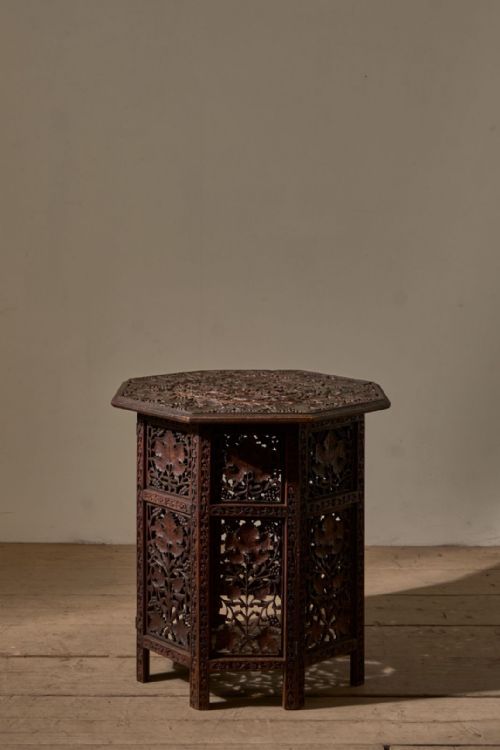


Pierced Carved Wooden Table
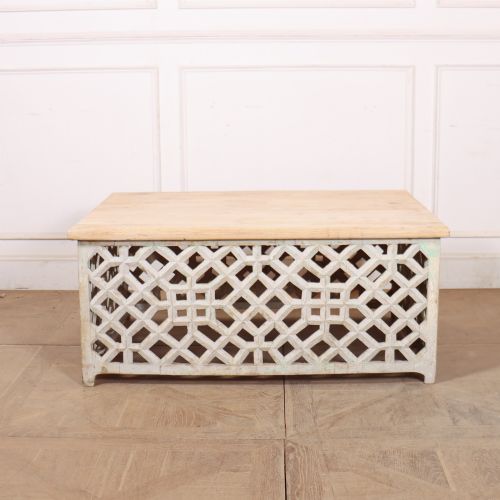
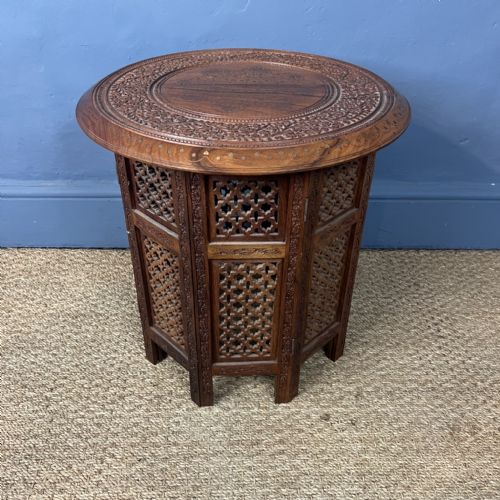
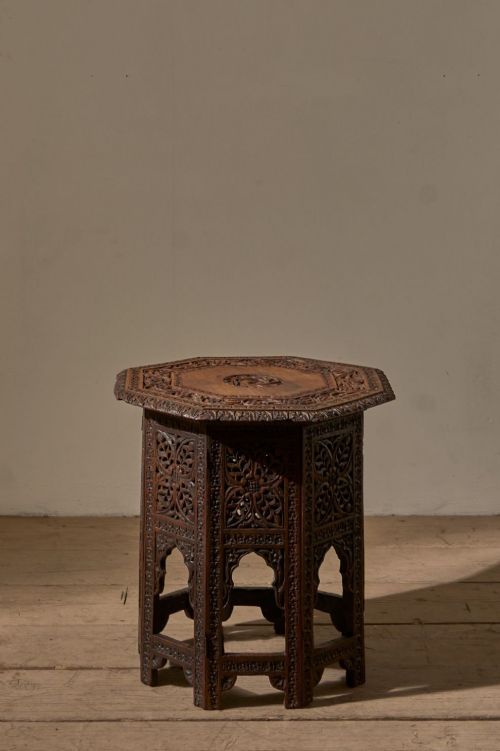
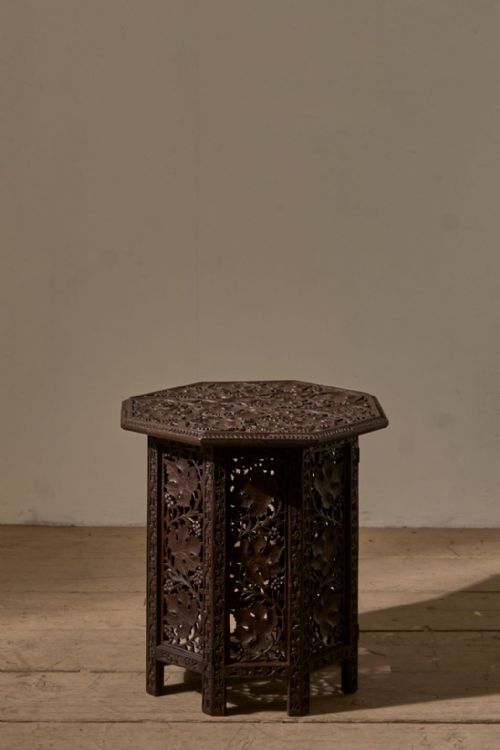
A pierced carved wooden table brings intricate floral and figural fretwork into a room, offering a functional surface shaped by diverse global traditions.
Pierced Carved Wooden Table
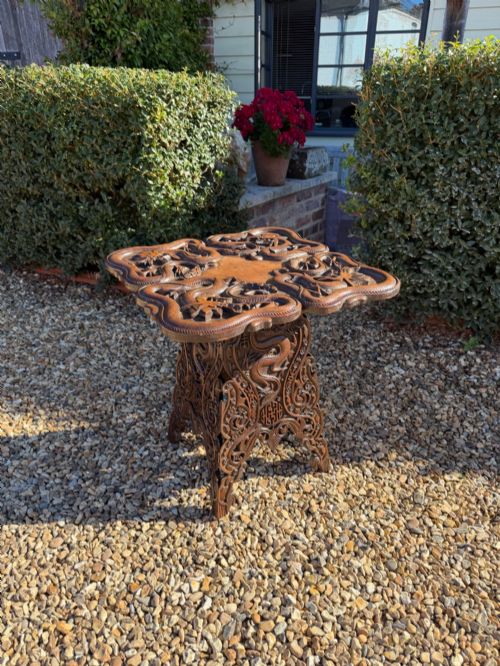
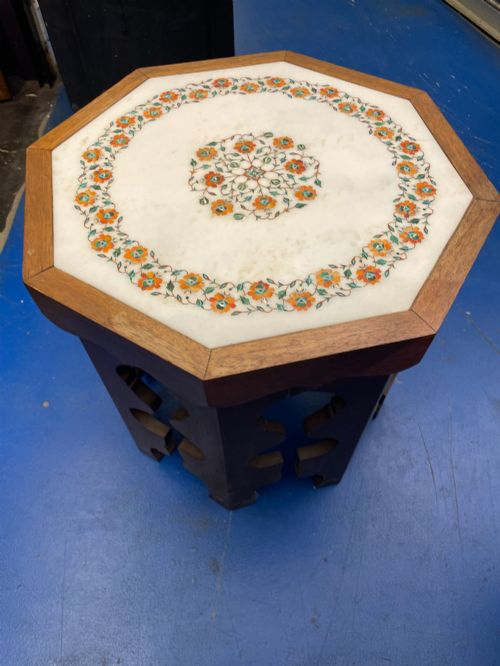
When you search for a pierced carved wooden table, you encounter low occasional furniture, folding tray tables, and side stands shaped by artisans across distant regions. The selection here leans heavily toward Anglo-Indian, Burmese, and Chinese origins, alongside occasional Victorian revivals and Georgian forms.
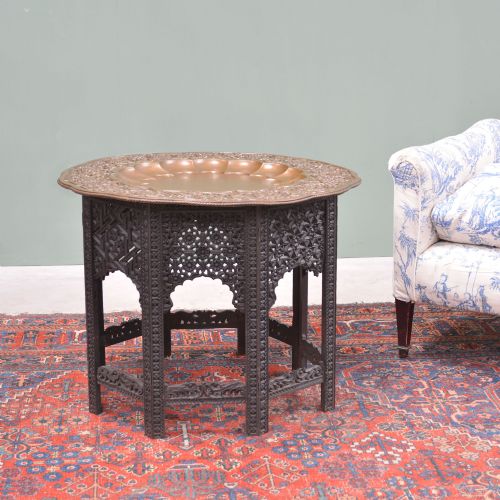
These items function as practical surfaces for daily use, appearing as lamp tables, coffee tables, and console tables. Many adopt clever folding designs intended for campaign use or easy storage, combining portability with dense decoration.
How they were made
Cabinetmakers and carvers utilised dense timbers such as teak, padauk, mahogany, rosewood, and sandalwood to withstand deep, intricate piercing. These woods provided the structural integrity required to carve complex foliage, dragons, and geometric lattice patterns without splintering the frame.
Metal and bone additions frequently complemented the timber work, with brass and copper inlays or tops set into the wood, alongside delicate bone inlay work. Joinery often incorporated folding mechanisms and removable trays, uniting utilitarian campaign requirements with decorative artistry.
A dragon peers out from the fretwork of a nineteenth-century side table, keeping a watchful eye on your afternoon cup of tea.
What varies in quality
The depth and clarity of the chisel work dictate the visual success of the piece, separating standard production from master craftsmanship. Crisp undercutting in the foliage and well-defined animal motifs demonstrate a superior level of hand carving.
The choice of primary timber and the precision of the joinery in folding frames influence the overall durability and weight of the furniture. Denser woods like padauk and teak maintain sharper edges and resist wear better over centuries of service.
The Pierced Carved Wooden Table Glossary
- Anglo-Indian
- Furniture made in India during the British colonial period, often combining traditional local carving styles with European forms. These pieces frequently utilise teak or padauk.
- Fretwork
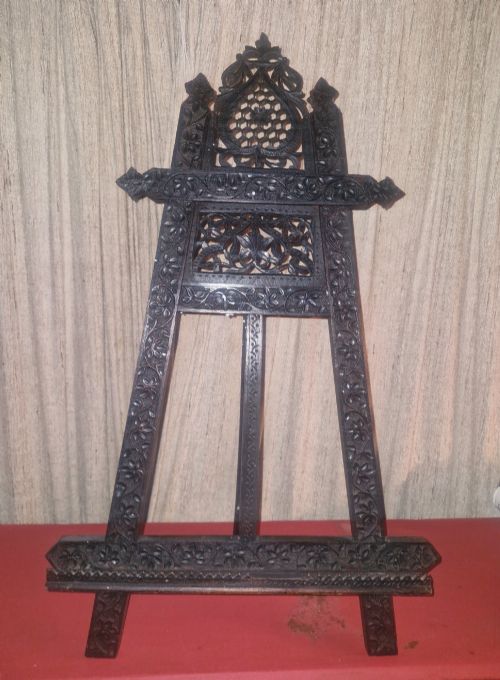
- Ornamental design created by cutting patterns through thin wood using a piercing technique. This forms the distinctive openwork lattice seen on many tables.
- Tip top
- A table construction featuring a hinged top that pivots vertically for storage against a wall. This mechanism was popular in campaign and occasional furniture.
- Padauk
- A heavy, durable tropical hardwood with a reddish hue used extensively in colonial furniture making. It provides a stable base for deep carving.
Pierced Carved Wooden Table: Frequently Asked Questions
Where were these tables made?
These tables originate from various regions including India, Burma, China, and Indonesia, often reflecting colonial trade and local craftsmanship of the nineteenth and early twentieth centuries.
Craftsmen in centres such as Hoshiarpur specialised in distinct styles of intricate fretwork and inlay that travelled back to British homes.
How do I care for a carved wooden table?
Dust the intricate carved surfaces regularly using a soft brush to prevent dirt accumulation in the recesses. Avoid harsh chemical polishes that can build up within the pierced details.
Keep the timber away from direct heat sources and dramatic humidity changes to prevent the wood from splitting or warping.
Are folding campaign tables sturdy?
Folding campaign tables were engineered for portability without sacrificing everyday utility. The clever hinged stands allow the furniture to pack flat while remaining stable when locked open for service.
Inspect the hinges and folding pins periodically to ensure the joints operate smoothly and support weight securely.
How do I identify an Anglo-Indian table?
Anglo-Indian tables typically feature dense, all-over floral or animal carvings executed in heavy tropical hardwoods like teak or padauk. Many incorporate folding bases or removable tray tops designed for colonial transport.
Subtle details such as brass or copper inlays further point toward the workshops of the Indian subcontinent during the Victorian era.