






Collector Glass Stemware
Collector glass stemware brings the refined shapes of Georgian drinking vessels and later enamelled coupes straight to the table.
Collector Glass Stemware
Collector glass stemware covers drinking vessels from the eighteenth century up to nineteen hundred, encompassing wine glasses, goblets, ale glasses, and champagne coupes. These pieces showcase a range of forms from the baluster and plain stem to intricate twists and composite stems.
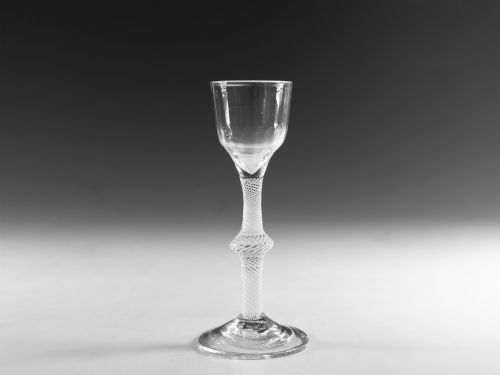
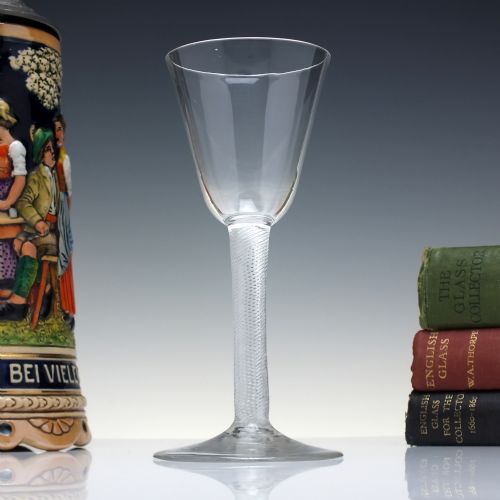
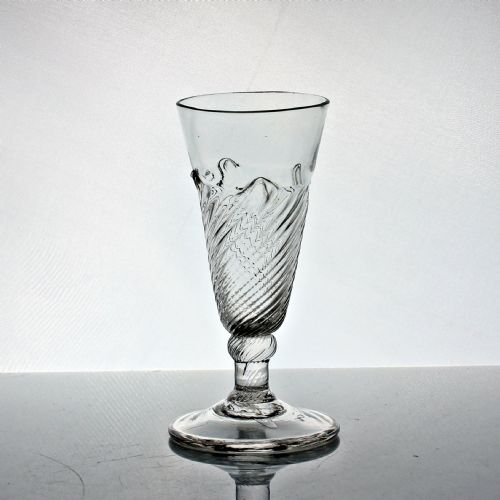
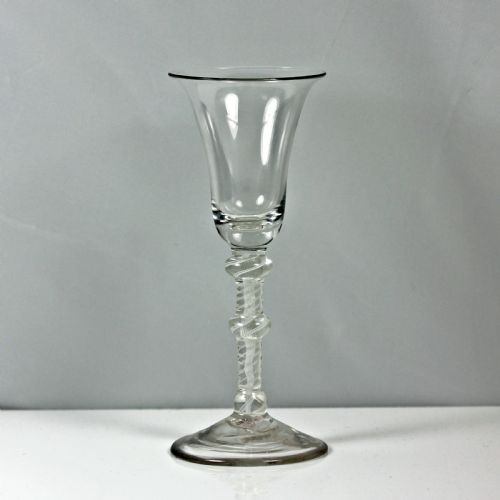
The majority of pieces seen on this page belong to the Georgian period, dominated by English wine glasses featuring opaque twists, air twists, and engraved bowls. Alongside these, buyers find larger rummers, ratafia glasses, and occasional nineteen-hundred pieces such as enamelled champagne coupes.
Materials and construction
Makers utilised lead glass, lead crystal, and flint glass to achieve clarity and weight in these drinking vessels. The material allowed artisans to draw stems and mould bowls with precision, whether producing a simple plain stem or a complex twist.
Decoration involved engraving the glass surface or applying white enamel details, as seen on specific eighteenth-century goblets and later champagne coupes. Twist stems were formed by trapping air bubbles or opaque glass threads within the molten metal before drawing and shaping.
Collector Glass Stemware Retail Price Guide 2026
Typical asking prices for collector glass stemware among the pieces listed under this phrase on Sellingantiques today, from the lower quarter to the upper quarter. They describe what is for sale here now, not the wider market.
Some eighteenth-century specimens arrive equipped with corkscrew stems, proving that clever engineering delighted drinkers long before modern novelties.
Determining quality in glass stemware
Quality rests upon the crispness of the bowl moulding, the symmetry of the twist within the stem, and the delicacy of any engraved or enamelled decoration. Finer examples display balanced proportions between the foot, stem, and bowl without distortion in the metal.
The complexity of the stem construction also distinguishes the work, with multi-spiral opaque twists, double series twists, and composite forms demanding greater skill from the glassmaker than a standard plain stem.
Fritz Heckert
The Collector Glass Stemware Glossary
- Air twist
- A stem formation created by stretching internal air bubbles into spiral threads within the glass. This technique produces a delicate, silvery effect inside the column.
- Opaque twist
- A stem containing white enamel glass rods drawn into fine opaque threads and twisted during manufacture. These create distinct white ribbons running through the transparent stem.
- Baluster
- A heavy, swelling stem shape popular in early eighteenth-century drinking vessels, often featuring knops or collars. It provides a sturdy and substantial feel in the hand.
- Rummer
- A large, robust glass used for beer, wine, or punch during the Georgian era. These vessels typically sit on a short stem with a wide, rounded bowl.
- Ratafia glass
- A tall, narrow drinking vessel designed for sweet cordial or liqueur. The slender bowl sits atop a lengthened stem, often found in eighteenth-century forms.
Collector Glass Stemware: Frequently Asked Questions
What is collector glass stemware?
Collector glass stemware comprises historical drinking vessels, primarily from the eighteenth century, valued for their distinct stem formations and bowl styles.
These items range from everyday Georgian wine glasses with twist stems to decorative champagne coupes from nineteen hundred.
How do I identify a Georgian wine glass?
Georgian wine glasses are identified by their characteristic eighteenth-century forms, including air twists, opaque twists, and baluster stems.
Examining the metal weight and the construction of the stem helps confirm the period of manufacture.
Were these glasses used for dining?
These vessels were designed and used for consuming wine, ale, beer, and cordials during formal dining and social occasions.
Different bowl shapes and capacities suited specific beverages, from small ratafia glasses to large rummers.
How should I care for antique stemware?
Antique glass requires gentle hand washing in lukewarm water with mild soap to preserve the delicate metal and surface engraving.
Avoid sudden temperature changes and store them safely on stable surfaces away from edge hazards.