


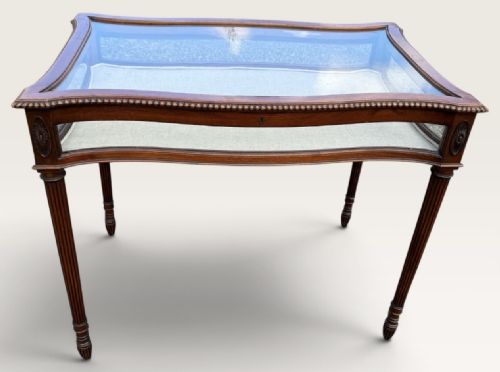


Collector Glass Display Box
Collector glass display box choices span Victorian and Edwardian bijouterie tables, countertop shop cases, and mahogany cabinets built to show off small treasures.
Collector Glass Display Box
A collector glass display box brings together pieces designed to protect and exhibit objects, most frequently seen as bijouterie tables and countertop display cabinets from the Victorian and Edwardian eras. These items place glazed panels over fitted interiors to present small artefacts or curiosities at eye level or tabletop height.
The selections range from commercial shop counters to domestic display tables framed in mahogany, oak, and satinwood. Buyers encounter serpentine shapes, brass inlay, and ormolu mounts that reflect French Rococo Revival and Louis XVI styles applied to British cabinetmaking.
Materials and Construction
Makers built these pieces primarily using solid and veneered hardwoods such as mahogany, oak, burr walnut, and satinwood, joined to form sturdy tabletops and glazed cases. Glass panels fitted securely into the wooden frames to enclose the display area while maintaining clear visibility from above and the sides.
Metal components like brass and ormolu provided structural reinforcement and decorative accents, frequently appearing as inlay or mounts. Interiors were often lined with fabric such as velvet or satin to cushion displayed items and create a contrasting background.
Collector Glass Display Box Retail Price Guide 2026
Typical asking prices for collector glass display box among the pieces listed under this phrase on Sellingantiques today, from the lower quarter to the upper quarter. They describe what is for sale here now, not the wider market.
Apothecaries once peered through these very glass panels to count their pills before the counters became miniature museums for tiny curios.
Assessing Quality and Execution
Superior examples distinguish themselves through the selection of cabinet timbers, such as figured mahogany or burr walnut, combined with precise joinery in serpentine shapes and glazed frames. The integration of decorative elements like brass inlay and ormolu mounts shows a higher level of craftsmanship.
The refinement of the interior lining and the smooth operation of glazed lids or doors dictate the overall standard of the piece. Better proportioned tables and cabinets balance structural integrity with delicate framing that maximises the viewing area.
The Collector Glass Display Box Glossary
- Bijouterie table
- A specialised glazed table designed specifically for displaying small valuable items or trinkets under glass. These pieces typically feature hinged tops.
- Ormolu
- Gilded bronze applied as decorative mounts on furniture, often seen in revival styles. It adds metallic contrast to the dark hardwoods.
- Serpentine
- A furniture shape featuring a wave-like front with a convex centre flanked by concave curves. This contour requires skilled carpentry to execute in solid wood.
- Satinwood
- A lustrous yellowish timber used for fine cabinetmaking and decorative inlay work. It contrasts sharply with darker woods like mahogany.
Collector Glass Display Box: Frequently Asked Questions
What is a bijouterie table?
A bijouterie table is a glazed display piece created to hold small treasures and trinkets. The glass top allows viewers to inspect items from above.
These tables date primarily from the Victorian and Edwardian periods, serving both domestic and commercial display purposes.
How were countertop shop cabinets used?
Countertop shop cabinets sat upon retail counters to showcase small goods to customers. Glazed panels protected merchandise while keeping items visible.
Cabinetmakers utilised woods like oak and mahogany to construct these durable commercial display cases.
Which woods appear most often?
Mahogany and oak dominate the construction of these display cases and tables. Cabinetmakers also utilised satinwood and burr walnut for finer examples.
These timbers provided the structural strength needed to support glazed tops and heavy glass panels.
How do you date a display table?
Dating relies on stylistic clues like Edwardian satinwood inlay or Victorian ormolu mounts. Construction techniques and timber choices also indicate the era of manufacture.
Pieces range from mid-nineteenth-century examples to early twentieth-century commercial counters.