






Oak Shop Showcase
An oak shop showcase brings the honest architecture of historic commerce straight into a modern interior.
Oak Shop Showcase
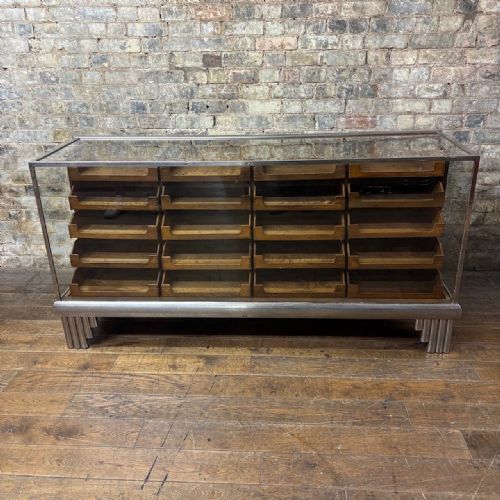
An oak shop showcase is a robust commercial fixture designed for trade, spanning countertop display cabinets and substantial haberdashery counters. The pieces appearing here predominantly date from the Victorian, Edwardian, and 1930s periods, reflecting both late nineteenth-century retail traditions and early twentieth-century commercial design.
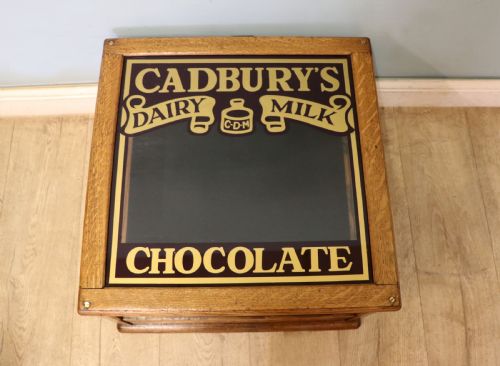
Forms range from compact countertop display cabinets with drawers to large display cabinets and expansive shop counters. Materials consistently centre on sturdy oak frames paired with expansive glass panels, sometimes incorporating brass or chrome hardware and velvet linings.
Stylistic influences stretch across Victorian and Edwardian aesthetics through to Art Deco and early twentieth-century commercial idioms, occasionally including French museum display cases. They serve today as practical storage and display furniture for domestic interiors.
Materials and construction
Makers built these commercial fixtures using solid oak for structural frames that could withstand daily retail use. Large glass panels provided maximum visibility for goods while protecting merchandise from dust and handling.
Metal elements such as brass or chrome appeared on hinges, handles, and framing details, depending on the period. Interior surfaces occasionally featured velvet linings to cushion displayed items, alongside fitted drawers for supplementary storage.
Oak Shop Showcase Retail Price Guide 2026
Typical asking prices for oak shop showcase among the pieces listed under this phrase on Sellingantiques today, from the lower quarter to the upper quarter. They describe what is for sale here now, not the wider market.
Listings span the nineteenth century through to the 1930s, uniting oak, glass, brass, and chrome in practical retail forms.
Judging quality in commercial oak furniture
Quality rests in the integrity of the original oak frame and the clarity of the glass panels. Pieces retaining their original hardware and functional drawers command greater appreciation than heavily altered examples.
F Sage And Co·Dudley And Co
The Oak Shop Showcase Glossary
- Haberdashery counter
- A long shop counter typically featuring multiple shallow drawers with glass fronts or tops, originally used for selling sewing notions and small textiles.
- Countertop display cabinet
- A smaller enclosed glass and wood showcase designed to sit atop a shop counter to highlight premium small goods.
- Victorian
- The period of British design spanning the reign of Queen Victoria, characterised by solid construction and historical revival styles.
- Edwardian
- The architectural and decorative style of the early twentieth century, favouring lighter proportions and refined commercial detailing.
- Art Deco
- The design movement of the 1920s and 1930s defined by streamlined geometric forms and modern industrial materials.
Oak Shop Showcase: Frequently Asked Questions
What is an oak shop showcase?
An oak shop showcase is a commercial display fixture originally built for late nineteenth and early twentieth-century retail environments. They combine sturdy timber frames with large glass panels to present goods securely.
Today, these pieces function as striking display cabinets in homes, offering deep visibility and period character for collections.
How do I date an oak showcase?
Dating relies on observing construction methods, materials, and stylistic cues associated with periods like the Victorian era, Edwardian period, or the 1930s. Hardware choices, such as brass versus chrome, also provide clear chronological markers.
Examining the underlying timber and joinery style helps narrow the window of manufacture between the late nineteenth century and the interwar years.
Where were these cabinets used?
These cabinets originally stood in high street shops, haberdasheries, and museums to display retail merchandise or valuable specimens. Countertop versions sat directly where customers transacted, while large freestanding counters formed the central barrier of the shop.
In contemporary spaces, they adapt naturally to living rooms, kitchens, or studies as curated display furniture.
Are the glass panels original?
Many surviving showcases retain their original glass, which often exhibits the slight imperfections and thickness variations typical of historic manufacture. Replacement glass sometimes appears in pieces that suffered heavy commercial use.
Inspect the panel mounting and edges to understand how the glazing relates to the surrounding oak frame.