


Collectable Glass Bottles
Collectable glass bottles combine decorative finesse and maritime craft, offering buyers intricate scent vessels and detailed dioramas spanning multiple eras.
Collectable Glass Bottles
When buyers search for collectable glass bottles, they encounter a diverse selection ranging from delicate scent containers to intricate maritime dioramas. These objects bridge decorative arts and folk traditions, capturing specific periods through distinct manufacturing approaches.
Perfume and scent bottles dominate the forms on this page, often hailing from the early twentieth century and the Victorian era. Alongside these, folk art pieces like model ships housed inside glass vessels provide a different facet of the category.
How they were made
The construction of these pieces relies heavily on glass manipulation, utilising clear, frosted, and opalescent varieties. Moulding techniques shape intricate relief patterns on scent bottles, while specialised stoppers complete the vessels.
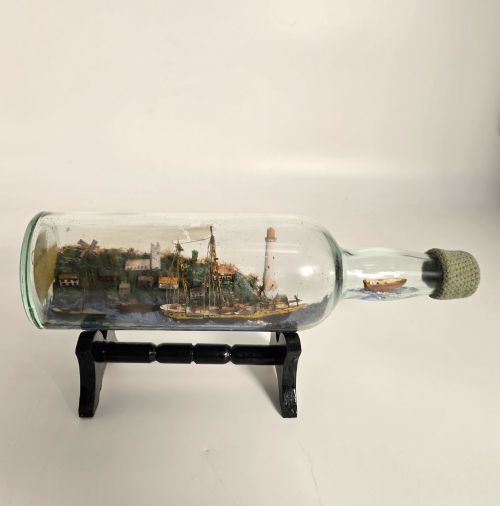
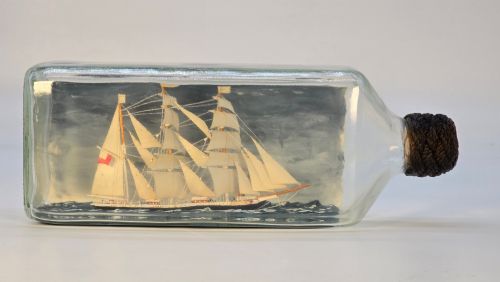
Maritime dioramas involve careful assembly using wood, paint, thread, and putty to construct miniature sailing or steam ships inside glass bottles, mounted on wooden plinths.
Listings feature items from the Victorian period up to the nineteen thirties, encompassing both glass scent bottles and wooden ship dioramas.
What varies in quality
Quality in these objects rests upon the precision of the glassmoulding and the crispness of surface details, particularly on decorative perfume bottles. Finer examples display sharp relief and sophisticated use of coloured staining.
In folk art pieces, the intricacy and scale of the internal model determine the standard. The complexity of rigging and the neatness of the assembly inside the glass distinguish superior dioramas.
Rene Lalique·Sabino
The Collectable Glass Bottles Glossary
- Opalescent glass
- Glass that displays a milky, iridescent appearance with milky-blue highlights when viewed in transmitted light. This material is frequently utilised in decorative Art Deco perfume bottles.
- Diorama
- A three-dimensional miniature scene enclosed within a container. In this category, the scene depicts sailing or steam ships housed inside glass bottles.
- Scent bottle
- A small vessel designed to hold liquid perfume, often fitted with a decorative stopper. These range from Victorian silver-mounted pieces to twentieth-century moulded designs.
- Maritime folk art
- Artistic objects created by sailors or self-taught makers focusing on nautical subjects. Model ships in bottles serve as primary examples of this tradition.
- Frosted glass
- Glass treated to achieve a non-transparent, matte surface texture. This finish diffuses light and highlights moulded decorative motifs.
Collectable Glass Bottles: Frequently Asked Questions
What periods do these bottles cover?
The selection spans from the Victorian era through the early twentieth century, with a concentration of pieces originating in the decades around nineteen twenty and nineteen thirty.
This timeframe encompasses both Victorian scent containers and Art Deco moulded glass alongside maritime folk art.
How were ships placed inside bottles?
Makers constructed the miniature sailing and steam ships with folding masts and rigging using wood, thread, and putty. They inserted the collapsed models through the bottle neck and pulled strings to raise them.
Once upright, the structures were secured inside the glass using specialised tools and adhesives.
What materials are used besides glass?
Perfume bottles occasionally incorporate metal mounts such as silver, alongside painted details or coloured staining within the glass relief.
Maritime dioramas integrate wood for plinths and ship hulls, thread for rigging, and putty to anchor the models inside the glass.
How do I care for antique glass?
Keep these objects away from direct sunlight and dramatic temperature fluctuations to protect decorative finishes and delicate internal components. Dust them gently with a soft dry cloth.
Avoid submerging pieces that contain internal wooden dioramas or delicate paper and thread elements.