




Coin Collector Drawers
Coin collector drawers provide secure, compartmentalised storage for delicate items, built in mahogany, oak, walnut and deal across the Georgian, Victorian and Edwardian periods.
Coin Collector Drawers
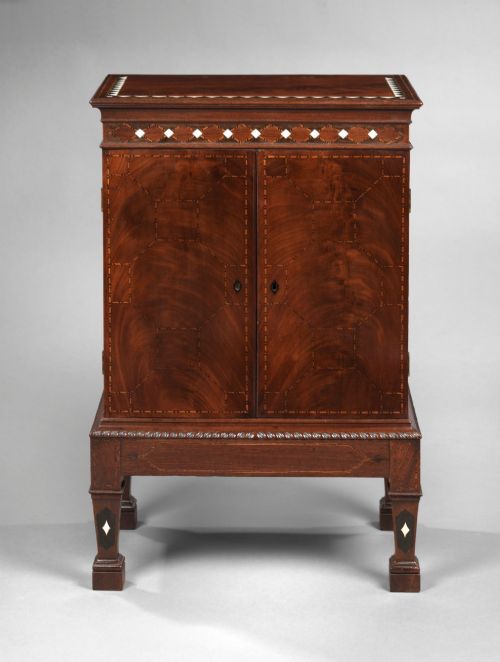
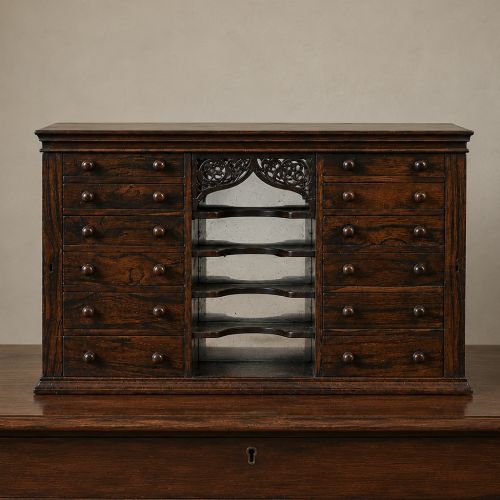
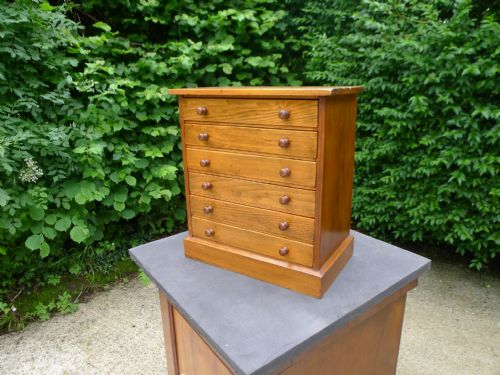
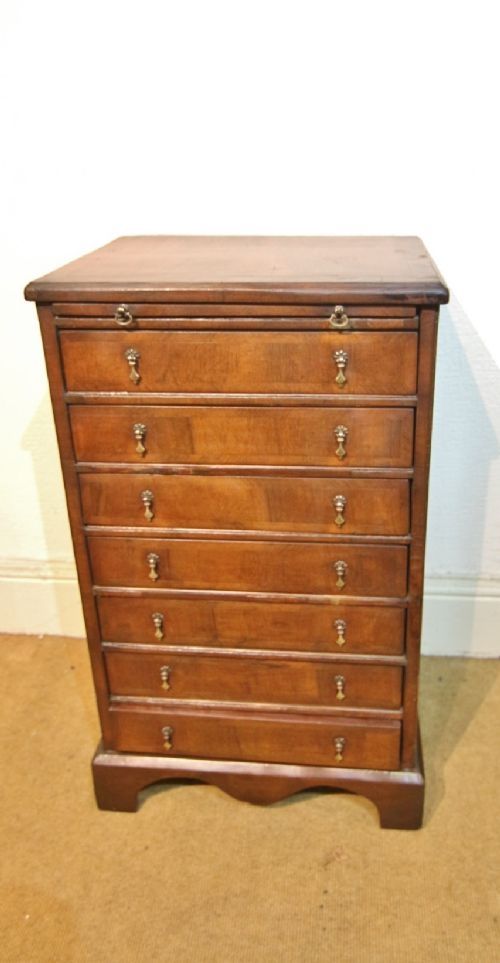
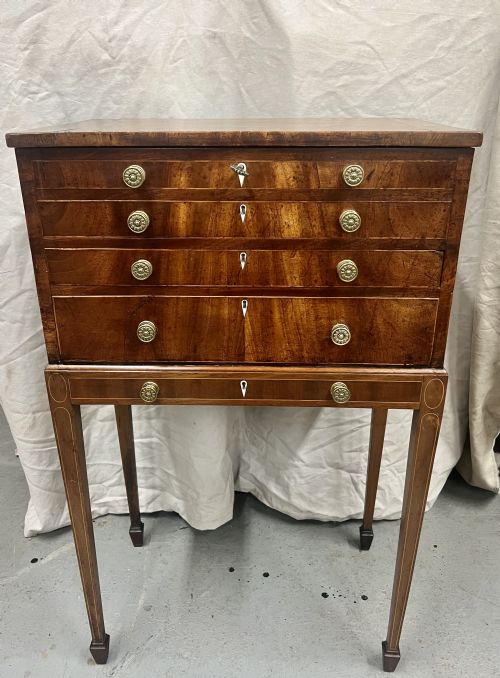
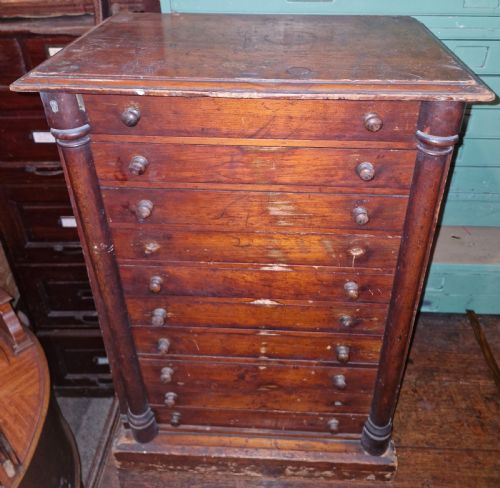
Coin collector drawers form specialised storage units designed to house numismatic items, specimens and small antiquities safely within multi-drawer housings. When searching for coin collector drawers, buyers encounter pieces referred to variously as collectors cabinets, specimen cabinets, chests of drawers and Wellington chests originating from the Georgian, Victorian and Edwardian eras.
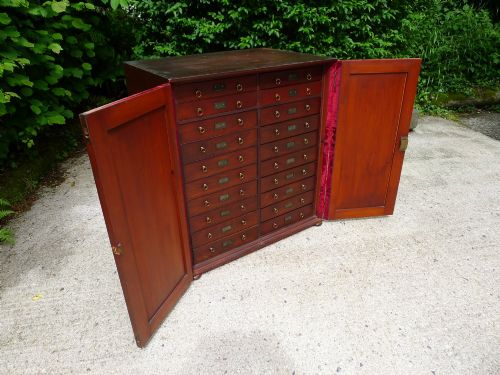
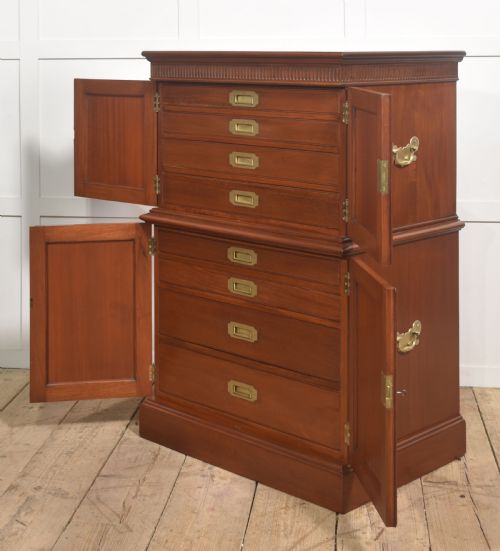
The most common formats on this page range from compact desktop specimen cases with a handful of drawers to large floor-standing mahogany cabinets containing twenty to forty shallow drawers. These pieces often incorporate locking doors, glass panels and brass drop handles, reflecting their original purpose of protecting valuable private collections from dust and handling.
How they were made
Cabinet makers utilised dense timbers such as mahogany, walnut, oak and rosewood alongside secondary woods like pine and deal to construct the carcases and internal partitions. Drawers are typically shallow in depth, designed specifically to hold flat items without movement, and frequently employ fine joinery like dovetailing.
Hardware details include brass drop handles, flush campaign mounts and locking mechanisms with original keys to secure the contents. Finishes involve polished wood surfaces, sometimes augmented with glass doors or mirrored sections depending on the specific cabinet type.
Some Victorian specimen cases include secret locking bars disguised as plain architectural mouldings to foil inquisitive fingers.
What varies in quality
Quality varies significantly according to the scale of the piece, the choice of timber and the complexity of the internal arrangement. Larger multi-drawer cabinets by identified workshops command attention for their substantial timber selection, such as figured English oak, Cuban mahogany or burr walnut.
The precision of the drawer construction and the integrity of the locking doors or glass fronts dictate the overall standard of manufacture. Pieces retaining provenance or association with known historical collections show a higher degree of original craftsmanship.
Brady of Edmonton·Charles William Schofield
The Coin Collector Drawers Glossary
- Collectors cabinet
- A multi-drawer piece of furniture designed specifically to house small specimens, coins or natural history items. These cabinets feature shallow drawers to prevent damage to stored objects.
- Wellington chest
- A tall, narrow chest of drawers secured by a hinged vertical locking stile on one side. This locking bar fastens over the drawer edges and is secured with a key.
- Specimen case
- A small portable box or desktop cabinet fitted with miniature drawers for holding delicate items. They often include glass panels or secure carrying handles.
- Deal
- Softwood timber, typically fir or pine, frequently used in the internal construction or secondary parts of 19th-century furniture. It provides a stable base for stained or polished finishes.
- Dovetail
- A traditional joinery technique connecting two pieces of wood by interlocking wedge-shaped fingers. This joint provides exceptional tensile strength in drawer construction.
Coin Collector Drawers: Frequently Asked Questions
What are coin collector drawers?
Coin collector drawers are shallow wooden compartments housed within cabinets or chests built to protect and organise small flat items.
They appear in various formats ranging from small desktop specimen cases to large floor-standing furniture pieces.
How were these cabinets used?
Collectors utilised these pieces to store, sort and display private collections of coins, medals and natural history specimens safely.
The shallow drawers prevented items from sliding over one another while locking doors kept contents secure.
What woods were used?
Makers constructed these cabinets using dense hardwoods such as mahogany, walnut, oak and rosewood for external visibility.
Internal partitions and secondary drawer linings frequently employed softer timbers including deal, pine and satin birch.
How do I identify the period?
Dating relies on stylistic clues, construction methods, timber choices and hardware styles associated with the Georgian, Victorian and Edwardian eras.
Mahogany dominates 18th-century and early 19th-century examples, while walnut and deal appear frequently in later 19th-century pieces.