



Cobalt Transferware Dish
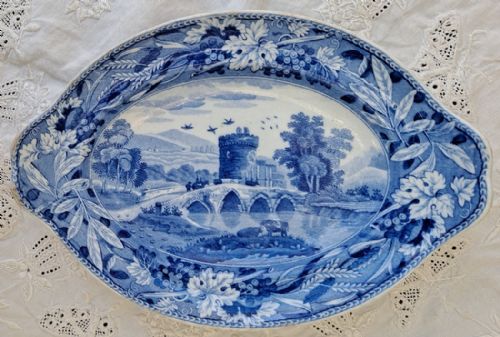
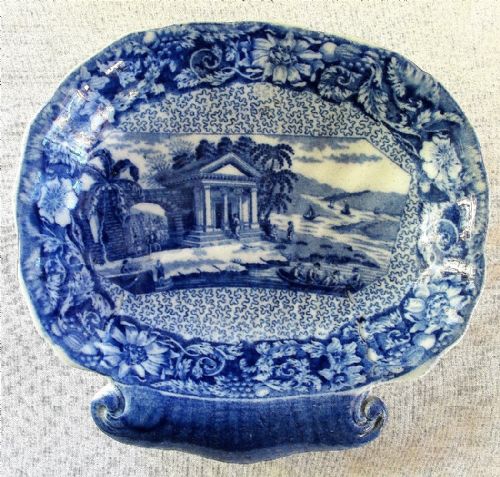
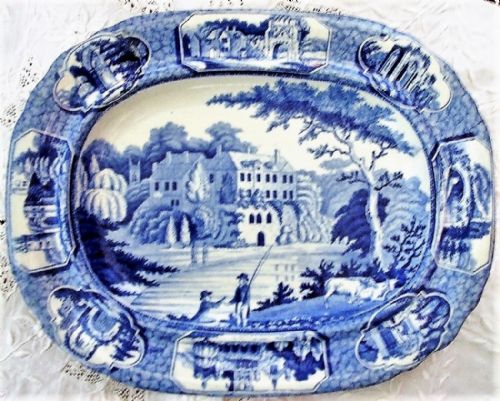
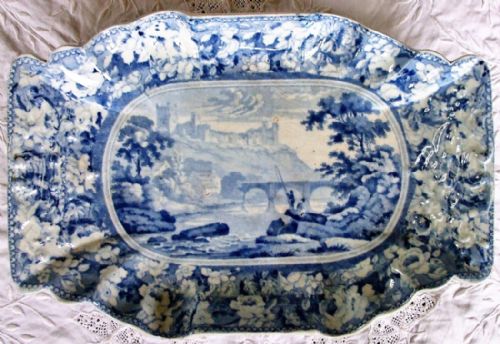
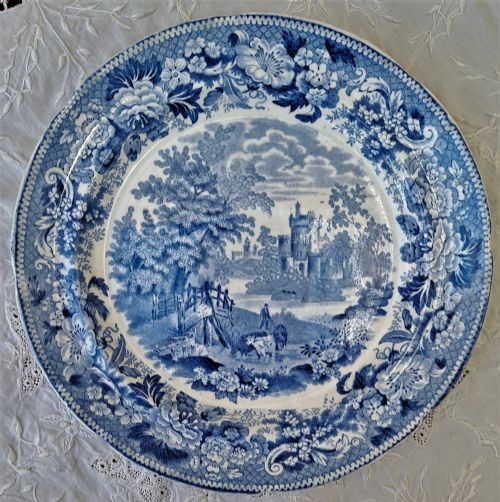
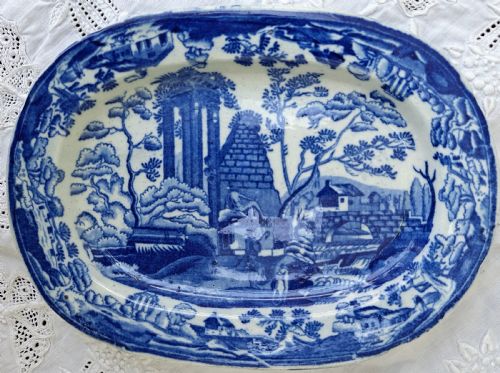
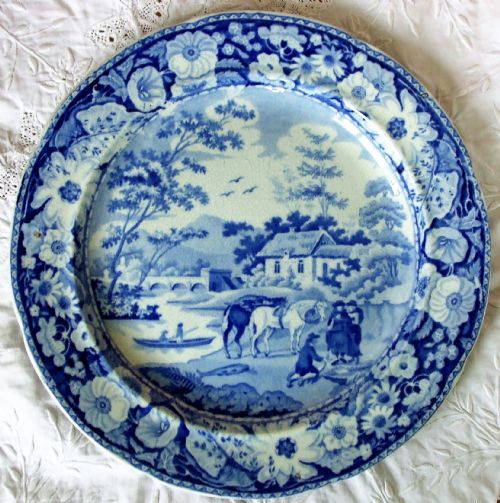
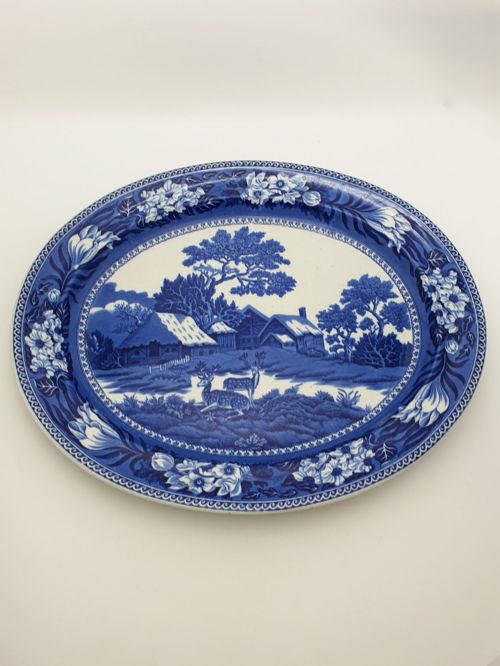
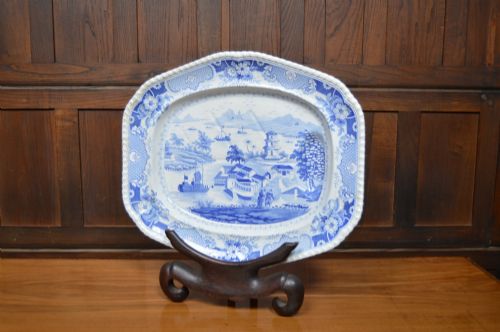
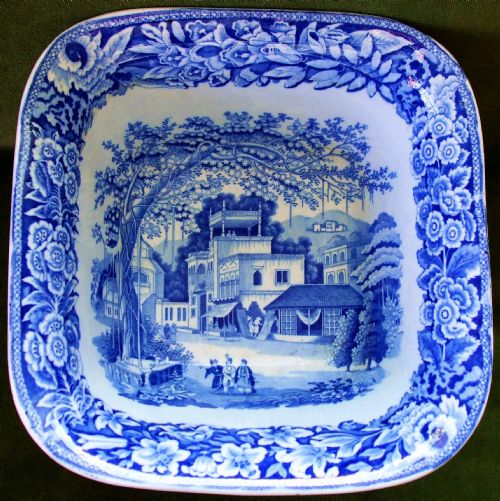
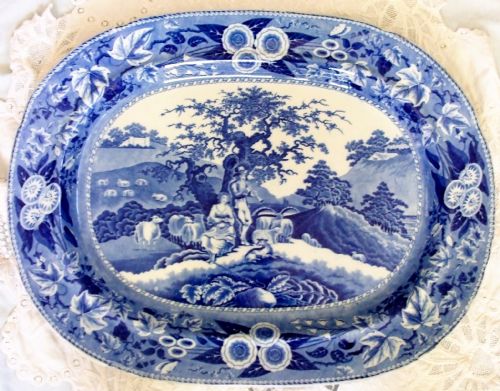
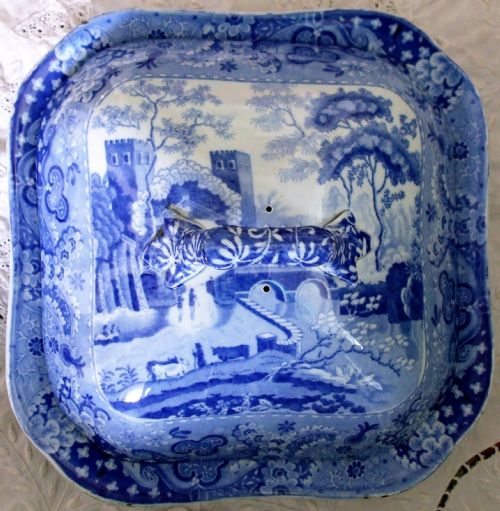
A cobalt transferware dish brings deep blue printed scenes of classical ruins, pastoral life and exotic landscapes directly onto your table.
Cobalt Transferware Dish
When seeking a cobalt transferware dish, you encounter earthenware, pearlware, and ceramic vessels spanning the Georgian, Victorian, and Regency periods. The most common forms on this page include serving platters, decorative plates, meat plates, and vegetable tureens bearing pictorial printed scenes.
Many examples date from the nineteenth century and originate from Staffordshire potteries, featuring named patterns such as Hexham Abbey, Classical Ruins, Fallow Deer, and India Temple. Forms range from simple flat plates to large meat platters, pierced serving dishes, and covered tureens.
The aesthetic bridges utilitarian kitchenware and display pieces, drawing on British landscape, Chinoiserie, and North American views. These dishes demonstrate the early industrial capability of English potteries to produce consistent, detailed monochromatic imagery at scale.
Materials and production
Potters shaped earthenware, pearlware, or stoneware bodies on the wheel or in moulds before applying a smooth glaze over the ceramic surface. Pearlware utilised a slightly blued glaze to mask the yellowish tint of the underlying body, creating a brighter ground for the decoration.
Makers applied the design by transferring cobalt pigment from an engraved copper plate onto tissue paper, which was then pressed onto the unfired or bisque ceramic body. This printed transfer was sealed beneath a transparent glaze and fired in a kiln to fuse the intense blue pigment into the shiny surface.
Cobalt Transferware Dish Retail Price Guide 2026
Typical asking prices for cobalt transferware dish among the pieces listed under this phrase on Sellingantiques today, from the lower quarter to the upper quarter. They describe what is for sale here now, not the wider market.
Listings span the nineteenth century, utilising earthenware, pearlware, and glazed pottery across Georgian, Regency, and Victorian styles.
Factors of quality
Quality rests primarily on the crispness of the cobalt transfer print and the clarity of the underlying white glaze. Finer pieces display sharp lines without blurred edges or smudged pigment where the paper met the curved ceramic contours.
The elegance of the pottery form and the complexity of the pictorial scene also distinguish finer examples. Well-modelled edges, such as pierced borders on serving dishes or substantial heavy platters with deep wells, demonstrate superior manufacture.
Zacharia Boyle·Thomas Lakin·William Adams·J. & R. Riley·J. & R. Clews·John Rogers and Son·John Davenport·Copeland and Garrett
The Cobalt Transferware Dish Glossary
- Transferware
- Ceramic pottery decorated by printing a design from an engraved copper plate onto tissue paper and transferring it onto the unfired clay body. This method allowed intricate pictorial scenes to be replicated consistently.
- Pearlware
- A refined earthenware developed in the late eighteenth century featuring a thin glaze with a faint bluish tint in the recesses. It was designed to imitate Chinese export porcelain more closely than standard creamware.
- Tureen
- A deep covered bowl used for serving soups, sauces, or vegetables at the dining table. Many feature matching stands or platters to catch drips during service.
- Chinoiserie
- A decorative style reflecting European interpretations of Chinese and East Asian artistic traditions. It frequently appears on these dishes as imaginary pagodas, arched bridges, and stylized figures.
- Charger
- A large decorative plate or platter used primarily for ceremonial display or as a base setting beneath smaller course plates. These oversized pieces highlight expansive printed landscapes.
Cobalt Transferware Dish: Frequently Asked Questions
How do I date a blue and white dish?
Dating relies on identifying the pottery mark stamped on the underside, the specific tint of the glaze, and the style of the ceramic body. Pearlware glazes with a slight blue pooling point toward the earlier nineteenth century, whereas heavier ironstone and later printed marks suggest the Victorian era.
Shape and manufacturing techniques also provide clues, as hand-thrown early Georgian pieces differ noticeably from later moulded ironstone wares. Comparing the recorded pattern name with historical pottery registries often narrows the production decade.
Can I use these antique dishes for food?
Most collectors prefer to display these pieces as decorative items rather than use them for daily dining. Using nineteenth-century earthenware for serving acidic foods can potentially affect the historic glaze over time.
If you do choose to serve from them occasionally, wash them gently by hand in warm soapy water rather than placing them in a modern dishwasher. Avoid soaking them, as historic ceramic bodies can absorb moisture through tiny crazing lines in the glaze.
What is the difference between earthenware and pearlware?
Earthenware is a porous, opaque ceramic fired at lower temperatures, commonly used for everyday domestic plates and platters. Pearlware is a refined variant developed to look whiter by adding a small amount of cobalt to the transparent glaze.
In good light, pearlware displays a faint bluish pooling where the glaze settles into crevices or around foot rims. This subtle tint distinguishes it from standard creamware and later white ironstone bodies.
Why are some transfer prints blurred?
Blurring occurs when the tissue paper carrying the cobalt pigment slips slightly against the curved ceramic surface during the pressing process. Hand-applied transfer printing was a rapid workshop task, so minor smudging occasionally happened.
Collectors generally value crisp, sharp transfers where every architectural detail of a ruin or foliage of a tree remains distinct. However, slight printing irregularities are accepted as normal characteristics of early industrial Staffordshire production.