

Cobalt Porcelain Set
A cobalt porcelain set brings deep blue richness to the table, uniting patterned dinner services, cabinet trios, and garniture vases.
Cobalt Porcelain Set
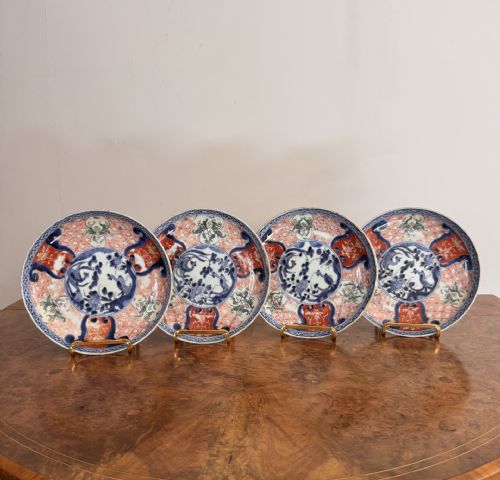
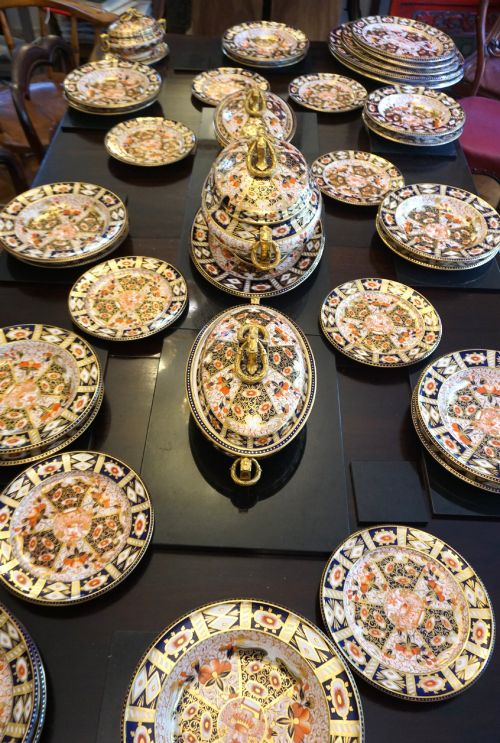
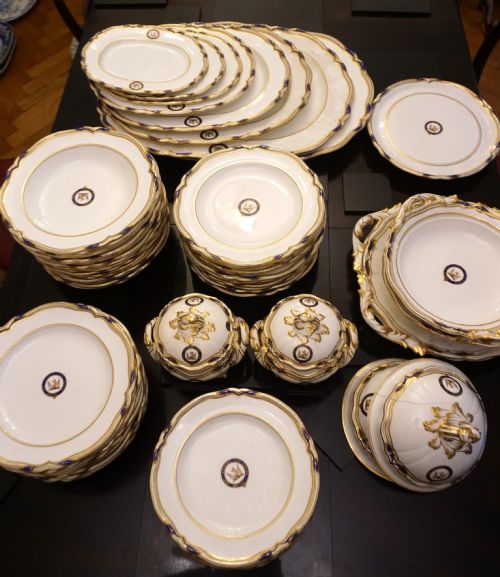
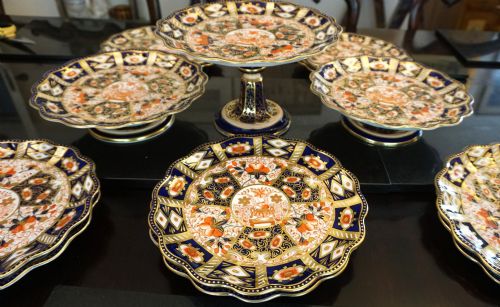
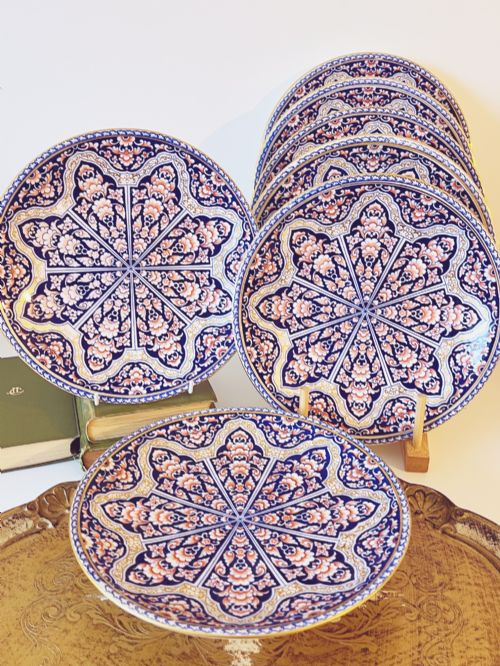
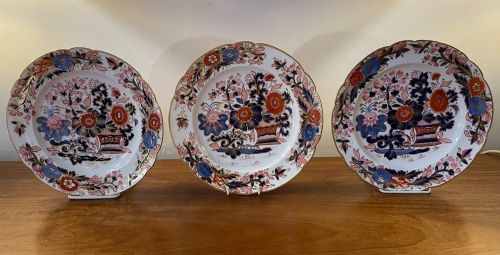
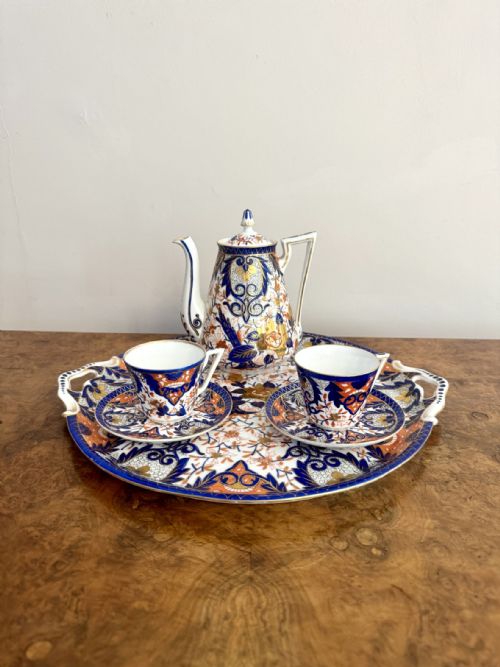
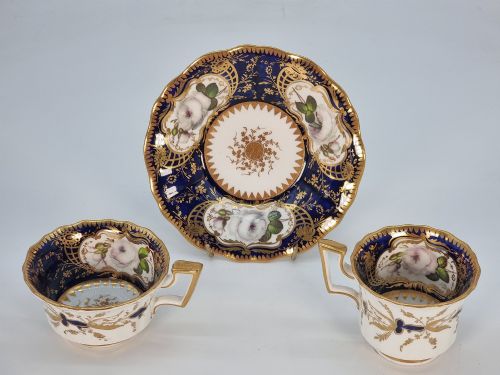
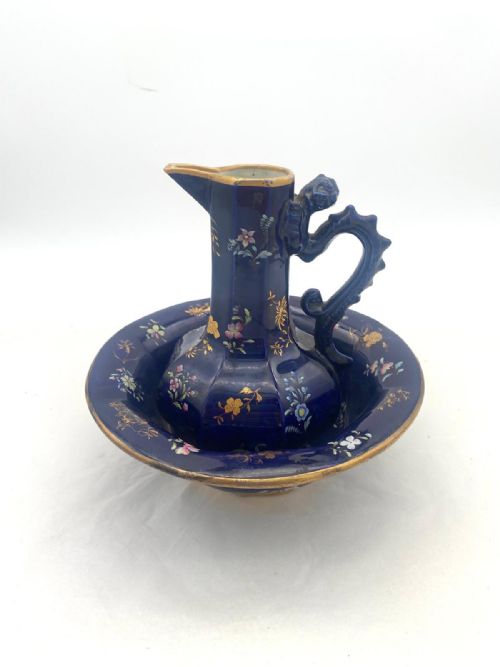
A cobalt porcelain set encompasses matched groupings designed for dining, display, or desk use, spanning expansive dinner services down to intimate tea trios. When examining a cobalt porcelain set on this page, buyers frequently encounter 19th-century English ironstone plates and Japanese Imari vessels executed in deep blue palettes.
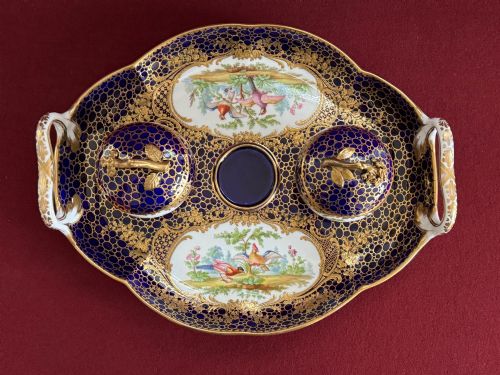
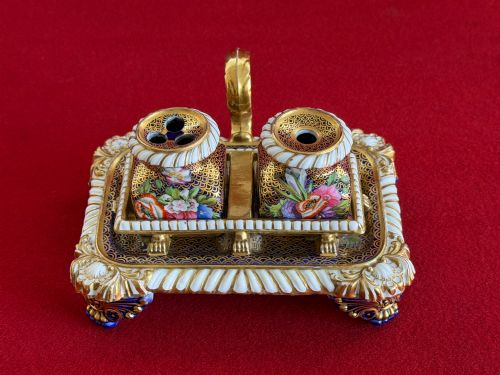
The forms range from sprawling multi-piece dinner services and dessert plates to decorative vases, garnitures, and fitted inkstands. Makers across Georgian and Victorian periods utilised rich blue glazes alongside Japanese motifs to create cohesive ensembles for formal presentation.
Many survivors represent historic English factories such as Spode, Coalport, and Minton, alongside Japanese export wares produced during the Meiji period. Whether composed of plates, cups, or urns, these groupings offer matching aesthetics developed for domestic utility and display.
How they were made
Potters achieved the distinctive dark blue coloration by applying cobalt oxide beneath or over the glaze before high-temperature firing. Enamel colours and gold leaf accents were frequently added in subsequent low-temperature firings to enrich the surface decoration.
Makers utilised fine porcelain, bone china, and sturdy ironstone bodies moulded into specific forms, from octagonal jugs to shaped vases. Artisans then hand-painted or transferred intricate patterns, often incorporating gilding and bronze mounts to complete the garniture or service.
Cobalt Porcelain Set Retail Price Guide 2026
Typical asking prices for cobalt porcelain set among the pieces listed under this phrase on Sellingantiques today, from the lower quarter to the upper quarter. They describe what is for sale here now, not the wider market.
Child-sized services let Victorian children practice pouring tea without smashing the family heirlooms.
What varies in quality
The artistic execution of hand-painted cobalt and the precision of the gilding separate standard production wares from superior cabinet pieces. Consistency across every matching component in a service indicates disciplined workshop standards during manufacture.
The crispness of moulded ironstone or porcelain forms and the depth of the underglaze blue pigment dictate the visual success of the set. Well-preserved painted details and intact gold leaf elevate the standing of surviving services and garnitures.
Davenport·Spode·Minton·Barr and Barr·Royal Crown Derby·Coalport·Thomas Steel·Newhall·John Rose·Masons·Aynsley
The Cobalt Porcelain Set Glossary
- Garniture
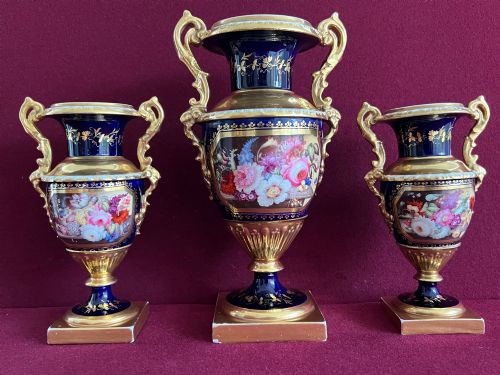
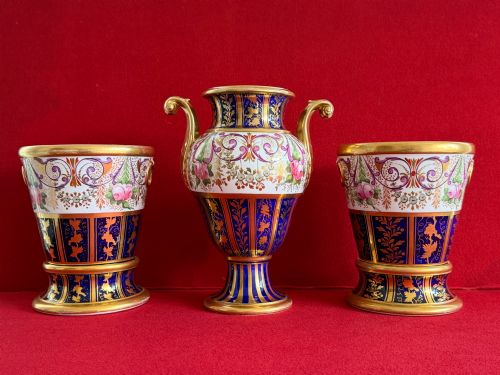
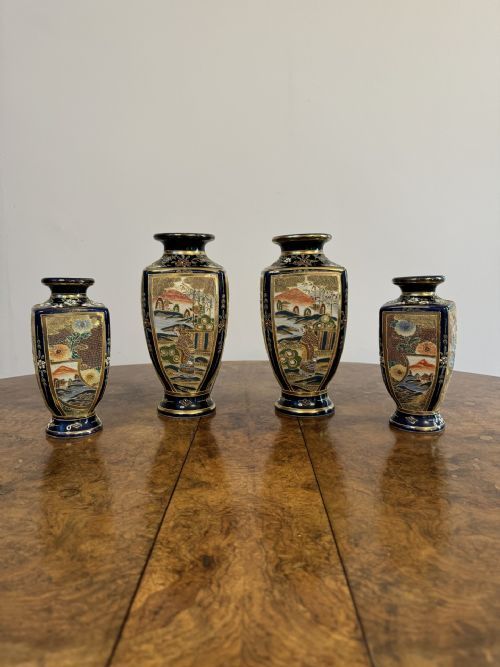
- A matched set of three or more decorative vases or urns designed to be displayed together on a mantelpiece or cabinet. These groupings typically feature a central tall vessel flanked by smaller matching companions.
- Imari palette
- A traditional decorative scheme featuring underglaze cobalt blue combined with iron red, white, and gilt highlights. Originating in Japan, this vibrant style was extensively copied by European porcelain factories.
- Trio
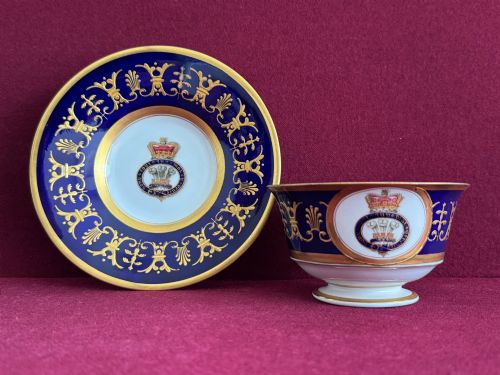
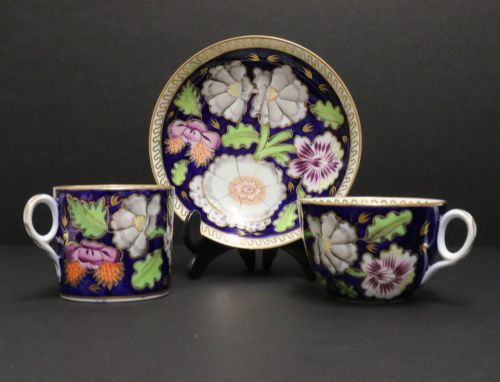
- A matched ceramic grouping consisting of a teacup, a coffee cup or saucers, and a matching dessert plate. These sets were popular in the Georgian and Regency periods for formal domestic tea service.
- Ironstone
- A heavy, durable type of earthenware patented in the nineteenth century as a robust alternative to true porcelain. It accepted cobalt transfer prints and enamels exceptionally well for large dinner services.
- Flow blue
- A nineteenth-century ceramic technique where the cobalt blue pigment blurred intentionally into the white glaze during firing. This created a soft, misty appearance popular on dinner and tea services.
Cobalt Porcelain Set: Frequently Asked Questions
What is a garniture set?
A garniture set is a matching group of decorative vases or urns created to adorn a mantelpiece or sideboard. These arrangements typically comprise three or five pieces designed to complement each other in size and pattern.
In period interiors, these vessel groupings served as focal points for formal rooms. Collectors display them today to showcase uniform cobalt painting and balanced sculptural forms.
How do I care for antique porcelain?
Antique porcelain requires gentle hand washing in warm water using mild soap, avoiding modern dishwashers entirely. Sudden temperature changes must be prevented to protect the historic glaze and delicate enamel decorations.
Displaying sets away from direct sunlight preserves the vibrancy of the cobalt blue and any applied gilding. Extra care is needed when stacking plates to avoid surface friction on painted rims.
Were these sets used daily?
Dinner and tea services were produced primarily for formal dining and entertaining guests in high-status domestic settings. Everyday utilitarian needs were often met by coarser earthenwares rather than fine porcelain.
Cabinet plates and garniture vases remained strictly decorative, intended to signal taste and refinement. Surviving services often owe their completeness to being reserved for special household occasions.
How do I spot Japanese Imari?
Japanese Imari porcelain displays distinct underglaze blue paired with iron red and gold leaf overglaze details. The motifs frequently incorporate floral panels, landscapes, and intricate brocade borders.
European factories produced numerous imari pattern copies during the nineteenth century, distinguishable by paste weight and potting style. Comparing the clay body and glaze texture helps separate Japanese export pieces from English interpretations.