


Cobalt Blue Transferware Plate
A cobalt blue transferware plate brings rich monochrome pattern and historical narrative to a table, combining durable ceramic bodies with vivid printed scenes.
Cobalt Blue Transferware Plate
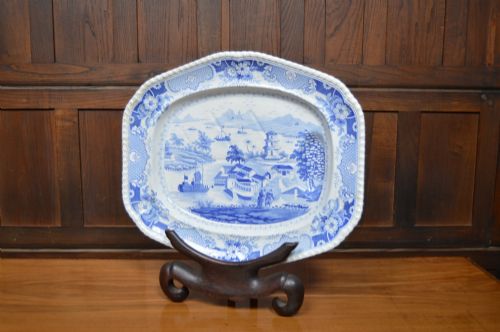
A cobalt blue transferware plate stands among the most recognisable expressions of nineteenth-century ceramic production. Buyers seeking a cobalt blue transferware plate will encounter various formats on this page, ranging from standard dining plates and dessert services to large serving platters, meat dishes, bread stands, and drainage inserts. These objects originate predominantly from nineteenth-century English kilns, spanning the Georgian, Regency, and Victorian eras.
The decorative subjects printed upon the earthenware surface vary widely, capturing the period's fascination with distant landscapes and classical themes. Common motifs include Chinoiserie scenes like 'Japan' and 'Tonquin China', topographical views such as 'Fair Mount near Philadelphia' and 'Wiseton Hall', and pictorial subjects like 'The Beemaster' and 'Returning Woodman'. Collectors meet both individual cabinet pieces and assembled sets that demonstrate the breadth of British transfer printing during the 1800s, 1850s, and intervening decades.
Materials and Technique
Potters constructed these pieces using earthenware, ironstone, pearlware, and stoneware bodies, which provided a stable foundation for the decoration. Artisans applied the designs via a copperplate transfer method, pressing tissue paper inked with cobalt blue pigment onto the biscuit ceramic before glazing and firing. Certain wares incorporate additional flourishes such as enamel colouring or gilt highlights over the glaze, adding depth to the printed monochrome framework.
The characteristic deep blue tone arises from cobalt oxide applied beneath a transparent lead or salt glaze, which vitrified during high-temperature kiln firings. This technique allowed potteries to replicate intricate architectural ruins, botanical studies, and figurative narratives with consistent clarity across large production runs. The resulting glazed pottery surfaces successfully combined decorative ambition with the durability required for daily domestic use.
Listings feature items spanning the Georgian, Regency, and Victorian periods, produced in earthenware, pearlware, ironstone, and stoneware.
Assessing the Pieces
Quality in these ceramics rests upon the crispness of the transfer print and the registration of the copperplate design against the ceramic form. Finer examples display sharp, well-defined lines without blurring, smudging, or pooling of the cobalt blue pigment beneath the glaze. The sophistication of the pattern itself, whether an elaborate topographical landscape or a detailed Chinoiserie narrative, often distinguishes standard production from exceptional output.
The choice of body material also influences the standing of a piece within the range, as refined ironstone and pearlware bodies generally exhibit smoother surfaces and finer potting than coarse utilitarian earthenware. Additionally, the presence of distinct maker marks or named pictorial patterns elevates historical interest. Pieces that retain uniform glaze coverage and balanced colour saturation represent the upper tier of surviving transferware.
John Ridgway·Mason·Stubbs·Pettys and Co Leeds·Thomas Lakin·Don Pottery·Brameld and Co·John Rogers and Son·John Davenport
The Cobalt Blue Transferware Plate Glossary
- Transferware
- Earthenware or ironstone decorated by transferring a printed design from an engraved copper plate onto the ceramic body. This innovation allowed potteries to produce intricate pictorial scenes rapidly and consistently.
- Pearlware
- A refined earthenware developed in the late eighteenth century featuring a subtle blue-tinted glaze that pooled in recesses. It served as a popular precursor to later nineteenth-century white earthenwares.
- Ironstone
- A durable, heavy ceramic patented in the early nineteenth century designed to resist chipping and cracking. It formed a sturdy base for both transfer-printed and enamelled domestic wares.
- Chinoiserie
- A European decorative style reflecting imaginative interpretations of Chinese artistic traditions. These patterns frequently feature pagodas, exotic bridges, and figures within fantastical landscapes.
- Drainer
- A perforated ceramic insert placed inside a meat dish or serving platter to separate juices from the joint of meat. They are often found decorated with matching blue and white transfer patterns.
Cobalt Blue Transferware Plate: Frequently Asked Questions
How do I date an antique transferware plate?
Dating relies on a combination of ceramic body characteristics, glaze appearance, and registered maker marks on the reverse. Earlier pieces from the Georgian period often utilise pearlware bodies with slight blue glaze pooling, while Victorian examples lean towards heavier ironstone.
Specific pattern names and impressed or printed manufacturer ciphers provide further chronological clues. Comparing the aesthetic style of the printed border against known production periods helps narrow down the decade of manufacture.
Can I use these antique plates for dining?
While these ceramics were originally created for functional dining and serving, modern use requires careful consideration of their age and material stability. Historic earthenware and pearlware can develop hairline cracks or absorb staining if subjected to modern dishwashers, abrasive detergents, or thermal shock.
Many collectors prefer to display them on walls or plate racks to preserve the glaze and prevent accidental damage. If utilised for food, gentle hand washing in lukewarm water with mild soap is essential.
What caused the different shades of blue?
Variations in blue tonality stem from the preparation of the cobalt oxide pigment and the specific temperature within the kiln during firing. Potters adjusted the thickness of the ink and the composition of the glaze, which directly influenced how deeply the cobalt settled.
Slight fluctuations in the kiln atmosphere could transform a bright cobalt shade into a softer, greyish blue. These subtle variations are characteristic of nineteenth-century production methods rather than modern standardisation.
How should I clean and maintain transferware?
Maintenance requires mild cleaning methods that protect both the underlying ceramic body and the delicate glass glaze. Submerging pieces in hot water for extended periods should be avoided, particularly if the ware has historical crazing where moisture might penetrate the porous biscuit body.
Storage or display should utilise padded plate hangers or stable stands to prevent rim chipping. Regular dusting with a soft, dry cloth is usually sufficient for pieces kept on open display.