


Cobalt Blue Porcelain Planter
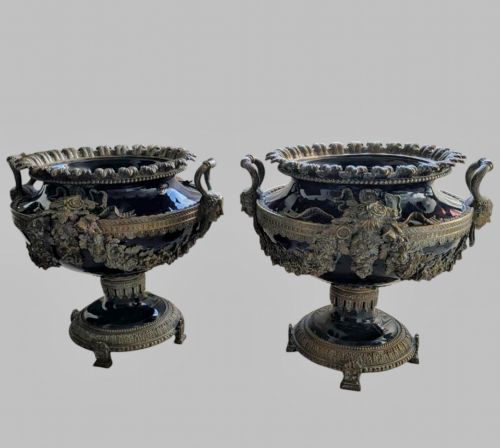
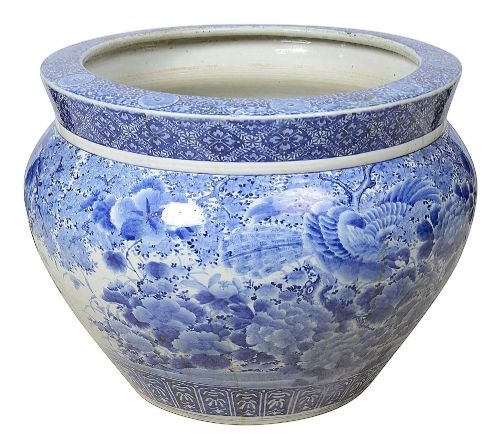
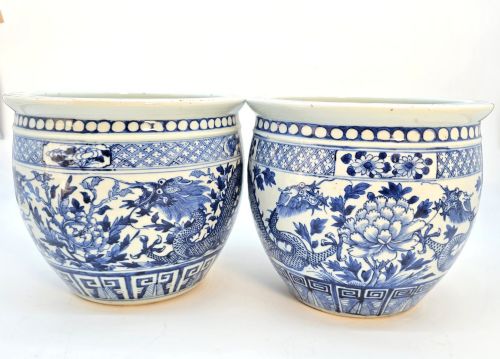
These cobalt blue porcelain planter examples span late nineteenth century styles from Chinese blue and white to French rococo revival.
Cobalt Blue Porcelain Planter
A cobalt blue porcelain planter provides a decorative vessel for housing indoor plants, appearing across nineteenth century periods from Victorian Britain to Qing Dynasty China. These pieces take forms such as jardinieres, cachepots, fish bowls, and decorative bowls designed to sit on tables or stands.
The most common versions met here include Japanese Imari pieces from the Meiji period and Chinese blue and white porcelain jardinieres dated around 1880. European interpretations also surface, including French majolica and pieces from makers like Royal Doulton and Coalport.
Buyers seek these vessels for their rich underglaze blue colouration and decorative presence within a room. They function as standalone ornamental objects as well as practical containers for greenery.
How they were made
Makers utilised porcelain, glazed ceramic, and glazed earthenware as the primary bodies for these vessels. Cobalt underglaze provided the deep blue pigment applied before firing, creating patterns ranging from traditional Chinese motifs to Japanese Imari designs.
Selected pieces incorporate gilt bronze, ormolu mounts, and gold leaf applied to the ceramic or porcelain body. These metal additions often frame French neoclassical and rococo revival designs, adding structural weight and decorative contrast.
Materials across these listings include porcelain, enamel, glazed ceramic, gilt bronze, cobalt underglaze, gold leaf, and earthenware.
What varies in quality
The depth and clarity of the cobalt underglaze separate standard production from finer examples. Crispness in hand-painted botanical or figurative motifs indicates skilled brushwork during the manufacturing process.
Integration of secondary materials such as gilt bronze or ormolu mounts defines the upper tier of European pieces. Quality rests in the weight of the ceramic body and the precision of any applied metalwork.
Royal Doulton·Coalport
The Cobalt Blue Porcelain Planter Glossary
- Jardinerie
- An ornamental pot or stand for holding plants or flowers. This term appears frequently across nineteenth century French and English listings.
- Cachepot
- A decorative container used to conceal an ordinary flowerpot. It performs a similar function to a jardiniere.
- Imari
- A style of Japanese porcelain decorated in underglaze blue, iron red, and gold. Pieces from the Meiji period feature prominently in this tradition.
- Ormolu
- Gilded bronze used for mounts and decorative fittings on European ceramics. It appears on French neoclassical and rococo revival vessels.
- Underglaze
- Pigment applied to pottery before the glaze is fired. Cobalt underglaze creates the durable blue designs seen on these pieces.
Cobalt Blue Porcelain Planter: Frequently Asked Questions
How were these planters used?
These vessels held indoor plants or served as decorative bowls and fish tanks in nineteenth century homes. Large examples sat on floor stands or tables.
They functioned both as practical horticultural containers and as status objects showcasing skilled craftsmanship.
How do I date a piece?
Dating relies on stylistic clues, ceramic bodies, and recorded periods such as the Meiji era or Qing Dynasty. Markers like maker names provide specific chronological context.
Listings attribute pieces to the nineteenth century, 1880, 1900, and 1920 based on available evidence.
What is Japanese Imari?
Japanese Imari refers to porcelain decorated in cobalt blue and iron red, frequently highlighted with gold. Meiji period examples of this style appear in nineteenth century trade.
These pieces combine traditional Japanese forms with rich decorative palettes.