



Cobalt Blue Glass Silver
Cobalt blue glass silver brings together rich, deep-toned vessels and precious metal mounts from the Georgian, Victorian and Edwardian eras.
Cobalt Blue Glass Silver
When you search for cobalt blue glass silver, you encounter functional and decorative table items that combine vibrant vitreous bodies with metallic components. These pieces span from the eighteenth century through to the twentieth century, capturing distinct periods of design evolution.
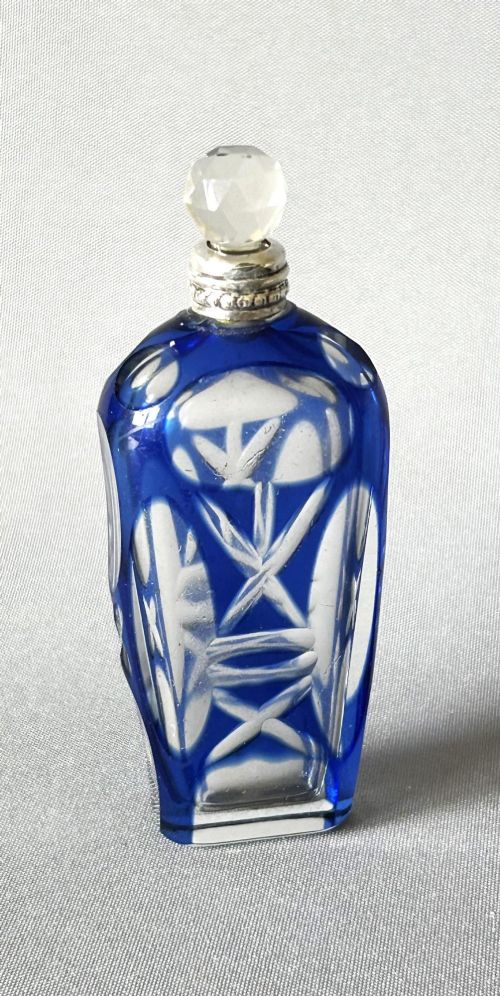
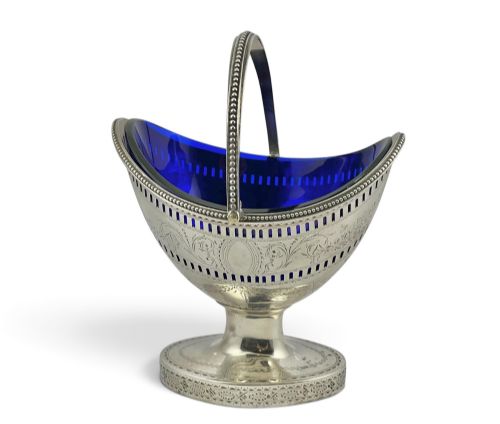
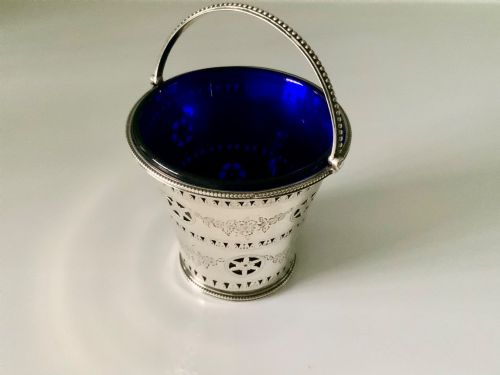
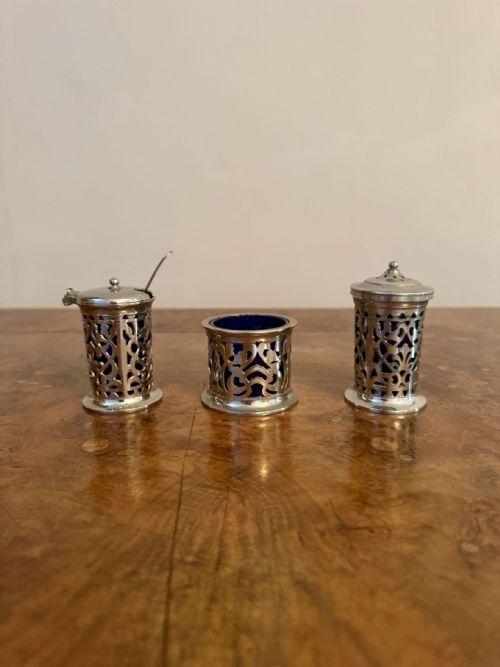
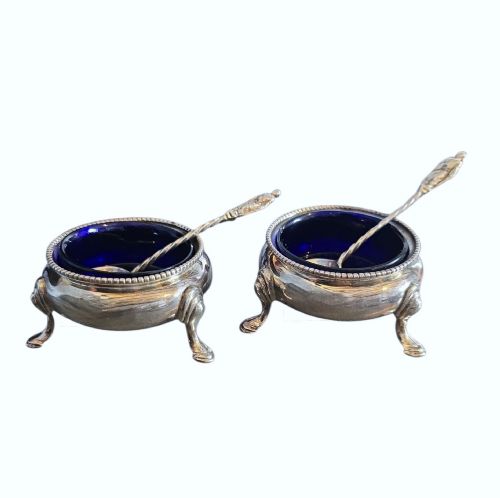
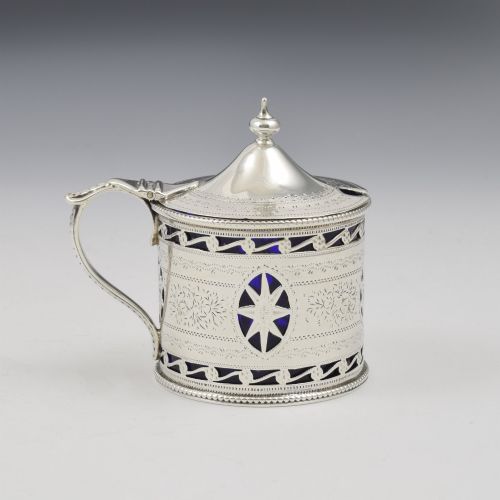
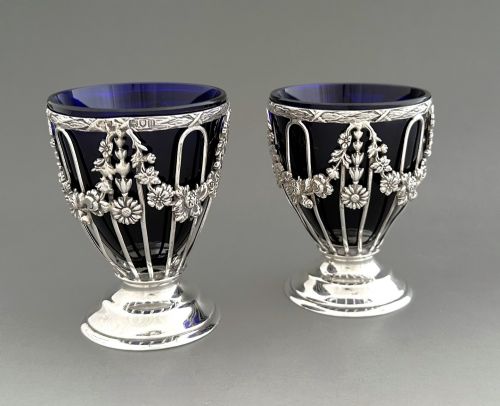
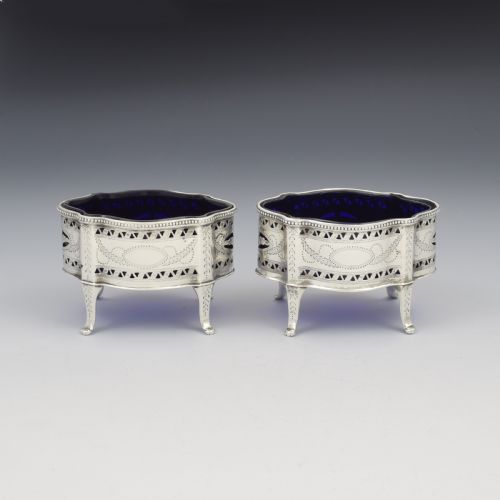
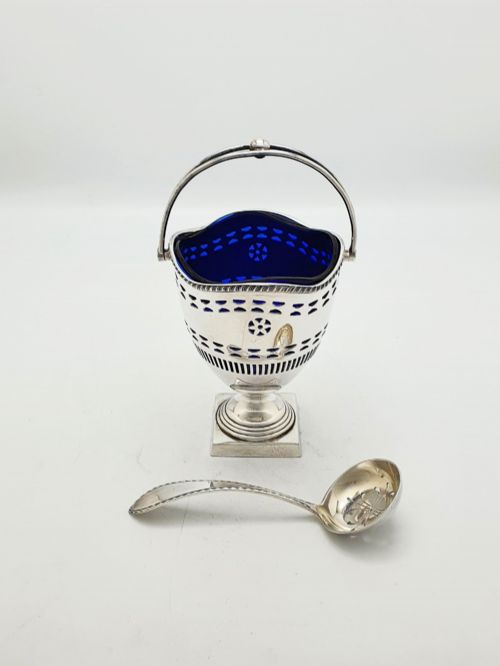
The most frequent examples on this page are salt cellars, mustard pots, sugar baskets and scent bottles. Many of these tablewares rely on removable blue glass liners held inside pierced or solid silver frameworks.
Origins range across English, Scottish, Welsh, French, German and Russian workshops, encompassing regional variations in both glassblowing and silversmithing traditions.
How they were made
Makers combined blown or moulded cobalt glass with sterling silver, silver plate, pewter or gold. Metal mounts were frequently pierced, cast or worked into wirework frames to cradle the glass vessels securely.
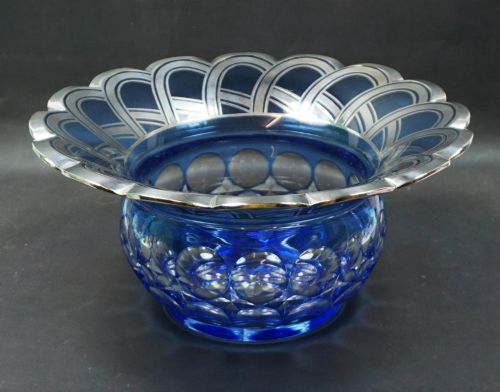
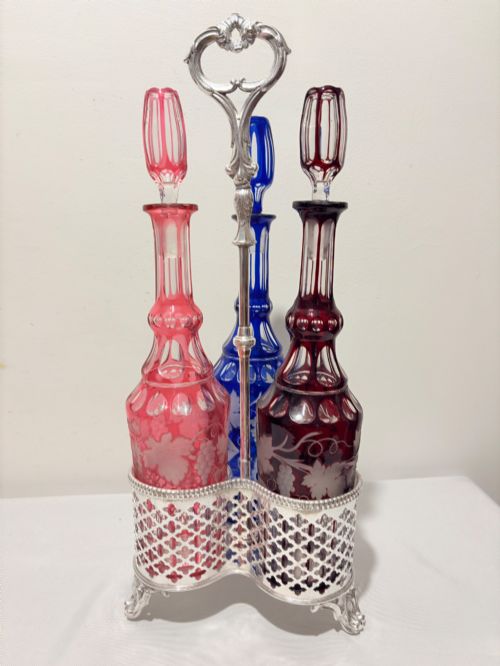
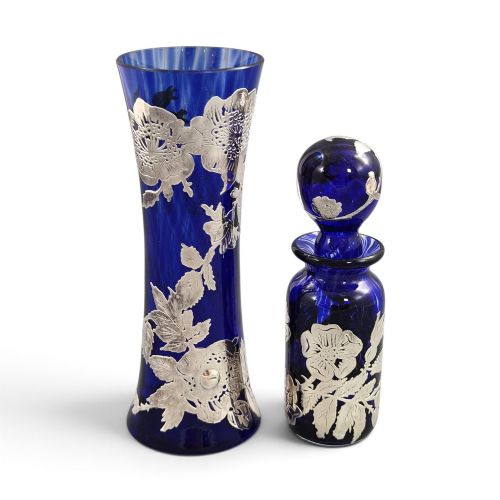
Techniques such as glass overlay involved fusing layers of coloured glass before cutting back the exterior to reveal intricate patterns. Silversmiths then applied engraved collars, hinged lids, swing handles or protective overlays directly to the glass bodies.
Cobalt Blue Glass Silver Retail Price Guide 2026
Typical asking prices for cobalt blue glass silver among the pieces listed under this phrase on Sellingantiques today, from the lower quarter to the upper quarter. They describe what is for sale here now, not the wider market.
Object types include salt cellars, mustard pots, scent bottles, sugar baskets, decanters, cruet sets and centrepiece bowls.
What varies in quality
Quality rests upon the crispness of the metalwork, particularly in pierced, chased or wirework silver frames. Heavy gauge silver and well-defined maker marks distinguish finer vessels from standard production pieces.
The depth and clarity of the cobalt glass itself also determine standard, alongside the precision of fit between the glass liner and its metal housing. Original matching components carry greater consistency than later replacement liners.
Nathan and Hayes·Aldridge and Green·Franchini and Bigaglia·Laugharne Glass
The Cobalt Blue Glass Silver Glossary
- Salt Cellar
- An open or enclosed vessel used for holding salt at the dining table. They frequently incorporate blue glass liners to protect the metal from corrosion.
- Pierced Silver
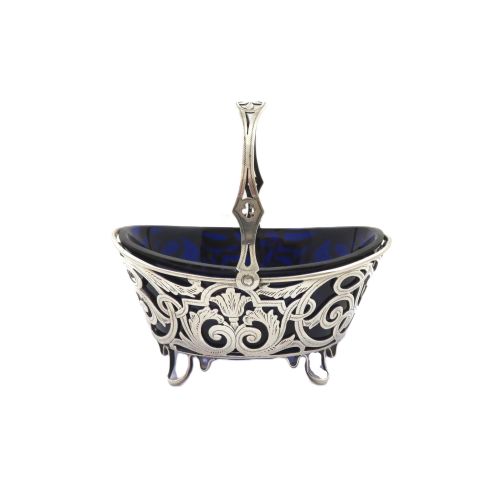
- Metalwork decorated by cutting or piercing open patterns through the sheet silver. This technique lightened baskets, mustard pots and sweet dishes.
- Overlay Glass
- A method where a vessel is formed with multiple layers of coloured glass. Artisans cut through the outer layer to expose the contrasting colour beneath.
- Sugar Basket
- A small handled container used for holding lump sugar during tea service. They often date from the Georgian and Victorian periods with pierced frames.
- Decanter
- A stoppered glass bottle used for serving wine or spirits. Examples paired with metal mounts feature silver necks, stoppers or frames.
Cobalt Blue Glass Silver: Frequently Asked Questions
What are cobalt blue glass silver items used for?
These items served dining and dressing table functions such as holding condiments, serving sugar, storing perfumes or containing wine. Many were designed for daily domestic use among wealthy households.
Over time, their roles shifted from practical dining accessories to decorative display pieces collected for their striking colour contrast.
How do I care for silver mounted glass?
Maintenance requires gentle cleaning of both surfaces separately using appropriate agents that will not harm the glass or abrade the metal. Liners should be removed before polishing the surrounding framework.
Harsh chemical dips must be avoided to preserve original patinas and prevent damage to historical glass bodies.
How can I tell a Georgian piece from a Victorian one?
Dating relies heavily upon hallmarks stamped into the metal mounts, alongside stylistic indicators such as neoclassical piercing or heavier floral casting. Georgian examples often display lighter wirework and simpler frames.
Victorian pieces frequently introduce heavier ornamentation, varied overlay techniques and broader manufacturing centres across Britain and Europe.
Are glass liners usually original to the silver?
Many surviving pieces retain their original blown or moulded liners, which fit snugly into the contours of the metal mounts. Exact matching is confirmed by uniform wear and correct proportions.
Replacement liners are common due to the fragile nature of glass over centuries of domestic service.