



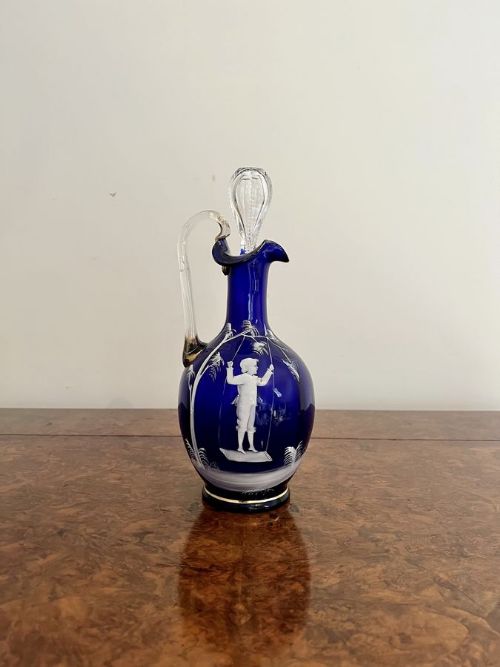
Cobalt Blue Carafe
These cobalt blue carafes are striking glass vessels made for serving wine and spirits, prized for their rich colour and historical presence.
Cobalt Blue Carafe
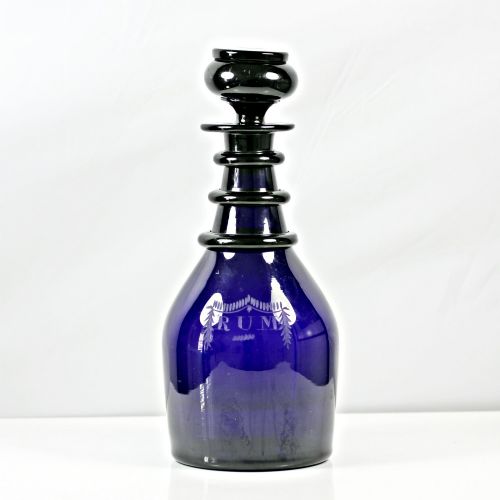
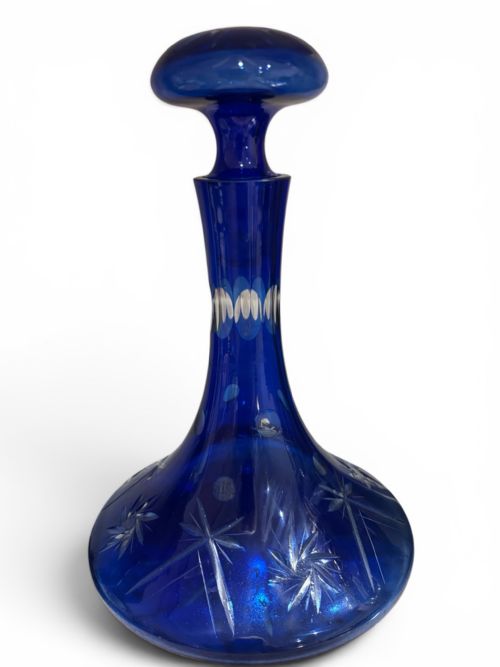
When you search for a cobalt blue carafe, you are examining deep blue glass serving vessels primarily categorised as decanters and bottles across our listings. These pieces span periods from the Georgian era through the Victorian epoch and into the Art Deco style, showing how makers utilised intense colour for table service.
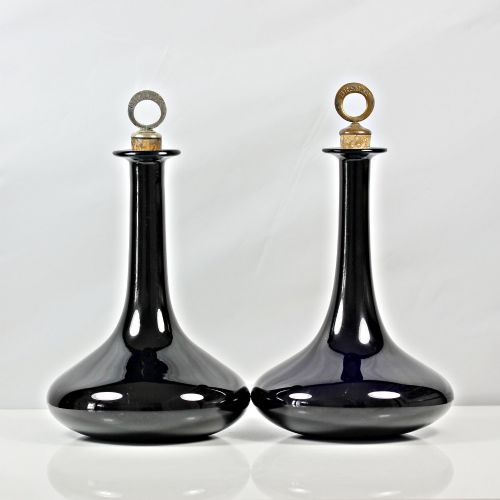
The versions you are most likely to meet on this page include Bristol blue three ring rum decanters, mell decanters, and tall serving bottles fitted with cork, metal, or silver plate necks. Many of these date from the nineteenth century, including specific items from William IV and Scottish Victorian contexts.
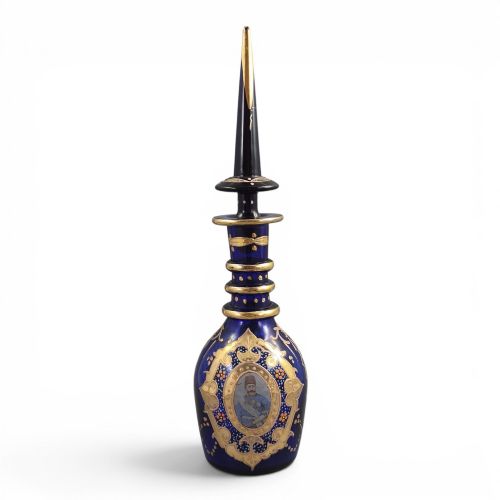
You will also find cross-cultural examples, such as Bohemian enameled cobalt glass decanters produced for the Persian Qajar market during the late nineteenth century. These forms demonstrate the wide geographic reach and stylistic variety associated with cobalt glass production in historic workshops.
Methods and materials in cobalt glass
The creation of a cobalt blue carafe relies on hand-blown glass techniques where metallic oxides impart the characteristic deep blue colour to the molten material. Artisans shaped these vessels freehand or in moulds to achieve traditional forms like the mell decanter and the ringed rum bottle.
Surface ornamentation on these pieces often incorporates applied gold leaf and hand-painted enamel details, particularly seen in Bohemian export wares intended for international markets. Other examples feature functional additions such as fitted cork stoppers and silver plate mounts around the neck.
Cobalt Blue Carafe Retail Price Guide 2026
Typical asking prices for cobalt blue carafe among the pieces listed under this phrase on Sellingantiques today, from the lower quarter to the upper quarter. They describe what is for sale here now, not the wider market.
Some nineteenth-century sailors allegedly preferred ringed decanters so they could hold onto their rum even when the ship rolled.
Assessing quality in antique blue glass
The distinction between standard production and superior examples lies in the depth and clarity of the cobalt glass itself, alongside the precision of hand-blown body forms. Heavier metal content and clean pontil marks indicate careful execution by historic glassblowers.
Surface decoration further differentiates the range, where meticulously applied gold leaf and finely detailed enamel work elevate a simple serving bottle into a notable decorative object. The integration of silver mounts or plated hardware also contributes to the overall distinction of the piece.
The Cobalt Blue Carafe Glossary
- Bristol Blue Glass
- A deep blue lead glass traditionally produced in Bristol during the eighteenth and nineteenth centuries. It was widely utilised for decorative and serving vessels.
- Mell Decanter
- A mallet-shaped decanter with a broad base and tapered neck, commonly used in the nineteenth century for storing and pouring spirits.
- Rum Decanter
- A historic spirit bottle typically distinguished by multiple glass rings or bands around the neck for secure gripping. These rings assist with handling.
- Qajar Era
- A historical period in Persia spanning from the late eighteenth to the early twentieth century. Export items made for this market often combined European glass forms with intricate local decorative styles.
- Enamel
- A decorative glassy substance fused to the surface of glass or metal through firing. It provides colourful painted details on historical decanters.
Cobalt Blue Carafe: Frequently Asked Questions
What is a cobalt blue carafe used for?
These vessels were historically utilised for serving wine, rum, whiskey, and other spirits at the dining table. Their dark glass protected light-sensitive contents from spoilage while offering a decorative presentation.
Today, collectors use them as standalone display pieces or continue to employ them for serving drinks during formal gatherings.
How do I date a blue glass decanter?
Dating relies on observing the vessel form, manufacturing marks such as pontil scars, and decorative styles. Nineteenth-century pieces often feature distinct neck rings and hand-blown asymmetries.
Stylistic cues like Art Deco silver mounts or Victorian enamel patterns help narrow the decade of production when combined with material evidence.
What is Bristol blue glass?
Bristol blue glass is a distinctively rich cobalt-coloured glassware associated with production centres in the English city of Bristol. It gained popularity during the Georgian and Victorian periods.
Its deep hue comes from the addition of cobalt oxide to the glass batch during melting.
How should I clean my antique decanter?
Gentle cleaning with warm water and mild soap is recommended to preserve delicate enamel, gold leaf, and historic glass surfaces. Avoid harsh abrasives and sudden temperature changes.
If the interior requires cleaning, specialised bottle brushes or non-chemical methods help protect the original patina.