


Cobalt Blue Bedside Lamps
Cobalt blue bedside lamps bring deep colour and rich texture to a room, pairing vibrant glazed ceramics with gleaming mounts.
Cobalt Blue Bedside Lamps
Cobalt blue bedside lamps unite vivid glazed ceramics, glass and cloisonné with classical metalwork for tabletop illumination. These pieces take the form of table lamps, often converted from earlier vessels such as vases, apothecary jars and tobacco jars.
The selection here draws primarily upon nineteenth-century French, English and Chinese origins, alongside early twentieth-century examples. Victorian pieces and French styles dominate the available range.
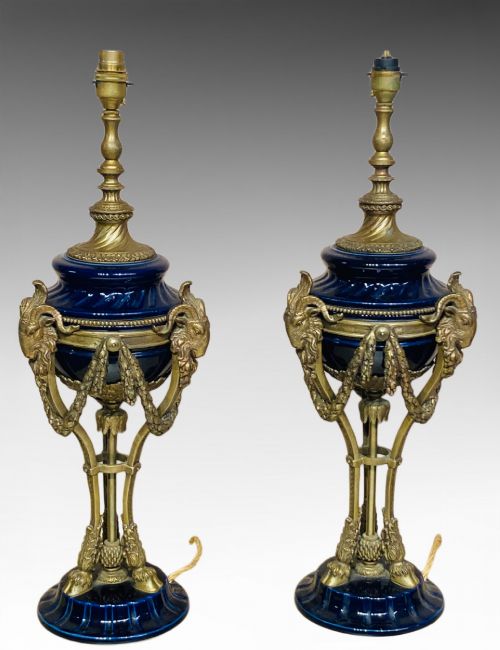
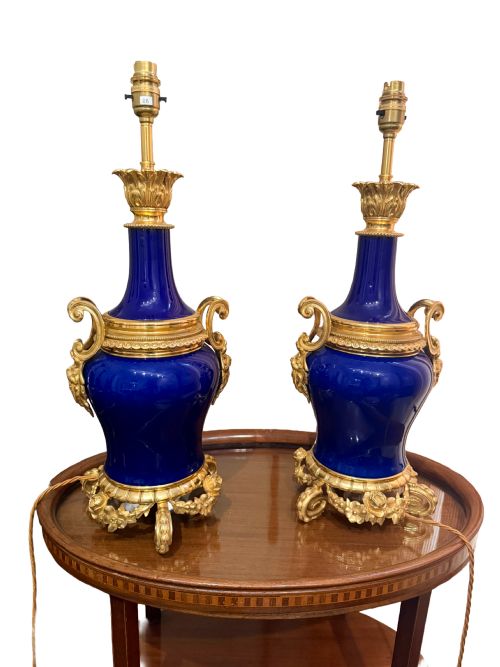
Buyers will encounter both single lamps and matching pairs, frequently mounted on gilt bronze or ormolu bases. Converted antique vessels form a significant portion of these functional decorative objects.
Materials and Construction
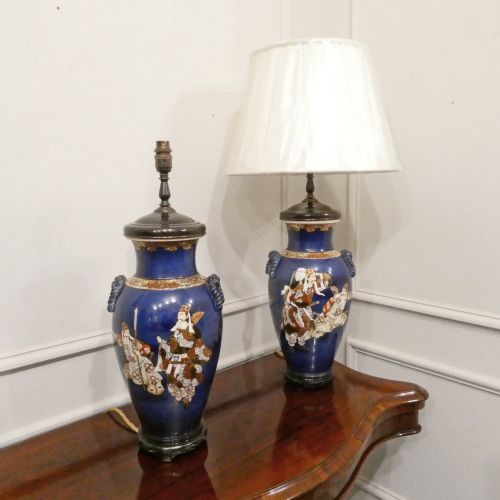
Makers utilised rich cobalt glazes on porcelain, ceramic and glass bodies, combining deep blue tones with hand-painted details. These vessels are frequently fitted with ormolu, gilt bronze or brass mounts that frame the ceramic core.
Conversion from earlier functional objects such as vases, ewers and jars defines the manufacture of many pieces in this group. Metal collars, bases and hardware were added to house electrical or oil-burning fittings while preserving the original decorative body.
Several heavy tobacco jars from the turn of the century now cast a gentle bedside glow.
Standards of Quality
Quality rests upon the crispness of the hand-painting, the depth of the cobalt glaze and the weight of the metal mounts. Finer examples display detailed gilding and clean casting on ormolu components.
The integrity of the original vessel before conversion distinguishes superior pieces from simpler ones. Expert adaptation preserves the proportions and decorative harmony of the base object without damaging its core material.
Royal Doulton·Sevres
The Cobalt Blue Bedside Lamps Glossary
- Ormolu
- Gilt bronze ornamentation applied to furniture, clocks and lamps. This technique involves creating a finely chased bronze mount and coating it with a layer of gold amalgam.
- Cloisonne
- Enamelling technique where thin metal wires form raised barriers on a metallic surface to create compartments filled with coloured paste. These compartments are subsequently fired and polished flat.
- Apothecary jar
- A vessel originally used by pharmacists to store dry drugs, herbs or liquids. When converted, these jars provide substantial ceramic bodies for table lamps.
- Bleu Royale
- A rich cobalt blue ceramic glaze associated with French porcelain production. This intense hue often serves as a backdrop for hand-painted decoration and gilt highlights.
- Ewer
- A large jug with a wide spout and a curved handle, traditionally used for pouring water. Ornamental versions of these vessels frequently become bases for decorative lighting.
Cobalt Blue Bedside Lamps: Frequently Asked Questions
What are cobalt blue bedside lamps made from?
These lamps combine ceramic, porcelain, glass and cloisonne bodies with metal mounts in brass, gilt bronze and ormolu. Many pieces incorporate fabric elements for shades.
The structural foundations often originate from repurposed nineteenth-century vessels, including vases, jars and ewers.
How do you style cobalt blue bedside lamps?
The deep blue glazes and metallic mounts work well against neutral walls or dark wood furniture. Pairs create symmetry on twin bedside tables.
The rich colours complement both traditional interiors and transitional spaces that feature gilt accents.
Are these lamps converted antiques?
Many examples are traditional objects, such as tobacco jars and vases, that have been adapted into functional lighting fixtures. This practice preserves antique ceramics while giving them a new purpose.
Conversion hardware is integrated to support modern electrical components.
How do you date nineteenth century lamps?
Dating relies on the manufacturing characteristics of the ceramic body, the style of the hand-painting and the composition of the metal mounts. French Neoclassical and Victorian motifs provide key period markers.
Markings on the base or glaze style often point to specific decades within the nineteenth century.