



Coat of Arms Art
Coat of arms art brings centuries of heraldry into the home through painted panels, carved wood, and historic textiles.
Coat of Arms Art
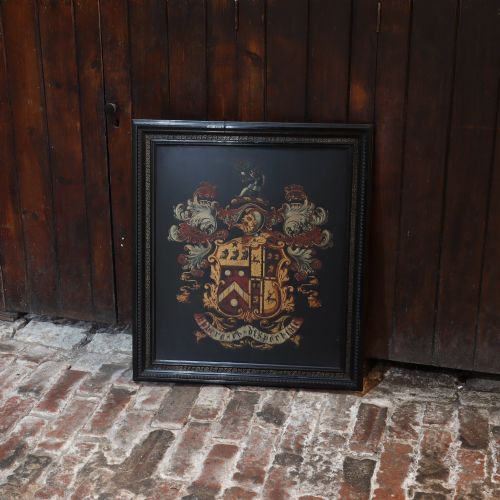
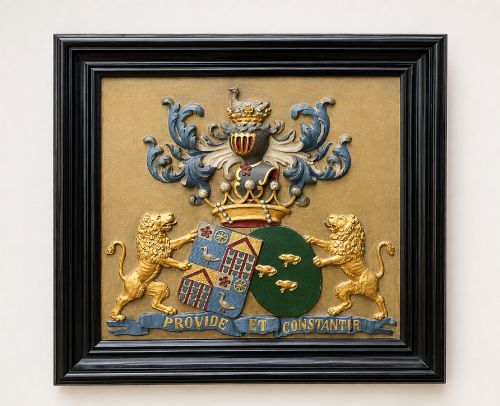
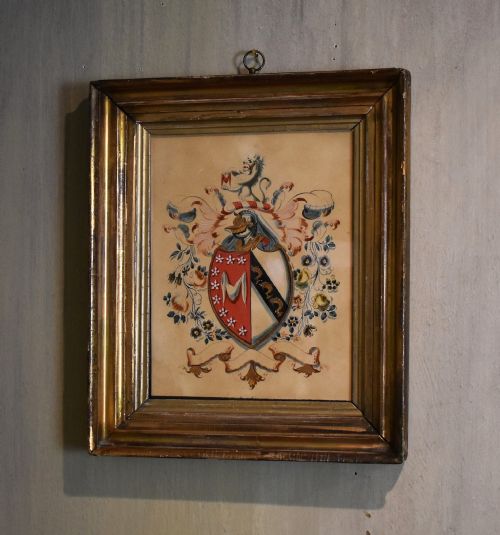
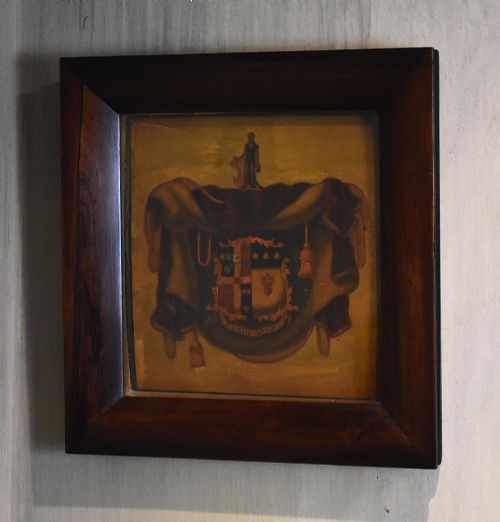
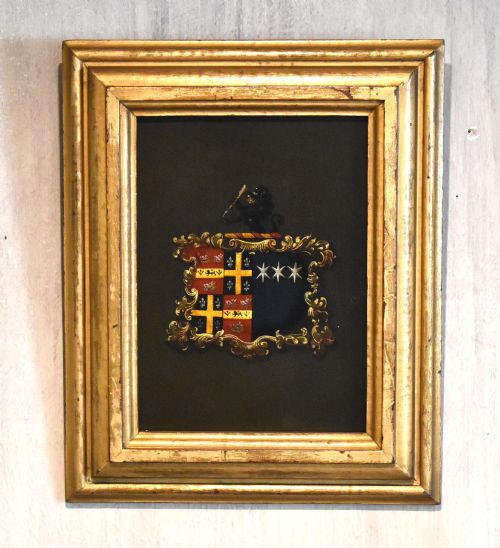
Coat of arms art encompasses wall plaques, paintings, and framed panels that display armorial bearings and historic insignia. These pieces range from substantial 19th-century heraldic panels and coach paintings to smaller decorative plaques and needlework.
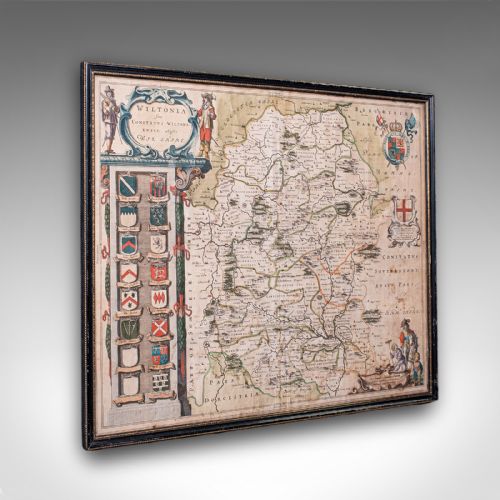
The selection on this page leans heavily toward 19th-century and 17th-century works, often rendered in oil paint, wood, or glass. Buyers frequently encounter framed cartography, portraits with heraldic context, and military commemorative pieces.
Origin and medium define the variety within these listings, stretching from Dutch panels and French faience to British cast iron and carved limewood. Each format reflects the specific period and purpose of its creation, whether civic, military, or domestic.
Materials and methods
Makers utilised traditional supports such as wood panels, canvas, paper, and glass to execute heraldic designs in oil paint and watercolour. Carved elements often employ oak, limewood, or giltwood, sometimes framed in brass or housed within specialised tavolette book cover bindings.
Metals appear through cast iron and bronze plaques, alongside trench art fashioned from German artillery shells marked with British insignia. Textile works rely on needlework and silk embroidery to capture military and commemorative armorials.
The listings feature works spanning the 17th, 18th, 19th, and early 20th centuries, utilising oil paint, needlework, cast iron, and carved wood.
Assessing quality and execution
The integrity of the materials and the survival of the original frame or mount heavily influence the character of the object. Pieces retaining their period framing or original coaching panels command greater visual presence.
Cornelius Johnson·Blaeu·Icilio Federico Joni
The Coat of Arms Art Glossary
- Heraldry
- The system by which armorial bearings and other insignia are devised, described, and regulated. This discipline forms the core subject matter of these artworks.
- Coach panel
- A painted wooden section originally mounted on the side of a horse-drawn carriage to display a family coat of arms. These panels were frequently salvaged and framed as decorative wall art.
- Trench art
- Decorative items made by soldiers, prisoners of war, or civilians from war scrap, such as the marked artillery shells seen in these listings.
- Faience
- Tin-glazed earthenware produced in Europe, represented here through antique French decorative plaques.
- Cartography
- The science or practice of drawing maps, seen in framed antique examples featuring Latin text and heraldic ornamentation.
Coat of Arms Art: Frequently Asked Questions
What is coat of arms art?
Coat of arms art includes historical paintings, carved wooden panels, metal plaques, and textiles that display heraldic shields and family crests. These items served as markers of lineage, civic identity, or military allegiance.
Items range from large painted coach panels and brass-framed oak crests to embroidered military commemoratives and framed maps.
How were heraldic coach panels used?
Coach panels were originally painted directly onto the doors of horse-drawn carriages to display the crest and status of the owner while travelling. When the vehicles fell out of use, these panels were often cut out and framed as wall art.
This practice preserved intricate heraldic painting on wood, which collectors now display as independent decorative panels.
How do I date a heraldic panel?
Dating relies on stylistic clues in the painting technique, the type of wood support, and the construction of the frame or mount. References to specific families, Latin inscriptions, or associated dates inscribed on the piece provide further chronological anchors.
Pieces span multiple centuries, from 17th-century Dutch works to 19th-century Victorian castings and early 20th-century trench art.
Where should I hang a heavy cast iron plaque?
Substantial pieces like Victorian cast iron Royal coats of arms or large bronze plaques require secure wall fixings anchored directly into masonry or heavy timber studs. Given their weight, professional installation ensures the wall and hanging hardware support the load safely.
Positioning them at eye level allows the detail of the casting and the painted or patinated surface to be appreciated clearly.