



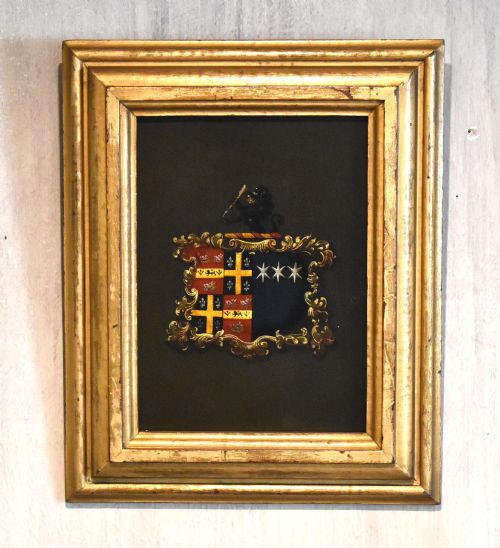
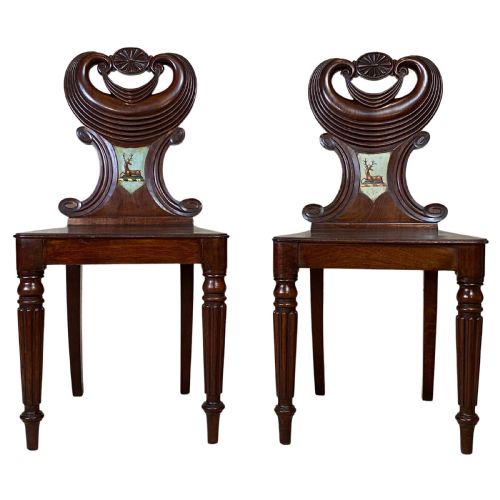


Georgian Armorial Crest
Georgian armorial crest items are heraldic ceramics, silver, and mahogany hall chairs carrying distinguished family insignia that display lineage and status.
Georgian Armorial Crest
When you search for Georgian armorial crest, you encounter items commissioned by elite households to display their heraldic identity. The selection centres on ceramic dinner services, porcelain teacups, silver tableware, and mahogany hall chairs.
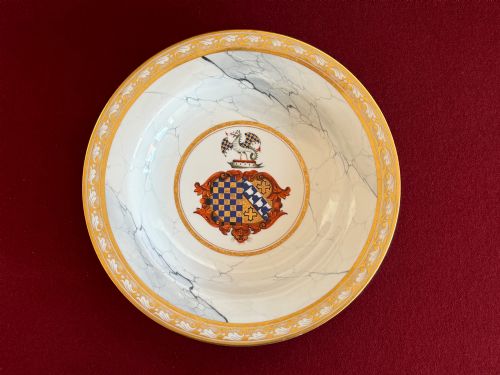
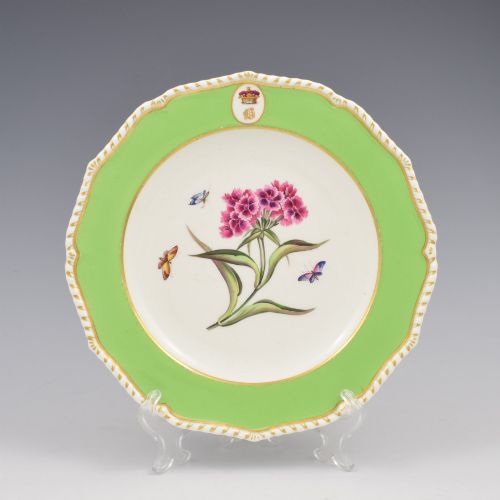
Dinner plates, pudding bowls, and platters in creamware and porcelain form a substantial part of the selection. These tablewares often bear painted or enamelled coats of arms belonging to specific noble families.
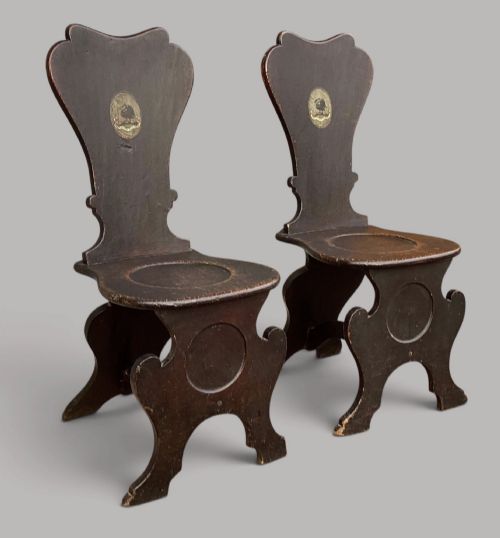
Seating also dominates the offerings, notably mahogany hall chairs from the Georgian and Regency periods. These chairs frequently feature carved wooden armorials or painted crests on their shield-shaped backs.
How they were made
Makers utilised traditional crafts such as hand-painting on porcelain, creamware, and earthenware, alongside polychrome paint on carved timber. Gold leaf often accents the heraldic details on fine dessert plates and porcelain jugs.
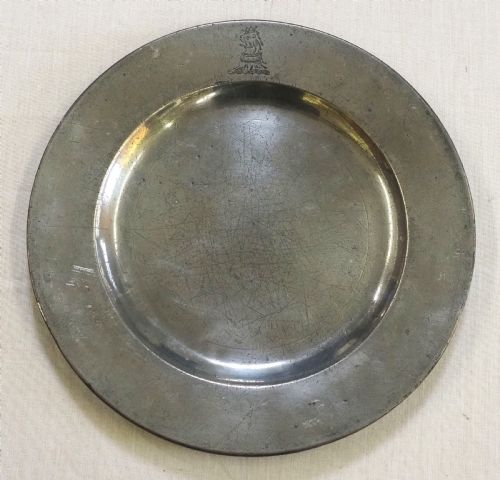
Silver items including snuff boxes, table forks, and marrow scoops demonstrate silversmithing techniques through engraved crests and hallmarks. Old Sheffield plate combined copper and silver layers to produce substantial wine coolers and dinner plates.
Materials range from sterling silver and Old Sheffield plate to mahogany and creamware.
What varies in quality
The precision of the heraldic painting and the depth of the wood carving dictate the visual standard of each piece. Crisp enamelling and well-defined brushwork on porcelain indicate superior workshops.
The importance of the commissioning family and the prestige of the maker elevate certain items. Pieces attributed to notable makers or featuring identified aristocratic provenance command greater interest.
Wedgwood·Bloor Derby·James Spackman·Matthew Boulton·Gillows·Chamberlain Worcester·Flight, Barr and Barr·William Sumner and Richard Crossley·John Hillery
The Georgian Armorial Crest Glossary
- Armorial crest
- The uppermost component of a coat of arms, displayed above the shield and helmet. This motif is painted, engraved, or carved onto silver, porcelain, and furniture.
- Creamware
- A fine earthenware developed in Yorkshire with a pale yellowish-cream glaze. Wedgwood produced notable armorial services in this material during the eighteenth century.
- Hall chair
- A rigid wooden seat placed in a grand entrance hall, constructed without upholstery. Georgian examples often display carved armorials on their wooden backs.
- Old Sheffield plate
- An early fused plating technique where a thin sheet of silver is fused to a thicker copper base. It was widely utilised for dining plates and wine coolers.
- Porcelain
- A white ceramic material fired at high temperatures to achieve a vitreous body. Factories like Worcester and Derby used it for finely decorated armorial tea services.
Georgian Armorial Crest: Frequently Asked Questions
What is a georgian armorial crest?
A Georgian armorial crest is a heraldic symbol belonging to a family, displayed on ceramics, silver, and furniture.
These motifs served to identify elite households and mark their personal possessions.
How were armorial crests applied to ceramics?
Potters painted or enamelled the crests by hand onto the glazed surface before a final kiln firing.
Gold leaf was frequently added to highlight the heraldic details.
Where were hall chairs placed?
Hall chairs stood in the entrance halls of country houses and town residences.
They were designed to display family heraldry to arriving visitors rather than for prolonged comfort.
How do I identify the family?
The painted or engraved coat of arms corresponds to specific genealogical records and heraldic rolls.
Matching the motto, supporters, or crest helps trace the original owner.
Are silver pieces marked?
British silver items carry hallmarks indicating the year of manufacture, town, and silversmith.
These marks help date the armorial engraving accurately.