


Coastal Watercolor Art
Coastal watercolor art captures maritime scenes and shores through delicate pigment washes on paper, offering buyers a direct connection to historic seaside communities.
Coastal Watercolor Art
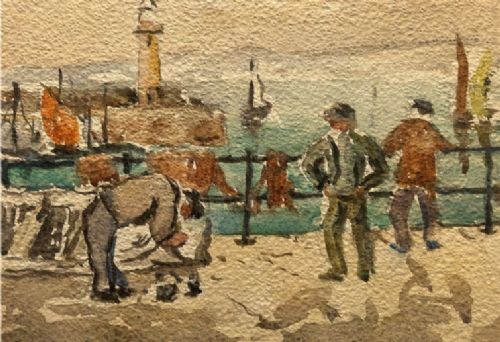
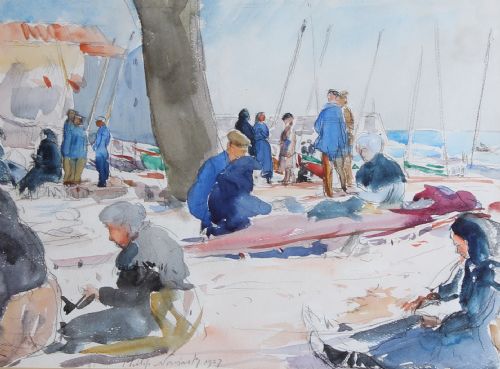
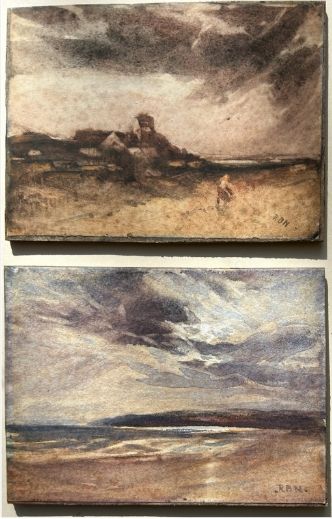
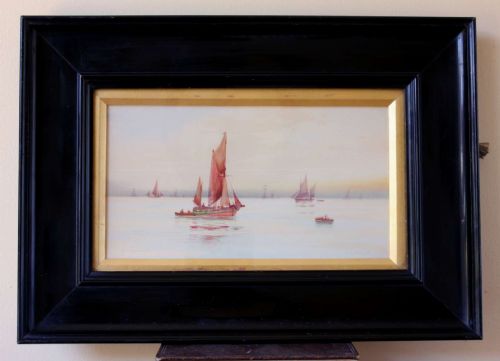
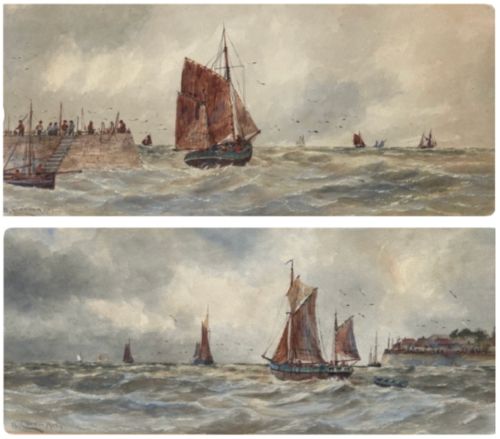
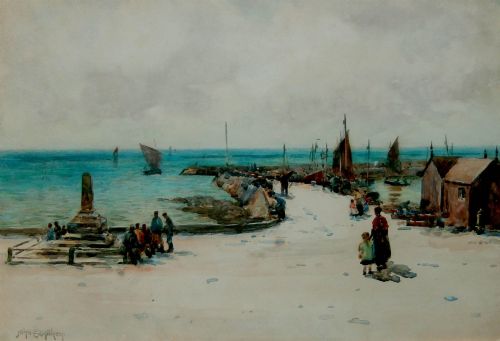
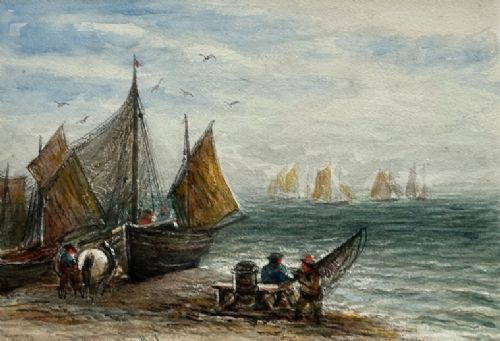
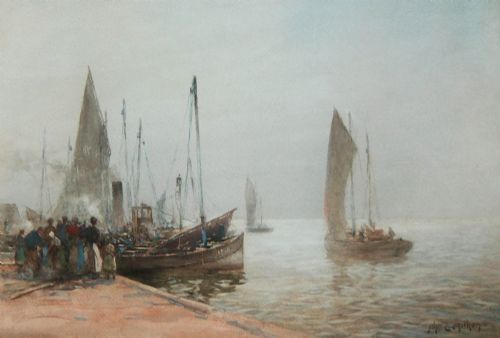
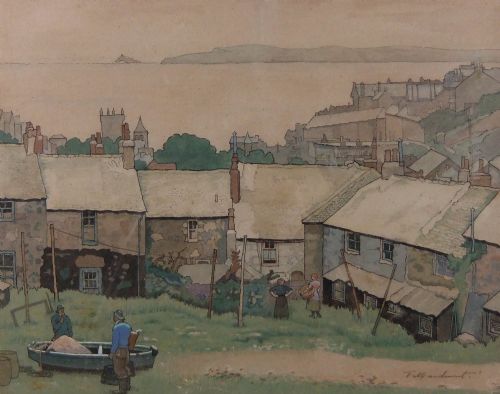
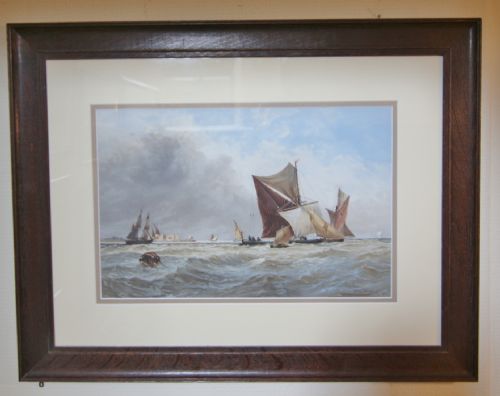
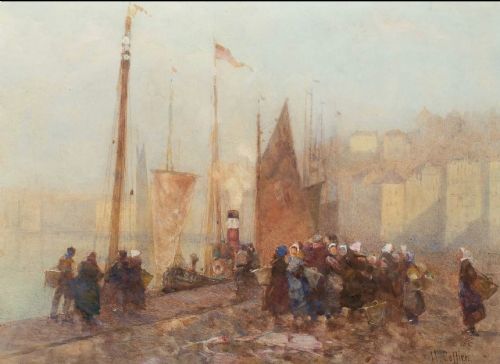
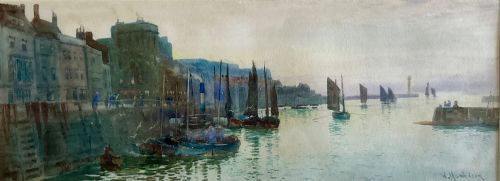
When searching for coastal watercolor art, buyers encounter traditional British and European maritime scenes rendered on paper from the nineteenth and early twentieth centuries. These works frequently depict busy fishing harbours, coastal villages, and sailing vessels operating in locations such as Whitby, St Ives, and various international waters.
The pieces on this page span the Victorian and Edwardian eras through to the mid-twentieth century, showcasing movements including British Impressionism and marine art. The most common versions met here are framed original paintings that focus on local seafaring life, coastal architecture, and tidal estuaries.
Materials and execution
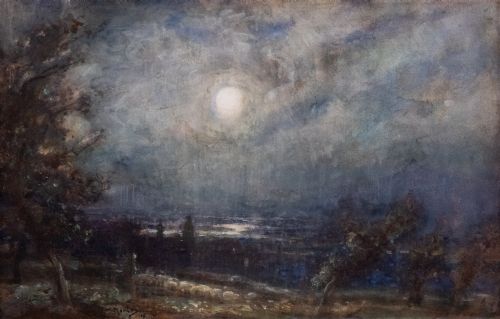
These works are executed primarily in watercolour pigment applied to paper sheets or supports, sometimes incorporating gouache for added opacity and highlights. Artists utilised fluid brushwork to capture transparent effects in water and sky, working en plein air or translating field sketches into finished studio pieces.
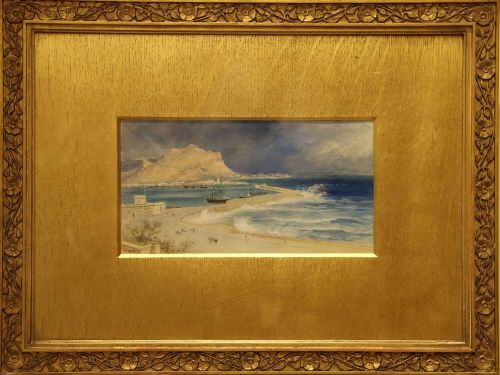
Framing typically involves wood mouldings, occasionally accented with gilt wood or gold leaf, paired with protective glass to shield the delicate paper surfaces from environmental damage.
Coastal Watercolor Art Retail Price Guide 2026
Typical asking prices for coastal watercolor art among the pieces listed under this phrase on Sellingantiques today, from the lower quarter to the upper quarter. They describe what is for sale here now, not the wider market.
Listings feature works from the 19th Century through the 1960s, executed primarily in watercolour on paper with wood and glass framing.
Distinctions in quality
Quality in these watercolours depends upon the sureness of the brushwork, the handling of light and atmospheric perspective, and the artist's ability to render complex maritime subjects convincingly. Superior examples demonstrate confident draftsmanship in the depiction of rigging, architecture, and water movement rather than mechanical rigidity.
Condition and paper preservation also dictate value, with higher-grade pieces retaining their original pigment vibrancy without excessive fading or discoloration from light exposure over the decades.
Philip Naviasky·Robert Buchan Nisbet·James Orrock·William Cannon·James Smetham·James E. Aitken·John E. Aitken·William Banks Fortescue·Thomas William Morley·Hector Caffieri·Thomas Maidment·Thomas Bush Hardy·Alfred G. Morgan·Carlo Ferranti·William Matthison·Henry Barlow Carter·John Moxon·George F Pennington·Alfred George Morgan·Lionel Horsnell·John Bedloe Goddard·Paul Delvaux·Charles William Adderton·Richard Harry Carter·William Lee Hankey
The Coastal Watercolor Art Glossary
- Watercolour
- A painting method in which the paints are made of pigments suspended in a water-soluble vehicle. It provides transparent washes of colour on paper supports.
- Gouache
- An opaque water-based paint consisting of pigment, water, and a binding agent such as gum arabic, often used alongside watercolour to create highlights.
- Works on paper
- A classification encompassing drawings, watercolours, prints, and pastels created on a paper base. These items require careful framing behind glass for preservation.
Coastal Watercolor Art: Frequently Asked Questions
What subjects appear in these watercolours?
These paintings primarily depict fishing boats, harbour docks, coastal cliffs, and maritime activities around British and European shores.
Scenes frequently capture specific locations such as Whitby, St Ives, and various international ports during the nineteenth and early twentieth centuries.
How should I display coastal watercolours?
Watercolours on paper require careful placement away from direct, harsh sunlight to prevent the pigments from fading over time.
Standard framing behind glass protects the porous paper surface from atmospheric moisture and dust accumulation in home environments.
How do I identify the period of a painting?
Dating relies on stylistic clues, artist signature records, clothing styles of figures depicted, and framing materials characteristic of specific eras.
Victorian and Edwardian maritime works often display distinct palette choices and brush techniques associated with late nineteenth-century plein air traditions.
Were these painted outdoors?
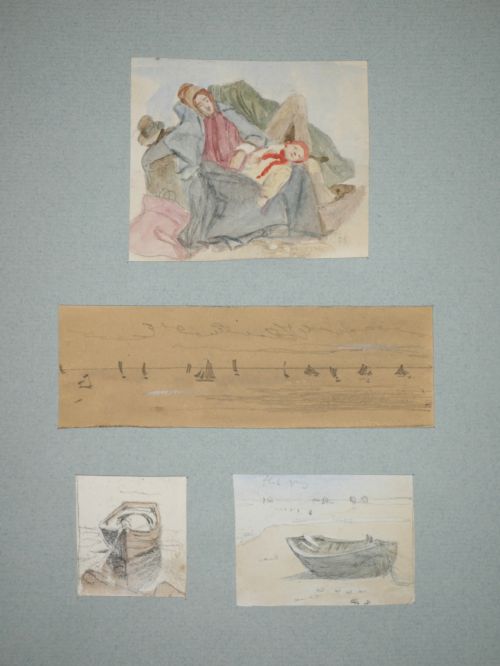
Many marine artists produced initial sketches and direct watercolour studies on location by the shoreline to capture changing light and weather.
Finished works were often developed further in the studio using these field observations and preparatory drawings.