

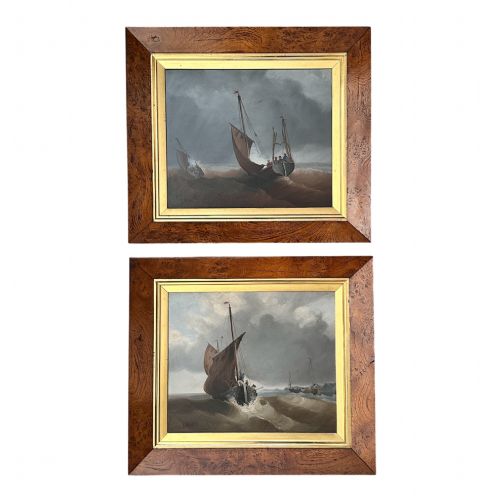
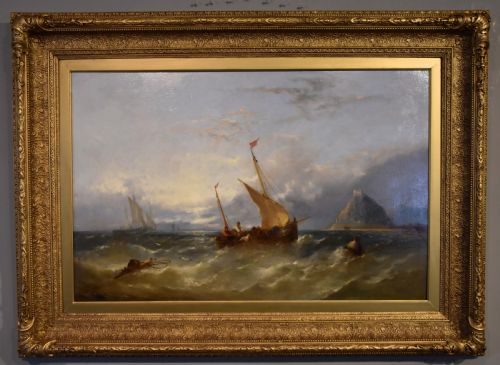
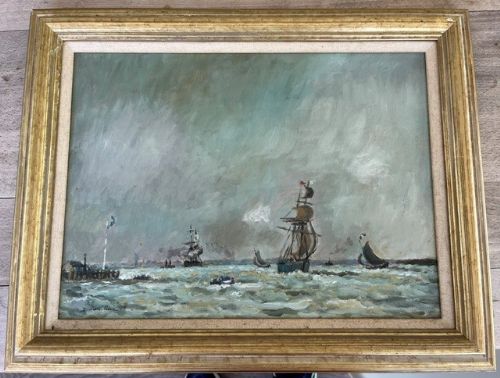
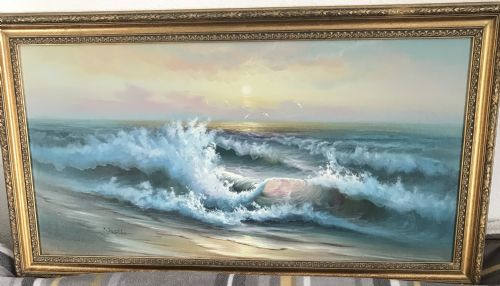


Coastal Ocean Oil Painting
A coastal ocean oil painting captures the restless movement of the sea and the weathered expanse of the shore.
Coastal Ocean Oil Painting
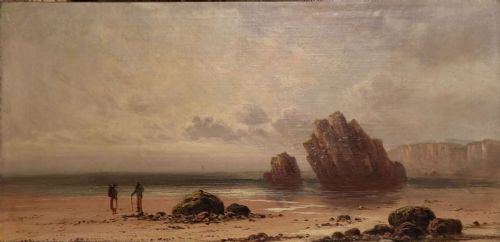
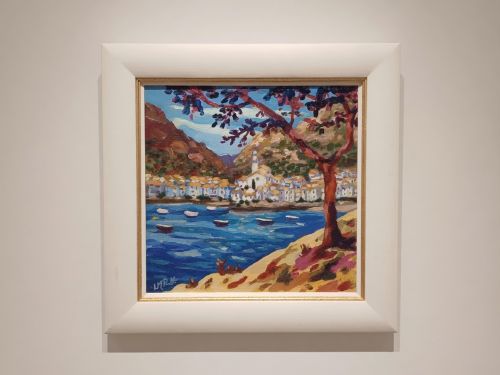
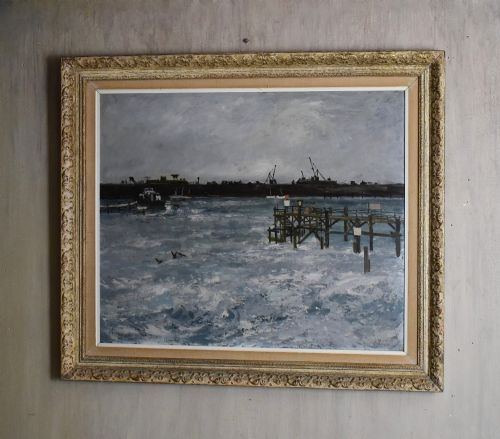
A coastal ocean oil painting represents maritime scenes, rocky beaches, and open waters executed in oil on canvas or board. These works range from nineteenth-century Victorian marine art to mid-twentieth-century British Impressionism and Post-Impressionism.
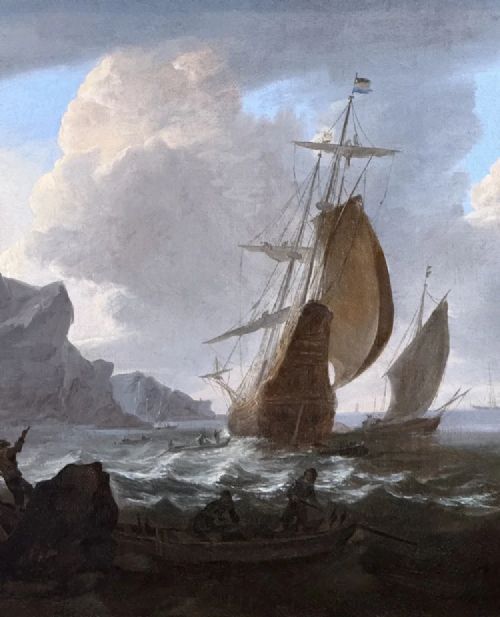
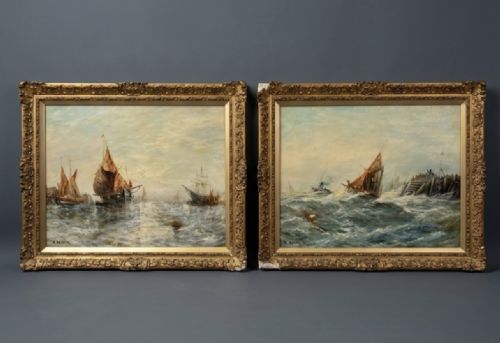
Most pieces encountered on this page date from the nineteenth and twentieth centuries, depicting subjects such as fishing boats off cliffs, harbours, and stormy seas. Common variations include plein air studies of Cornwall alongside framed French and Dutch coastal views.
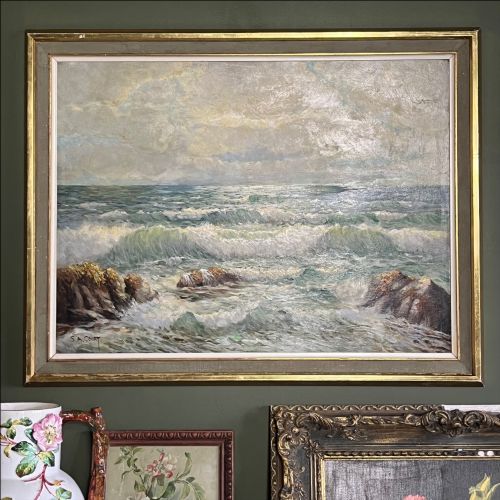
Collectors seek these paintings for their historical documentation of maritime life and their atmospheric rendering of light on water. The works vary from intimate board studies to large canvases housed in original gilt frames.
Materials and technique
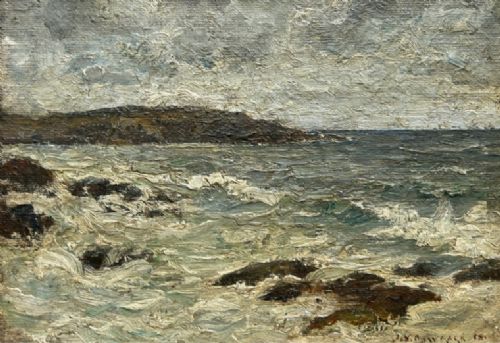
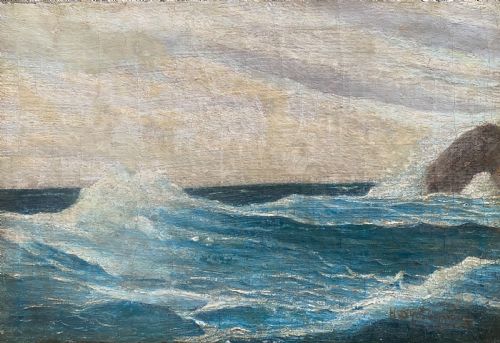
Artists painted primarily with oil paint on stretched canvas or wooden board, frequently applying heavy impasto to build up the texture of turbulent waves and foam. Ground pigments suspended in drying oils allowed painters to blend luminous skies and deep marine tones directly on the support.
Many works incorporate en plein air techniques, where painters worked outdoors directly facing the sea to capture transient light conditions and atmospheric shifts. Canvases were often finished within period wooden frames, occasionally highlighted with gold leaf or gilt ornamentation.
Listings feature works executed in oil on canvas and oil on board across the nineteenth and twentieth centuries.
Assessing quality
Quality rests in the artist's handling of light, atmosphere, and the convincing movement of water rather than the mere recording of topographical detail. Superior paintings demonstrate confident brushwork and tonal harmony that convey the weight and depth of the ocean.
The relationship between the painted surface and its housing influences the overall integrity of the piece, with period gilt frames complementing the composition. Condition of the canvas and stability of the oil paint layer remain central to the integrity of each work.
Clifford Hanney·Sidney A Court·Bonaventura Peeters·Peter Brannan·John Moore of Ipswich·William Henry Williamson·Charles Napier Hemy·Norman Lloyd·Gustave De Bréanski·William Greaves·Charles Malfroy·Abraham Hulk Snr·Charles Sim Mottram·Stephen J Renard·Hendrik Willebrord Jansen·Roger de la Corbiere·Claude Thomas Stanfield Moore·Sir David Murray·John Callow·E Tucker
The Coastal Ocean Oil Painting Glossary
- Impasto
- Paint applied thickly to a canvas or board, standing out in relief from the surface. This technique allows artists to render the physical texture of crashing waves and sea spray.
- Plein air
- Painting outdoors in direct natural light to capture immediate atmospheric effects. Artists using this method completed their marine scenes facing the subject.
- Gilt frame
- A wooden picture surround coated with a thin layer of gold leaf or metallic paint. These frames define the edge of the maritime view and reflect period tastes.
- Sea stack
- An isolated and often vertical column of rock in the sea near a coast. Painters frequently employed these geological formations to anchor the composition of rocky shorelines.
Coastal Ocean Oil Painting: Frequently Asked Questions
What periods do these paintings cover?
The works span from the seventeenth century through the Victorian era and into the mid-twentieth century.
Nineteenth-century examples frequently depict detailed maritime scenes, while later twentieth-century pieces lean towards impressionistic interpretations of light and water.
How were maritime paintings displayed?
These works were traditionally hung in domestic interiors within heavy wooden frames, often finished with gilt or gold leaf.
Original frames frequently survive with the canvas, providing context for how the art was presented in period homes.
Where were these coastal scenes painted?
Artists worked across various European locations, recording specific shorelines in Cornwall, France, Italy, and the Netherlands.
Many paintings document working fishing communities, harbours, and recognizable landmarks such as St Michael's Mount.
How do I care for an oil painting?
Keep the artwork away from direct sunlight and extreme fluctuations in temperature and humidity to protect the canvas and oil pigments.
Dust the surface gently with a soft, dry brush and avoid using liquid cleaners on the paint or frame.