




Coastal Boat Scene Artwork
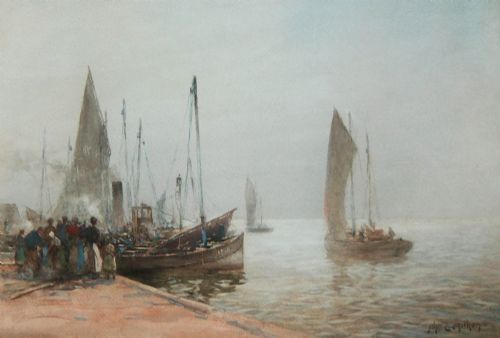
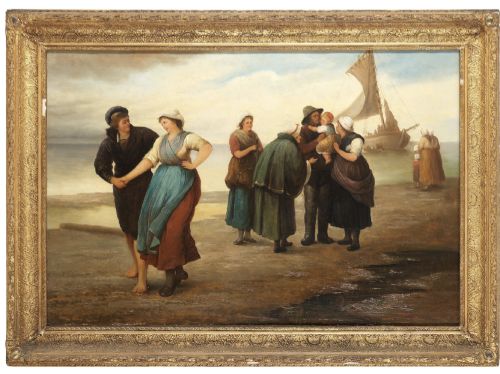
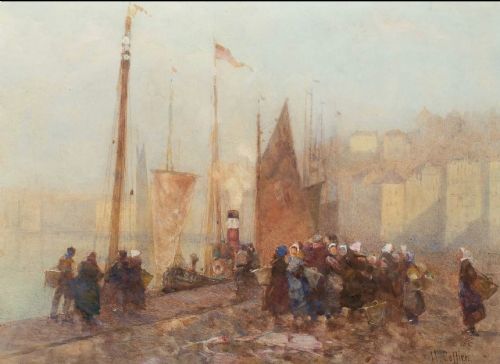
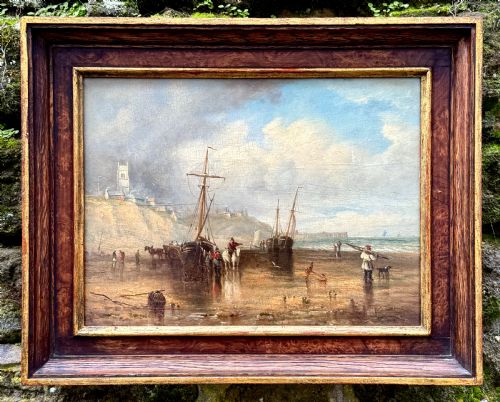
These coastal boat scene artwork pieces capture harbours, fishing vessels and open seas across centuries of painting traditions.
Coastal Boat Scene Artwork
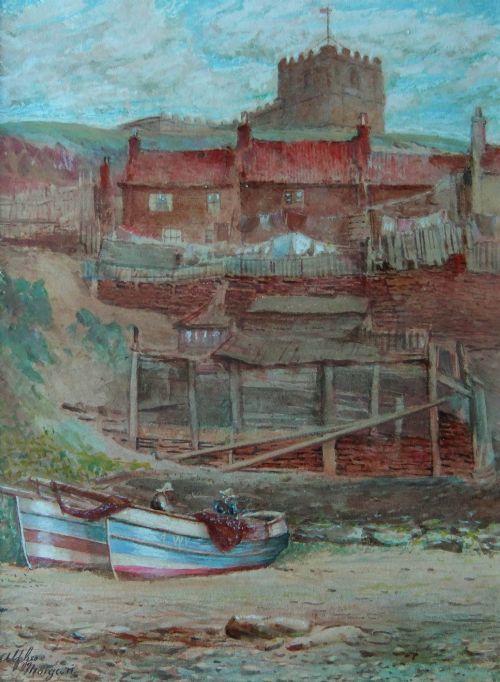
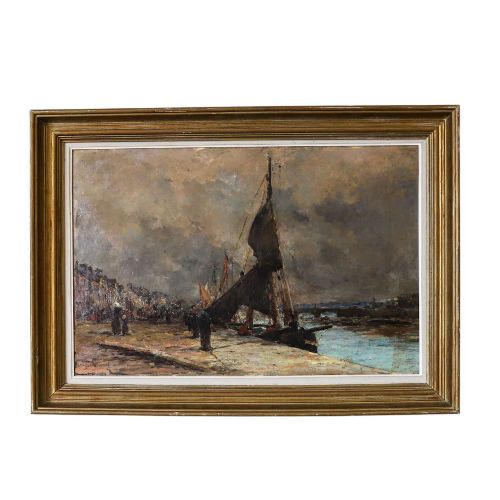
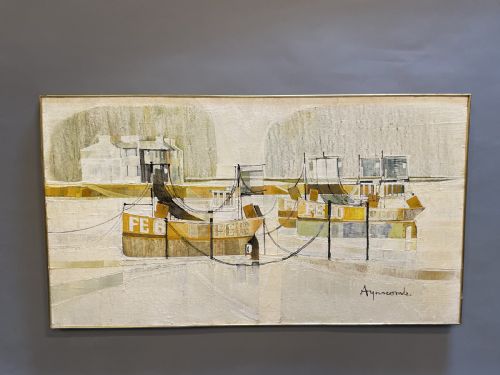
Buyers seeking coastal boat scene artwork encounter framed watercolours and oil paintings depicting harbours, shipping vessels and coastal figures. The selection spans the nineteenth century through to mid-century modern interpretations, documenting maritime life from British shores to European ports.
Most examples originate from the Victorian era and the early twentieth century, taking the form of oil on canvas, oil on board or delicate paper watercolours. These works record historic fishing fleets, tidal estuaries and bustling quaysides observed by period artists.
Materials and techniques
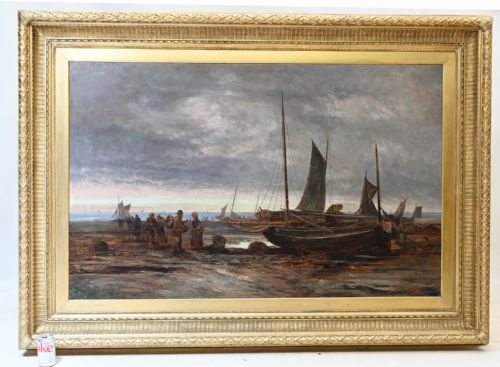
Painters applied oil paint to stretched canvas, wooden board or card to build textured depictions of stormy seas and light on water. Watercolour pigments on paper captured transparent washes for atmospheric skies and harbour reflections.
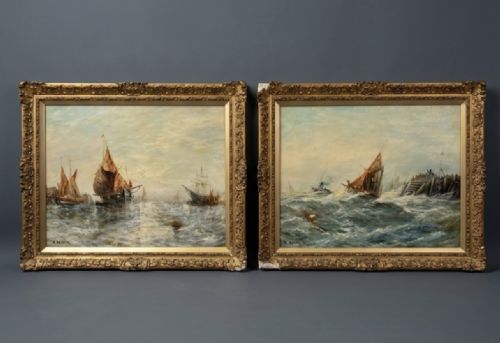
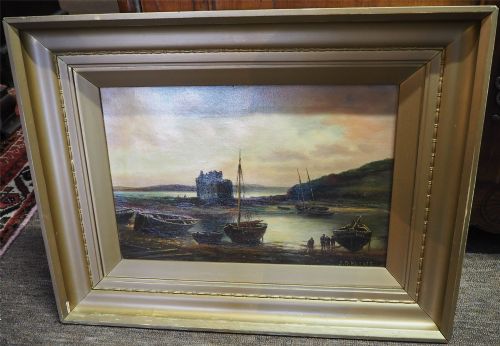
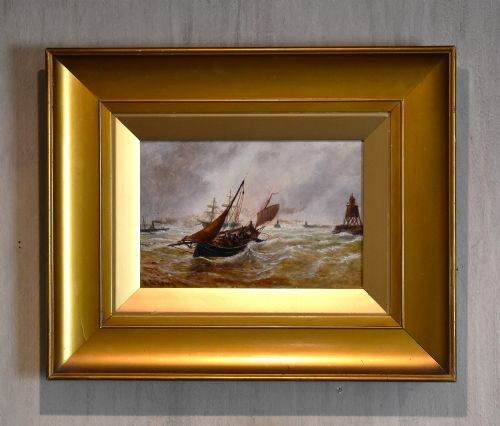
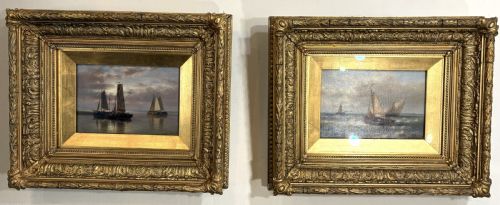
Works are frequently housed in period giltwood frames that complement the maritime subject matter. Support materials range from traditional canvas to heavy paper sheets.
Several artists clearly braved very choppy waters to capture the fishing boats bouncing about on this page.
Factors of quality
Quality rests in the artist's handling of light, movement and maritime atmosphere within the composition. Stronger pieces demonstrate confident brushwork in rendering choppy waves, rigging and coastal architecture.
The integrity of the original support, the preservation of the pigment and the suitability of the period frame contribute to the overall standard of the artwork.
James Orrock·James E. Aitken·Hector Caffieri·Thomas Creswick·Bernard Benedict Hemy·Abraham Hulk I·Paul Delvaux·William Edward Webb·Raymond Picque·William Lee Hankey·Thomas Bush Hardy·Adrian Van Porten·George Gregory·George Morland·Claude Thomas Stanfield Moore·Frederick William Hattersley·Ernest F. Hill
The Coastal Boat Scene Artwork Glossary
- Oil on canvas
- Pigments bound in drying oil applied to a woven fabric support stretched across a wooden frame. This medium allowed artists to build rich textures for turbulent seas.
- Watercolour
- A paint consisting of soluble pigment suspended in a water-based solution, typically applied to paper. It yields translucent washes suited to coastal light and hazy horizons.
- Seascape
- A work of art depicting the sea, ships or coastal views. It forms a distinct genre alongside traditional landscape painting.
- Gilt frame
- A wooden picture surround covered with a thin layer of gold leaf or metallic gilt paint. These frames often match the historical period of the artwork they enclose.
Coastal Boat Scene Artwork: Frequently Asked Questions
How do I date an antique maritime painting?
Dating relies upon stylistic cues, artist signatures, framing methods and the materials used for the support. Canvas types and stretcher construction also provide clues to the decade of creation.
Examining archival records or the artist's recorded working life helps narrow the timeframe of execution.
Where should I hang a coastal artwork?
These paintings suit spaces with consistent ambient light away from direct sunlight to protect pigments and paper supports. Matching the scale of the frame to the wall proportion ensures visual balance.
Pairing them with neutral wall colours allows the marine tones and gilt frames to stand out.
What is the difference between oil and watercolour marine works?
Oil paintings utilise thick, opaque pigments that offer rich texture and deep colour saturation suited to stormy seas. Watercolours employ translucent washes on paper that capture bright coastal light.
Oils are typically heavier and require robust wooden frames, whereas watercolours need glass protection.
Are these paintings original period pieces?
The inventory comprises original works executed by period artists rather than modern reproductions. Signatures, dates and historical documentation help verify authenticity.
Examining the reverse of the canvas or board often reveals historical labels, titles or artist inscriptions.