
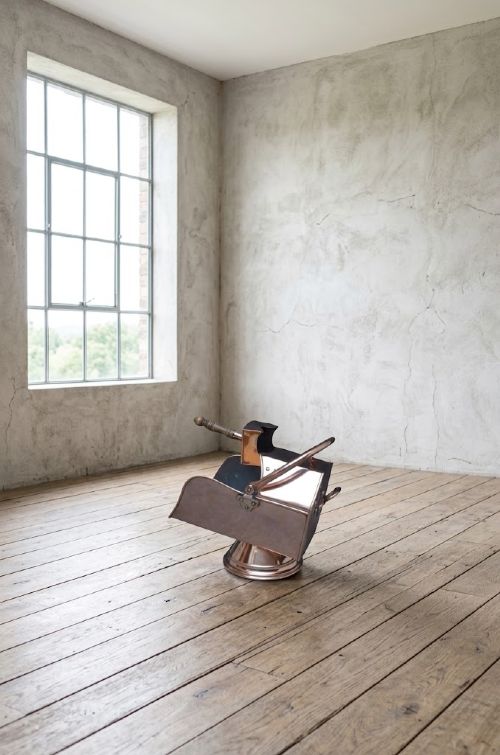
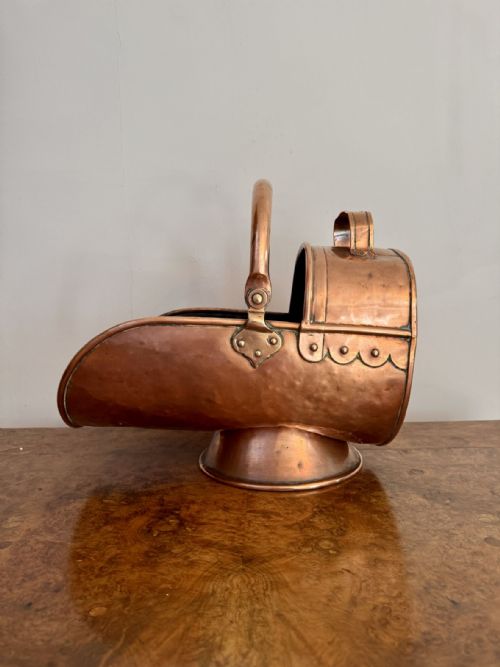


Coal Scoop and Scuttle
These coal scoop and scuttle pieces are robust fireside containers designed to hold fuel, offering period utility and decorative hearth presence.
Coal Scoop and Scuttle
Most pieces date from the nineteenth century, including specific years such as eighteen-sixty and eighteen-eighty, as well as Arts and Crafts and Art Nouveau styles. These functional containers often appear paired with original shovels or equipped with metal liners.
Materials and construction methods
These items rely heavily on durable metals, utilising polished brass and warm copper for helmet and scuttle bodies, sometimes supported by iron or painted toleware. Wooden elements appear in selections like mahogany coal scuttles, which incorporate metal liners to handle active fuel safely.
Craftsmen shaped sheet metal through hand-beating and riveting, attaching handles and rims with mechanical fasteners or soldered joints. Decorative variations emerge from the hammered surfaces of Arts and Crafts pieces and the stylised contours typical of Art Nouveau designs.
Listings span the nineteenth century, including specific years like 1860 and 1880, alongside Georgian and Edwardian examples.
Distinctions in construction and provenance
Quality separates ordinary metal bins from superior examples through the thickness of the brass or copper gauge and the integrity of the riveted joints. Better pieces retain their original matching shovels, robust swing handles, and internal zinc or metal liners without modern replacements.
Stylistic refinement also dictates standing, where restrained Georgian forms and distinctive maker-marked items command greater attention than standard utilitarian versions. The presence of well-executed hand-hammered detailing or crisp period stamping elevates an object within the range.
Benham and Froud
The Coal Scoop and Scuttle Glossary
- Coal helmet
- A traditional metal scuttle shaped with a flared rim resembling a classical helmet, designed to pour fuel cleanly into a fireplace. This form is common among Victorian brass and copper examples.
- Toleware
- Lacquered or enamelled metalware, usually iron, painted with decorative finishes. In this context, it appears on grocery hoppers adapted for household use.
- Metal liner
- A removable inner vessel fitted inside wooden or metal scuttles to contain coal dust and protect the outer structure from moisture and abrasion.
Coal Scoop and Scuttle: Frequently Asked Questions
Did these pieces always come with shovels?
Many period coal scuttles were sold as sets that included a matching metal shovel designed to rest in side clips or brackets. Surviving examples with their original shovels are particularly valued by collectors.
Over the decades, shovels were frequently separated from their primary containers during household moves or replacements.
How do I care for antique brass and copper scuttles?
Metals like brass and copper require gentle dusting and occasional cleaning with appropriate non-abrasive polishes to maintain their finish. Many owners prefer to leave a warm, aged patina rather than achieving a bright, reflective shine.
Keep the interior zinc or metal liners dry to prevent corrosion and protect the structural integrity of the outer shell.
Can I still use these for real coal?
While these vessels were built for solid fuel, modern use depends heavily on the condition of the internal metal liner. Using a protective insert prevents direct contact between moisture, coal dust, and the antique metal.
Many buyers choose to repurpose them as magazine racks, kindling holders, or purely decorative fireside accents.