


Cloisonne Wall Platter
A cloisonne wall platter delivers dense nineteenth-century metalwork and vitreous enamel into a room, bringing birds, dragons and landscapes across centuries.
Cloisonne Wall Platter
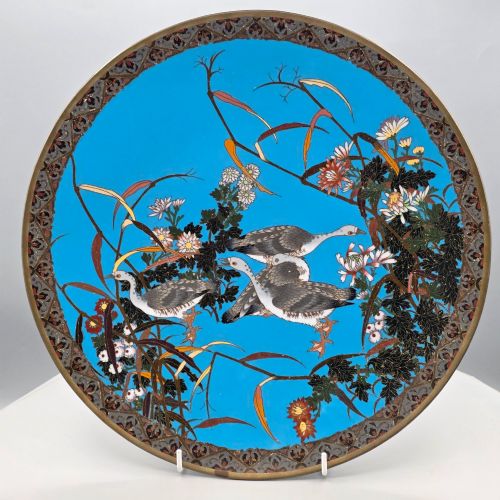
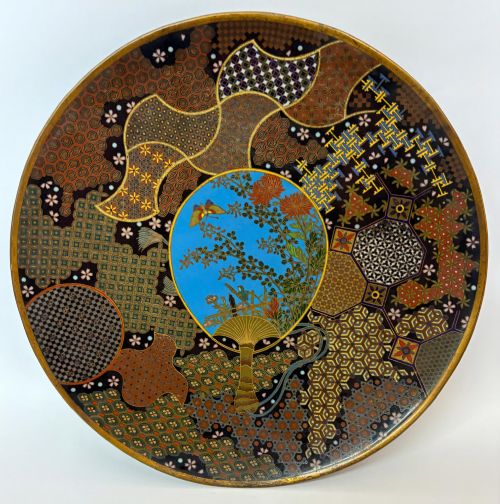
When someone searches for a cloisonne wall platter, they are looking at large decorative chargers, plates and trays originating from Japan during the nineteenth century. The examples met on this page span the Edo and Meiji periods, taking the form of wide circular dishes intended primarily for display rather than service.
Makers shaped these pieces from copper, bronze and porcelain, applying detailed pictorial scenes of dragons, ho-o birds, koi, geese and landscapes. The format ranges from medium plates to huge chargers reaching fifty centimetres across.
Most items belong to the Meiji period, alongside a smaller group from the late Edo period, representing a tradition of metal and enamel craftsmanship focused on wall and cabinet presentation.
How they were made
Artisans constructed these platters by soldering thin brass or copper wire onto a metal or porcelain base to form cellular compartments, known as cloisons. These wires outline intricate subjects such as Mount Fuji, flowers, samurai and phoenixes.
Workers filled the resulting cells with coloured enamel pastes, firing the pieces in kilns before grinding and polishing the surface smooth to reveal the metallic grid. Certain variants utilise porcelain foundations, incorporating totai shippo techniques with simulated tree bark and cinnabar lacquer.
A solitary green frog peers out from among chrysanthemums on one charger, reminding us that nineteenth-century enamelers observed pond life just as closely as dragons.
What varies in quality
Quality rests upon the fineness of the wirework and the discipline of the enamel filling, where tighter grids and complex pictorial subjects separate standard decorative items from masterworks. The ambition of the composition dictates the grade, distinguishing simple geometric border patterns from dynamic scenes of leaping koi or multi-clawed dragons.
The physical scale and weight also influence the tier of the piece, with larger diameters requiring greater technical control during repeated kiln firings to prevent warping or enamel cracking. Presence of signatures and uncommon ground textures like totai shippo tree bark further elevate the standing of an individual platter.
The Cloisonne Wall Platter Glossary
- Cloisonne enamel
- A metalwork technique where fine wire is soldered to a body to create cells filled with vitreous paste. This method defines the primary surface texture of the platter.
- Charger
- A large decorative plate intended for display on a wall or sideboard rather than dining use. These items form the majority of the larger formats available.
- Totai shippo
- A method applying enamel directly onto a porcelain body rather than solid metal. Pieces using this technique often display textured surfaces resembling tree bark.
- Ho-o bird
- A mythical phoenix motif frequently depicted among floral arrangements and clouds. It appears across multiple nineteenth-century charger designs.
- Meiji period
- The historical era spanning from eighteen sixty-eight to nineteen twelve, associated with the expansion of Japanese decorative arts exported to the West.
Cloisonne Wall Platter: Frequently Asked Questions
How do I hang a cloisonne wall platter safely?
These heavy metal and enamel dishes require specialised wall brackets that support the entire rim without putting pressure on the enamel body. Ensure the fixing anchors securely into masonry or wall studs.
Avoid spring-loaded wire hangers that can slip against polished metal or chip the delicate vitreous edges over time.
Were these platters meant for dining?
Nineteenth-century chargers and trays served decorative display roles within interiors rather than everyday dining functions. Their intricate wire boundaries and polished enamel surfaces were designed to catch light from a distance.
Using them for food or liquid will stain the exposed base metals and risk scratching the fired glass compartments.
How do I tell Edo period pieces from Meiji period pieces?
Edo period platters generally date before eighteen sixty-eight and often feature heavier, bolder enamel colour palettes with deep bronze or copper foundations. Meiji pieces from later decades display increasingly refined wirework and microscopic attention to pictorial detail.
Examining the weight, scale of the motifs and the density of the wire grid helps distinguish the working periods.
What is totai shippo?
Totai shippo describes transparent or translucent enamel work applied over a porcelain core instead of solid copper or brass. This allows light to pass through portions of the design, creating distinct depth.
Makers often combined this technique with textured surfaces that mimic natural tree bark.