
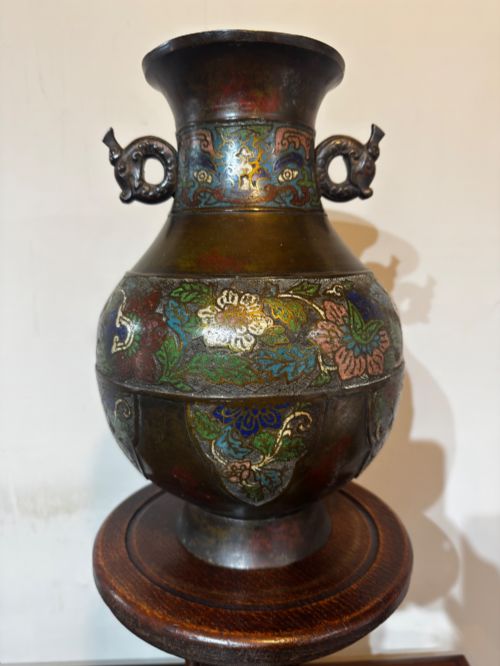
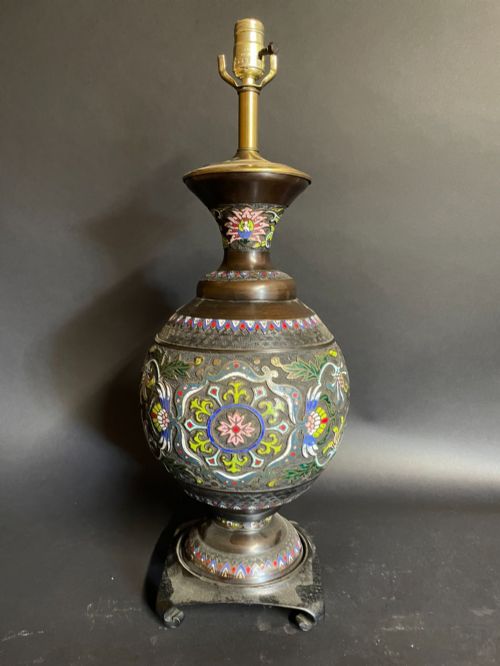


Cloisonne Bronze Vase
A cloisonne bronze vase brings rich coloured enamelwork and cast metal together, offering a striking display piece for any mantel or table.
Cloisonne Bronze Vase
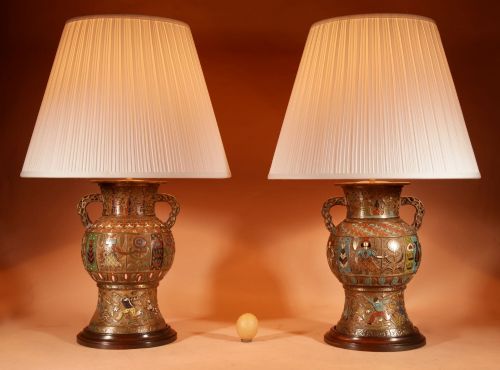
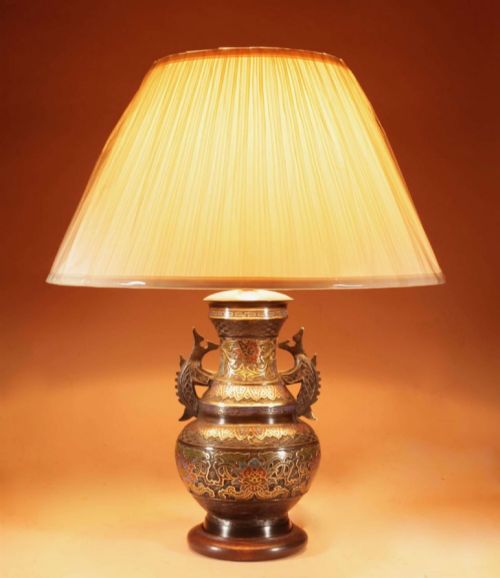
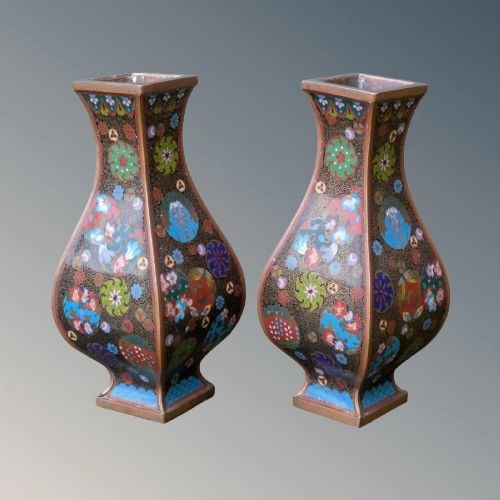
A cloisonne bronze vase combines metal casting with delicate vitreous compartments, appearing in forms such as ginger jars, lamps and urns across this selection. These pieces originate predominantly from the nineteenth century and the early decades of the twentieth century, reflecting both Japanese Meiji and Chinese Qing traditions alongside French interpretations.
Buyers will most frequently encounter nineteenth-century examples and 1900 pieces, often shaped as pairs or adapted later into table lamps and candelabra. The selection spans miniature vessels to large scale decorative works featuring koi and geometric patterns.
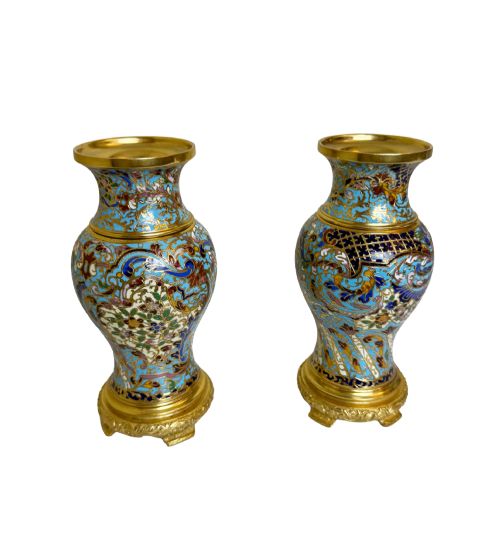
Originating from diverse cultural workshops, these vessels range from archaic Japanese bronze forms to Chinoiserie and 19th Century French or Ormolu mounted designs. Each piece demonstrates how metalwork styles travelled and adapted across different global markets during the late Victorian and Edwardian eras.
Determining Quality
The precision and thinness of the wirework define the initial tier of workmanship, where tighter, more complex geometric or pictorial cells require greater skill from the artisan. Finer pieces display uniform enamel depth without pitting or cloudiness within the coloured fields.
The weight and finish of the underlying bronze or gilt metal structure dictate the overall substance of the object, distinguishing heavier, robust castings from lighter utilitarian items. Mounts, such as ormolu fittings or integrated handles, also demonstrate the level of craftsmanship invested in the secondary elements.
Listings feature pieces spanning the 1880s through the 1930s, incorporating bronze, brass, copper, and gilt bronze materials.
The Cloisonne Bronze Vase Glossary
- Cloisonne Enamel
- A technique where metal wires are soldered to a metal body to create cells filled with enamel paste. These compartments keep distinct colours separate during the high temperature firing process.
- Champleve
- A method where troughs or cavities are gouged directly into the thick bronze surface rather than building wire walls on top. These recessed channels are then filled with vitreous enamel and polished flush.
- Ormolu
- Gilded bronze furniture or vessel mounts popular in nineteenth-century European decorative arts. This finish adds a bright golden contrast to darker patinated bronze bodies.
- Meiji Period
- The era in Japanese history spanning from 1868 to 1912, known for exceptional metalworking and enamel exports. Pieces from this time often feature naturalistic motifs such as koi fish and flora.
- Ginger Jar
- A high-shouldered ceramic or metal vessel originally used for storing spices, later adapted purely for decorative display. They frequently include matching fitted lids in these collections.
Cloisonne Bronze Vase: Frequently Asked Questions
How do I clean a cloisonne bronze vase?
Dust the surface gently with a soft, dry microfibre cloth to remove everyday particles without disturbing the delicate wire and enamel planes.
Avoid using liquid chemical cleaners, polishes, or abrasive cloths, as these substances can damage the vitreous enamel or strip the original bronze patina.
Were these vases used for holding water?
Many of these vessels functioned primarily as decorative display items rather than utilitarian flower holders due to their internal construction and antique status.
Using them with water can seep into joints or older repairs, so placing a discreet inner liner inside is recommended if fresh stems are required.
How do I distinguish Chinese from Japanese pieces?
Chinese examples often utilise heavier bronze bodies with dense, traditional motifs and rich turquoise ground enamels rooted in Qing styles.
Japanese Meiji period works typically display finer, more naturalistic pictorial details, such as swimming koi, executed with meticulous wire placement.
Can I convert a vase into a lamp?
Numerous historical pieces arrived already mounted or adapted as table lamps and candelabra during the late nineteenth and early twentieth centuries.
If converting an un-drilled vase, consult a professional restorer to ensure the wiring process does not compromise or drill through the antique bronze body.