
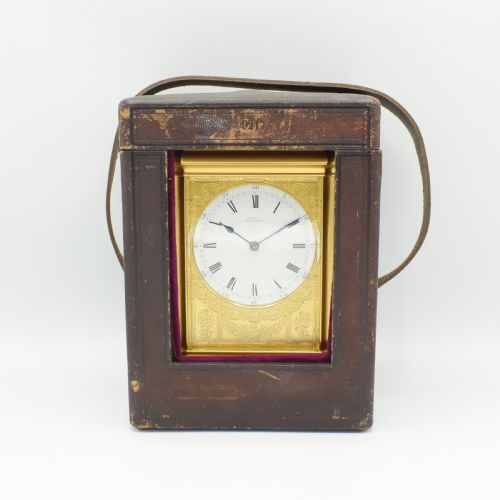
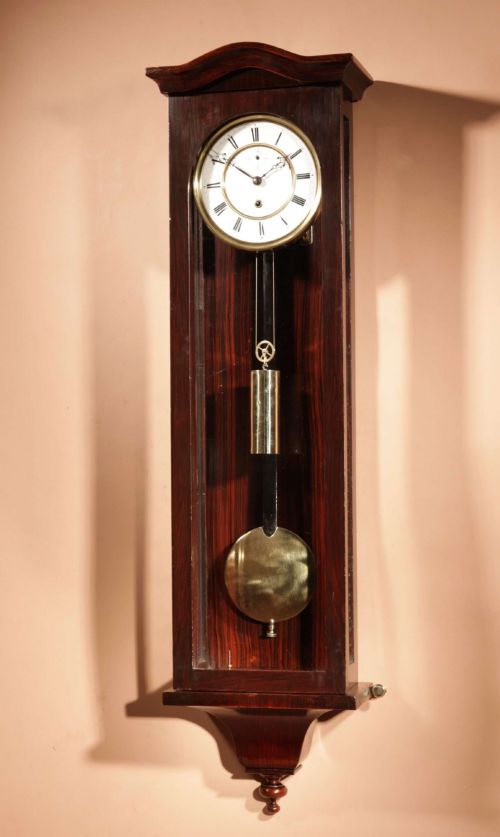
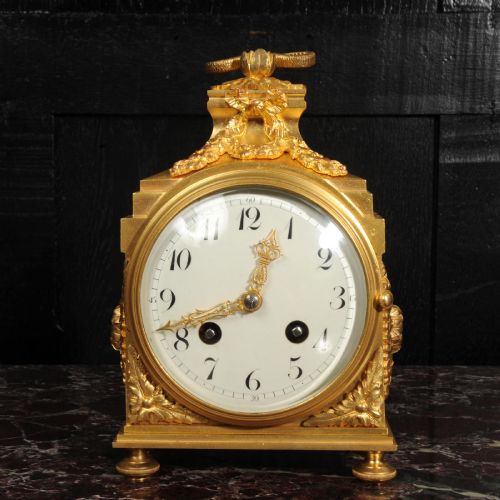
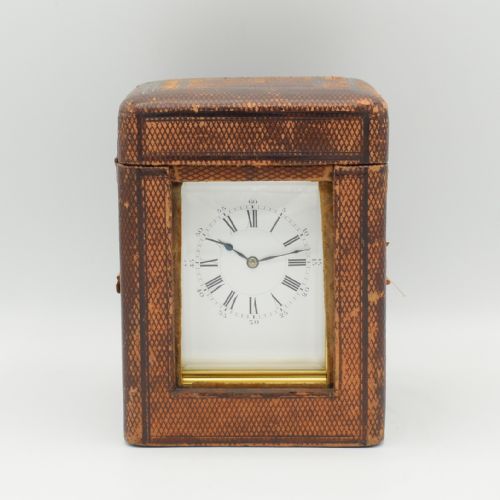
Clock with Enamel Dial
A clock with enamel dial offers the crisp legibility and refined craftsmanship that collectors prize in domestic horology.
Clock with Enamel Dial
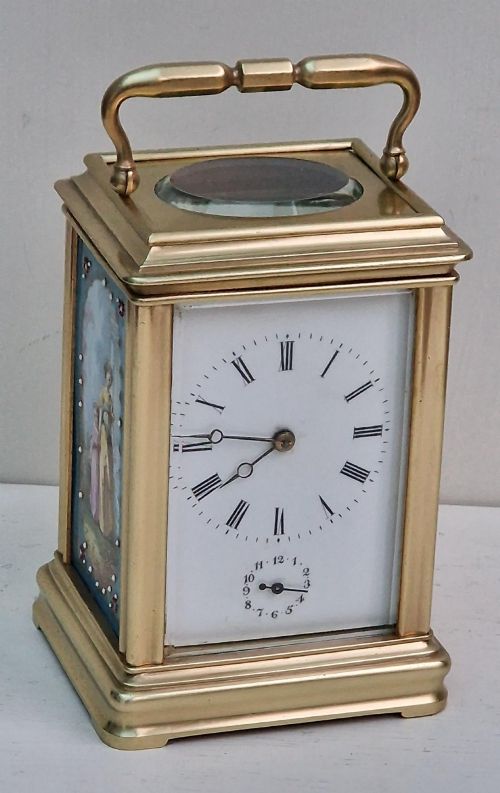
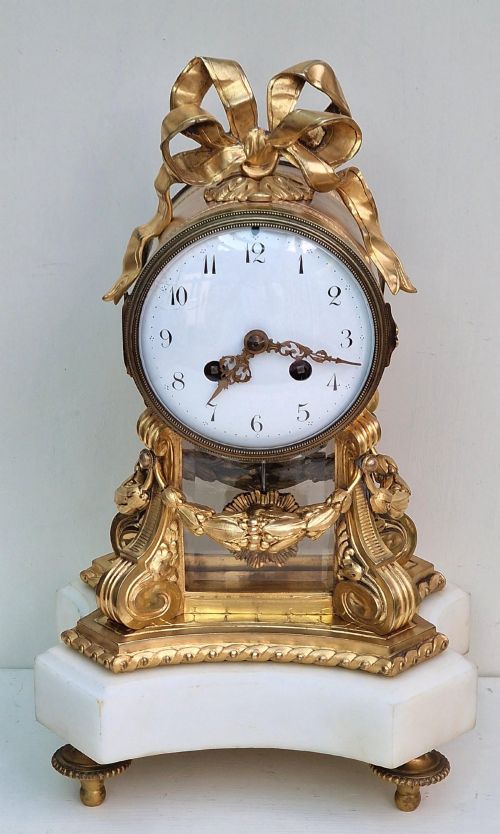
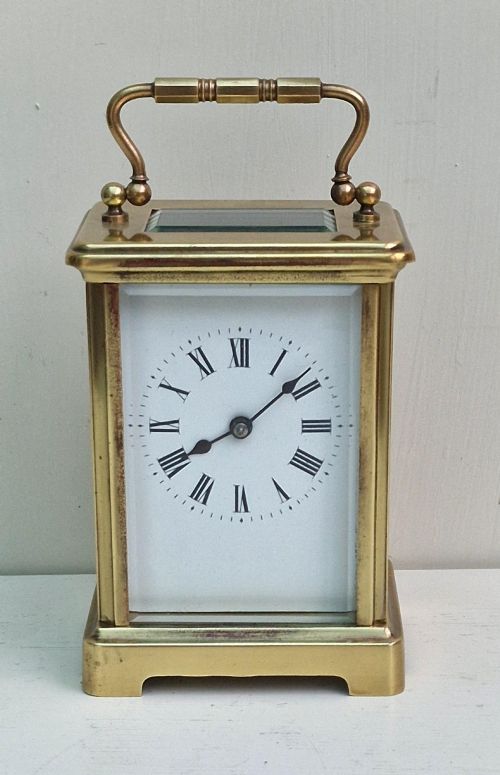
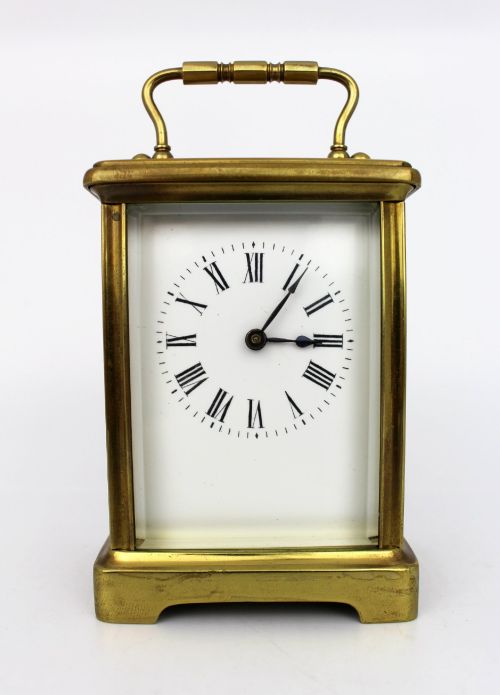
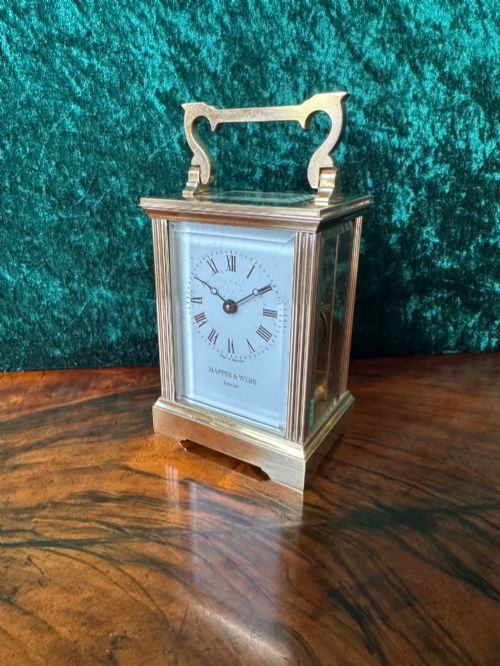
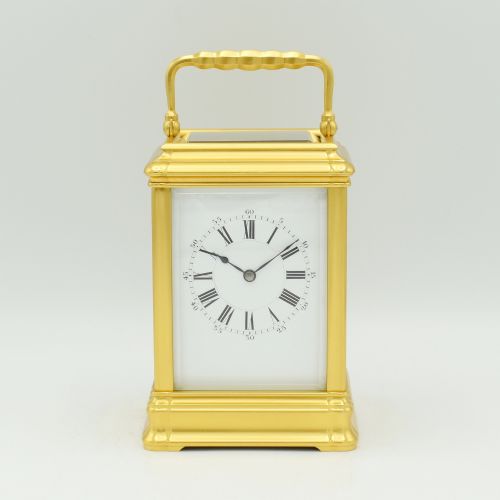
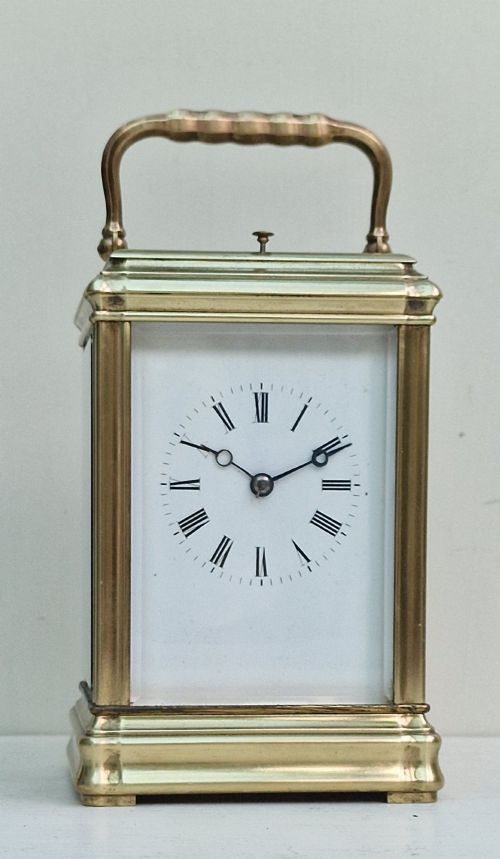
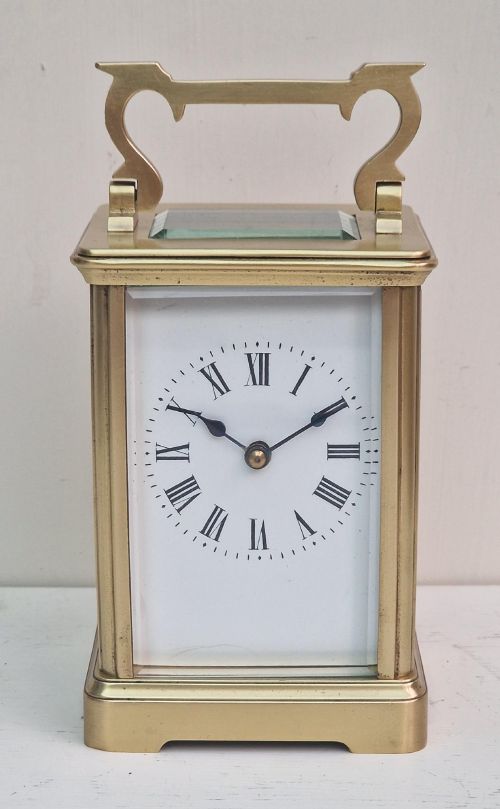
A clock with enamel dial spans several centuries of domestic timekeeping, bringing together mechanical precision and decorative arts. When you search this phrase, you encounter portable carriage pieces, architectural wall regulators, and substantial mantel timepieces from British and continental workshops.
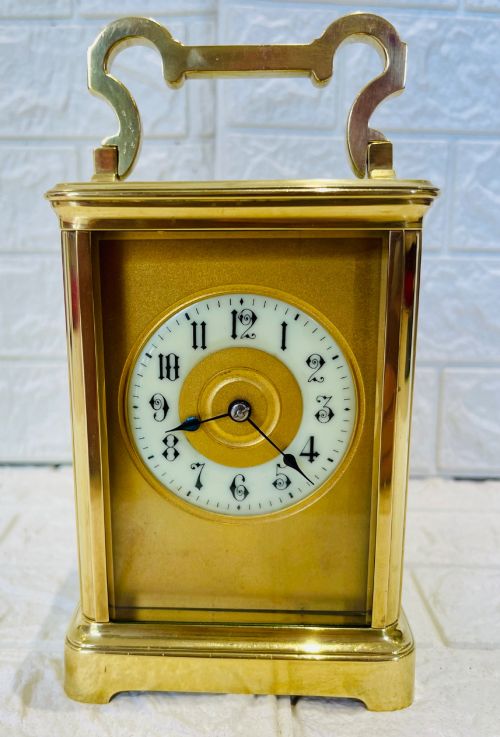
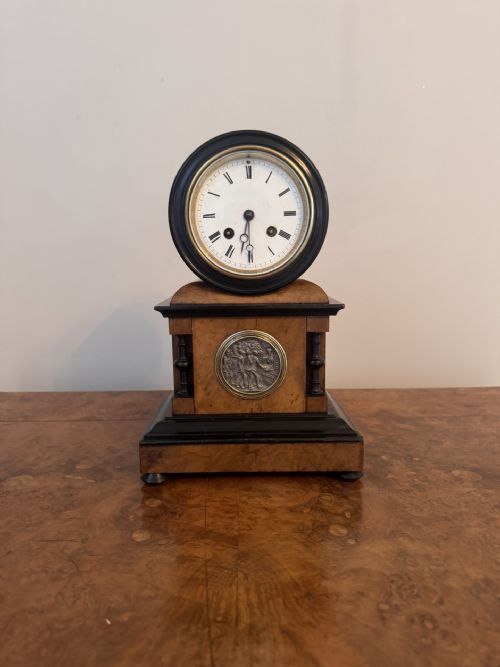
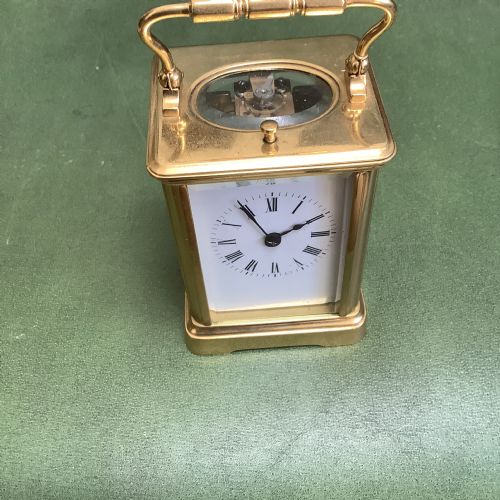
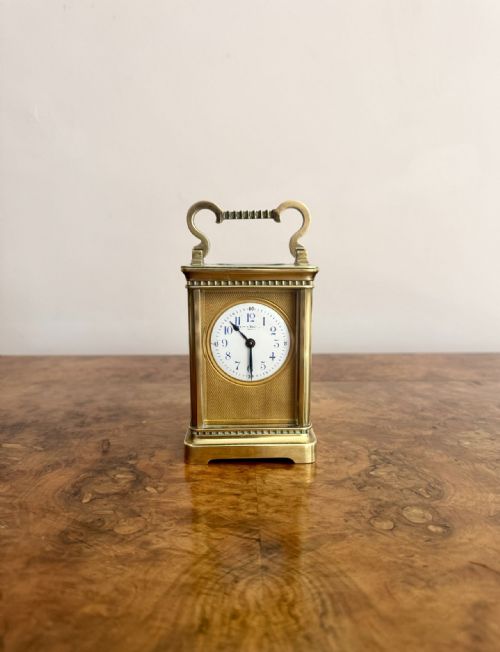
The most common examples on this page are nineteenth-century French carriage designs housed in brass and glass cases, alongside Victorian mantel clocks. These items served both practical daily use and ornamental display in period drawing rooms and offices.
How they were made
The casing relies on durable metals such as brass, gilt bronze, ormolu, and timber frames including mahogany, walnut, and ebonised wood. Glazing protects delicate mechanisms while allowing visual access to the movement.
Dial faces utilise vitreous enamel fused to metal bases, providing a smooth white ground for painted numerals. Movements incorporate mechanical brass gears, escapements, and pendulum or spring drives.
Listings feature brass, gilt bronze, ormolu, and mahogany casings housing vitreous enamel dials across Georgian, Victorian, and Edwardian periods.
What varies in quality
The distinction between standard production and top-tier horology rests on the sophistication of the movement and the signature of the maker. Complications like repeat striking, alarm functions, and moon-phase indicators elevate a piece significantly.
Casing materials and decorative details also set items apart. Hand-painted miniatures, fine ormolu mounts, and original leather travel cases distinguish exceptional survivals from simpler standard models.
Henri Jacot·Pickford of London·Gontard and Bolviller Paris·Leon Message·Jollet et Cie·Paul Garnier·Jn Wright Linton·Valiant Paris·Bellenot Paris·Drocourt·Morse London·John Ellicott
The Clock with Enamel Dial Glossary
- Enamel dial
- A clock face made by fusing powdered glass to a metal substrate at high temperature. This creates a glossy, durable surface that resists fading.
- Carriage clock
- A small, portable spring-driven timepiece designed for travel, typically fitted with a carrying handle and glass panels. They often feature lever escapements.
- Escapement
- The mechanical linkage that controls the release of gear train energy to regulate timekeeping. Examples include platform and pinwheel variants.
- Sonnerie
- A striking mechanism that sounds the hours and sometimes quarters automatically as they pass. Petit sonnerie strikes quarters on the quarter-hour and hours on the hour.
- Ormolu
- Finely ground high-carat gold applied to a bronze base using a mercury amalgamation technique. It provides a rich, enduring metallic lustre on decorative clock mounts.
Clock with Enamel Dial: Frequently Asked Questions
How do I wind a carriage clock?
Most carriage clocks use a key inserted into arbors at the base or backplate of the movement. Turn the key gently until resistance indicates the mainspring is fully tensioned.
Avoid overwinding, as this places undue strain on the internal springs and can damage the historical mechanism.
What is a repeater mechanism?
A repeater mechanism allows the clock to strike the last elapsed hour or quarter-hour on demand when a button or lever is pressed. This was particularly useful for telling time in the dark before electric lighting.
Such additions require complex gear trains and mark the piece as higher status.
How are periods identified?
Periods are determined through stylistic cues, case materials, escapement types, and maker signatures. Victorian and Edwardian examples often show distinct revival styles or industrial adaptations like ship bulkheads.
Comparing dial fonts and movement architecture against known dates helps confirm the era of production.
Where should I place a mantel clock?
Position these clocks on stable, level surfaces away from direct sunlight, moisture, and extreme temperature fluctuations. Wooden mantelpieces or sturdy sideboards provide ideal support.
Ensuring the surface is level is crucial for the escapement to beat evenly and keep accurate time.