


Clerical Portrait Art
Clerical portrait art comprises historical depictions of church figures, theologians, and religious leaders, offering collectors a direct link to centuries of ecclesiastical history.
Clerical Portrait Art
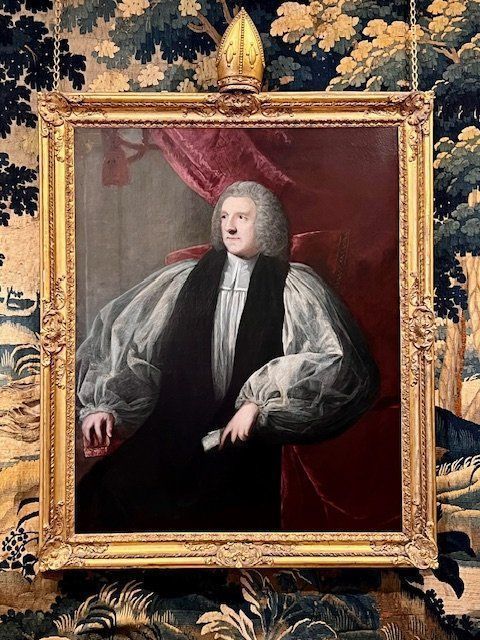
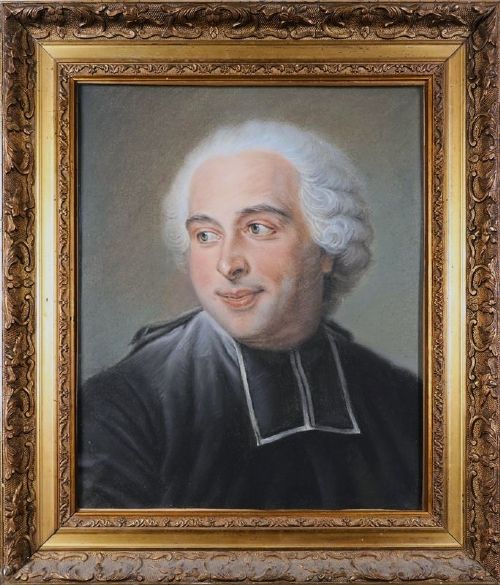
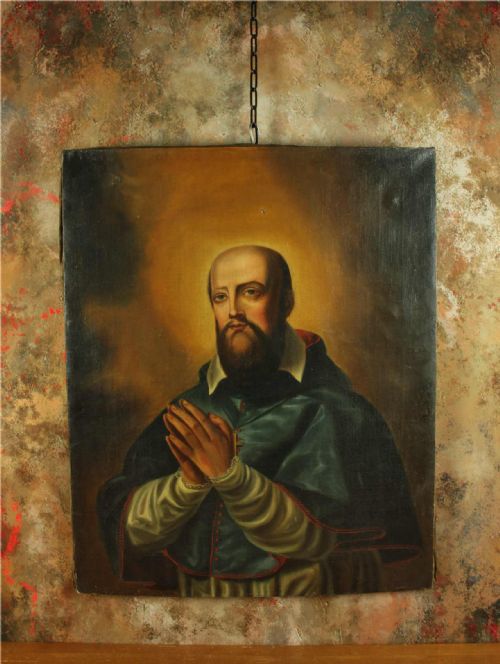
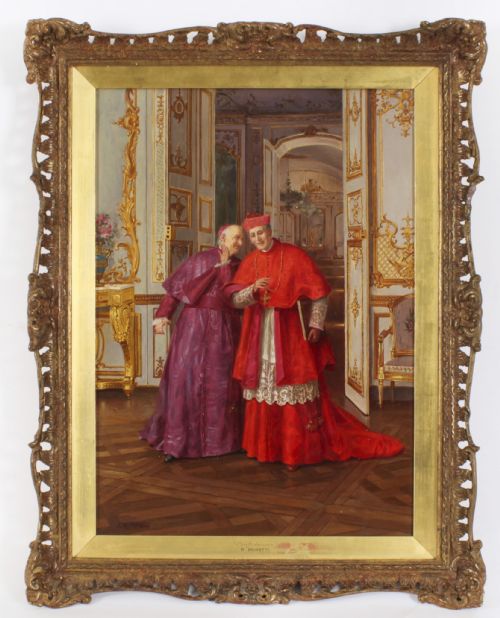
Clerical portrait art encompasses depictions of archbishops, cardinals, bishops, ministers, and scholars rendered across multiple centuries. These works range from grand representations of high-ranking church officials to intimate studies of local clergymen and theologians.
The selections span numerous periods, notably the 17th, 18th, and 19th centuries, capturing shifts in aesthetic ideals from Italian Baroque and Georgian traditions to Victorian and Edwardian academic realism. Buyers frequently encounter oil paintings on canvas and panel alongside watercolours and pastels.
Portraits often record specific historical personages, church founders, and Oxford martyrs, identifying subjects through contemporary inscriptions, armorial bearings, or traditional attire such as cassocks, bands, and rochets.
Materials and techniques
Artists primarily utilised oil paint applied to woven canvas panels, though earlier examples occasionally employ copper supports or paper mediums like pastel and watercolour. Pigments were built up in transparent glazes and opaque layers to capture the texture of clerical vestments and skin tones.
Frames frequently complement the artwork using traditional joinery methods, incorporating carved wood, moulded gesso, and applied giltwood finishes that reflect the prevailing decorative styles of the period.
Monks admiring fish and cardinals lingering at dinner tables remind us that historical clerics enjoyed life's quieter terrestrial pleasures.
Distinctions in quality
Quality rests in the psychological depth of the sitter's expression, the assured handling of facial modelling, and the anatomical precision of hands and drapery. Superior works capture individual character rather than relying on formulaic expressions or generic workshop templates.
The integrity of the original support, the stability of the paint layers, and the authenticity of period framing also differentiate standard studio productions from masterworks by notable portraitists.
Sir Joshua Reynolds P.R.A.·Maurice Quentin de la Tour·Renato Moretti·Frank Moss Bennett·Adriaen Van der Werff·Ernst Stierhof·Alan Ramsay·Frank Hyde·James Ward RA·Edward Penny·John Jackson RA·Beechey·George Dowdney
The Clerical Portrait Art Glossary
- Oil on canvas
- A painting technique involving pigment suspended in drying oils applied to a stretched woven fabric support. This combination allows for rich colour blending and durability over centuries.
- Giltwood
- Wood carved and coated with gold leaf or metallic powder, commonly utilised for ornate period picture frames. It enhances the visual presentation of fine art.
- Gesso
- A white paint mixture consisting of a binder mixed with chalk, gypsum, or pigment, used as a prepared base for wooden panels and frames before gilding or painting. It provides a smooth foundation.
- Academic realism
- A style of painting and sculpture produced under the influence of European academies of art, prioritising strict adherence to classical techniques and lifelike representation. It results in highly polished, detailed compositions.
- Italian Baroque
- An artistic style originating in Italy during the early 17th century, characterised by dramatic lighting, deep shadows, and emotional intensity. It imparts a theatrical presence to religious subjects.
Clerical Portrait Art: Frequently Asked Questions
What periods do these portraits cover?
The available works span several centuries, with particular concentrations from the 17th, 18th, and 19th centuries. Pieces also extend into the early and mid-20th century.
Styles shift across these eras, moving from early English and Spanish school traditions through Georgian and Victorian academic realism.
How were these paintings originally displayed?
Historical portraits of church figures were traditionally hung in ecclesiastical residences, colleges, diocesan offices, and private ancestral libraries. They served to commemorate leaders, record lineage, and project institutional authority.
Today, collectors place these works in studies, living rooms, and traditional hallways, often pairing them with period furniture and gilt frames.
How do I identify the subject of a portrait?
Subjects are frequently identified through painted inscriptions, canvas labels, or accompanying biographical documentation detailing the sitter's name, clerical title, and dates of birth and death. Distinctive clerical vestments also provide clues to the ecclesiastical rank.
Coat of arms, books, and specific academic or religious symbols included within the composition often point directly to the individual's office.
What materials are common in these works?
Oil paint on stretched canvas represents the primary medium across the collection, accompanied by works on paper using pastel and watercolour. Some earlier examples utilise alternative supports such as copper.
Frames are typically constructed from wood finished with gesso and giltwood details, aligning with the period of creation.