

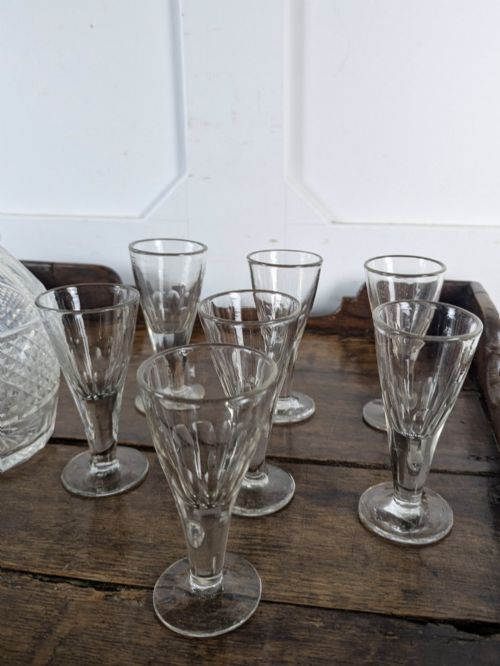



Clear Glass Sherry Glasses
Clear glass sherry glasses bring sparkle and historic charm to the table, offering a refined way to serve fortified wine.
Clear Glass Sherry Glasses
When you search for clear glass sherry glasses, you are looking at small vessels designed for fortified wines across several historical periods. The selection spans Georgian, Victorian, and Edwardian eras, alongside later twentieth-century examples.
You will most commonly encounter Victorian and Edwardian drinking vessels on this page, often appearing in matched sets or smaller groupings. Forms range from traditional flutes and port glasses to cordial glasses.
The inventory also includes related serving pieces such as decanters and drinks sets on silver-plated trays. These items illustrate the broader context of period dining and hospitality.
Materials and manufacture
The pieces listed demonstrate traditional techniques including hand blowing and lead crystal manufacture. Artisans shaped molten material to create delicate stems and bowls suitable for fortified wines.
Decoration relies heavily on surface work such as thumb-cutting, intaglio cutting, and acid etching. Workshops also utilised silver plate for associated items like decanter sets and trays.
Clear Glass Sherry Glasses Retail Price Guide 2026
Typical asking prices for clear glass sherry glasses among the pieces listed under this phrase on Sellingantiques today, from the lower quarter to the upper quarter. They describe what is for sale here now, not the wider market.
Thumb-cut vessels ensure your grip remains steady even when port-fuelled debates grow particularly animated.
Judging quality in glassware
Quality in these drinking vessels rests on the crispness of the cutting and the clarity of the material. Sharp facets and deep wheel-engraving distinguish finer work from simpler production.
Consistency across a set elevates an assembled group of glasses. Uniformity in wall thickness, stem pulling, and foot finishing indicates superior workshop standards.
Webb·Riihimaki
The Clear Glass Sherry Glasses Glossary
- Thumb-cut
- A decorative pattern of shallow, rounded indentations resembling a thumbprint, often encircling the lower bowl or base of period glassware. This technique provides both a tactile grip and brilliant light reflection.
- Intaglio
- A method of ornamentation where the design is sunk below the surface of the glass rather than raised. It requires skilled wheel-engraving to achieve fine detail.
- Lead crystal
- Glass containing a proportion of lead oxide, which increases weight, brilliance, and refractive index. This material allows for deeper and sharper cutting without fracturing.
- Cordial glass
- A small vessel traditionally used for drinking liqueurs or fortified wines after a meal. These pieces typically feature narrow bowls and sturdy stems.
- Etched glass
- A surface decorated by the application of acid to eat away unprotected areas of the design. This creates a frosted or matte contrast against polished clear glass.
Clear Glass Sherry Glasses: Frequently Asked Questions
What is the difference between sherry and port glasses?
Sherry and port glasses share similar small capacities suited to fortified wines, though port glasses occasionally feature slightly deeper or rounder bowls depending on the period. Both types were designed to concentrate the aromas of rich, aged wines.
In historical settings, these terms were sometimes used interchangeably by makers and owners. Examining the overall capacity and bowl shape provides the best clue to their original intended function.
How do I date antique clear glass sherry glasses?
Dating relies on observing the manufacturing technique, pontil marks, metal composition, and decorative style. Georgian pieces often display heavy lead metal and pontil scars on the base, while Victorian examples introduce machine polishing and diverse cutting styles.
Comparing the silhouette and engraving style to documented examples from the same era helps narrow the timeframe. Makers' marks, where present, offer the most precise chronological evidence.
Can I use antique sherry glasses for daily dining?
Period glassware can be used for special occasions if handled with appropriate care. Hand washing in tepid water prevents thermal shock and protects delicate stems from damage.
Avoid using modern dishwashers, as harsh detergents and high temperatures can cloud antique crystal over time. Storing them securely on stable shelving prevents accidental tipping.
Why are matched sets of antique glasses scarce?
Individual pieces from larger dining sets were frequently broken or separated over generations of use and household moves. Finding a surviving set of six or more matching glasses is an uncommon occurrence.
Many historical gatherings utilised assembled groups of similar glasses rather than strictly uniform services. This historical reality explains why matched sets command particular attention from collectors.