
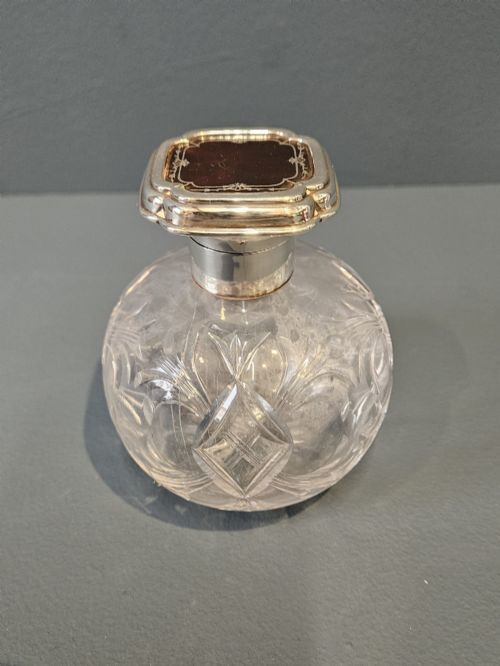
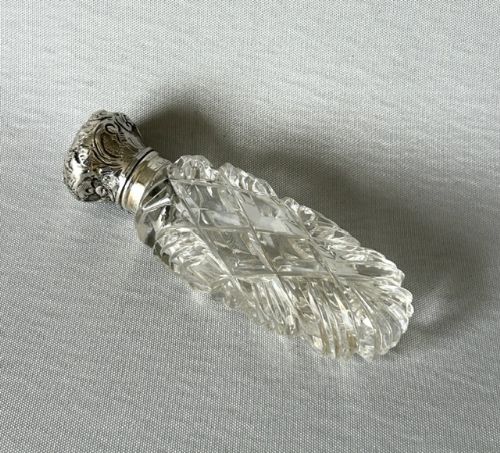
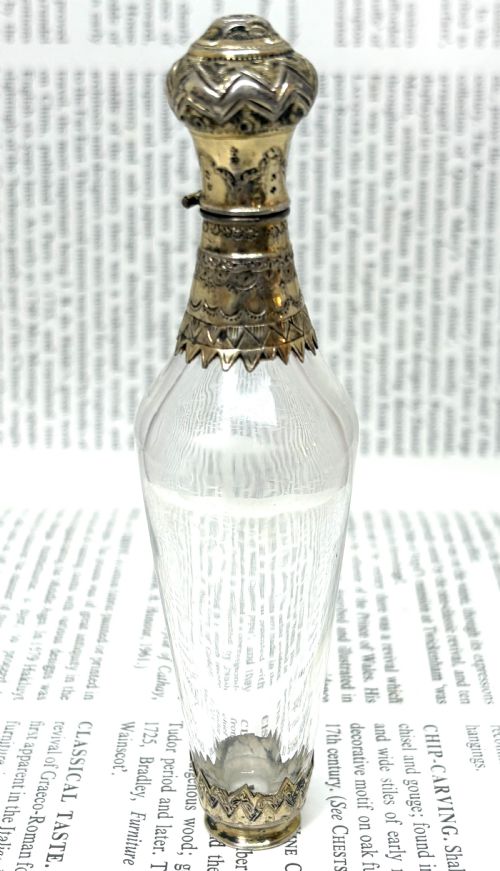


Clear Glass Scent Flask
A clear glass scent flask is a portable vessel for perfume, combining useful vanity item and decorative object across periods from the Georgian era to Art Deco.
Clear Glass Scent Flask
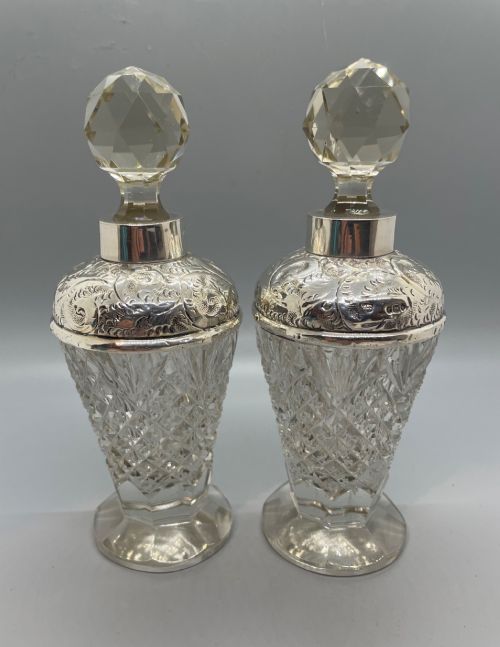
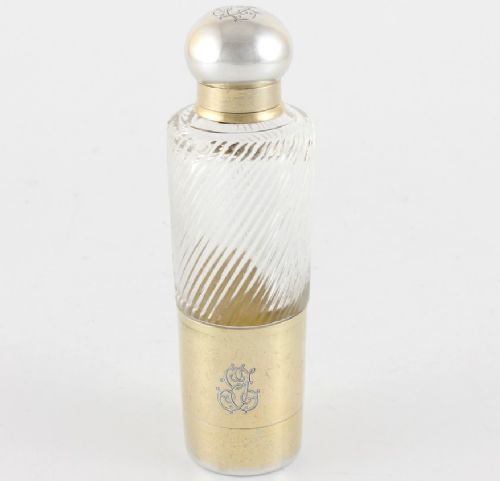
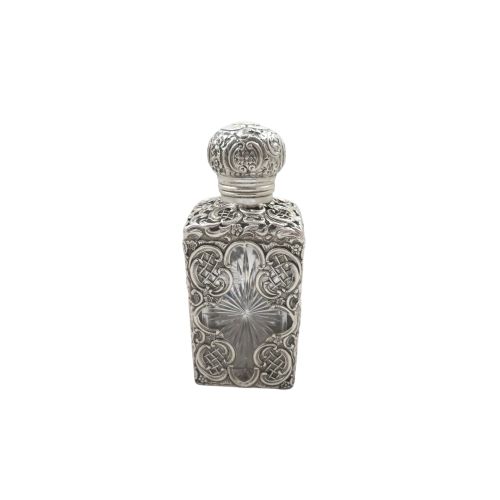
A clear glass scent flask appears in various iterations across this selection, from Georgian and Victorian examples to Edwardian and Art Deco designs. Buyers encounter everything from simple pocket bottles with silver caps to elaborate moulded glass editions by prominent makers.
The objects serve as personal vanity accessories or dressing table pieces. Many incorporate fitted precious metal mounts, hinged caps, or internal stoppers designed to prevent evaporation of volatile oils.
Origins span British, French, and Chinese workshops, shifting from heavy cut crystal with sterling silver collars to streamlined geometric glass vessels of the nineteen-thirties.
Materials and Techniques
Makers utilised clear, cut, and frosted glass combined with sterling silver, silver gilt, and enamel mounts. Metal components often feature hallmarks indicating assay offices in London and Birmingham alongside continental silver marks.
Surface decoration relies on diverse methods including wheel-cutting, acid-etching, silver overlay, and internal painting. Mold-pressed production became prominent in later decades, allowing intricate relief motifs on the glass body.
The listings on this site encompass pieces from the Georgian era through the nineteen-thirties, featuring materials like sterling silver, enamel, and frosted glass.
Evaluating Execution
Quality rests upon the crispness of the glass cutting, the weight and purity of any silver mounts, and the integrity of internal stoppers. Superior pieces demonstrate precise alignment between metal collars and glass necks.
Artistic ambition distinguishes standard dressing table accessories from masterworks, particularly where enamel work, silver overlay, or moulded relief decoration display exceptional detail.
Tonnel Paris·Gorham·Karl Palda·Rene Lalique·Barnsley and Co·S Morden and Co
The Clear Glass Scent Flask Glossary
- Silver Gilt
- Silver that has been coated with a thin layer of gold. This finish adds warmth and protects the underlying silver from tarnishing.
- Silver Overlay
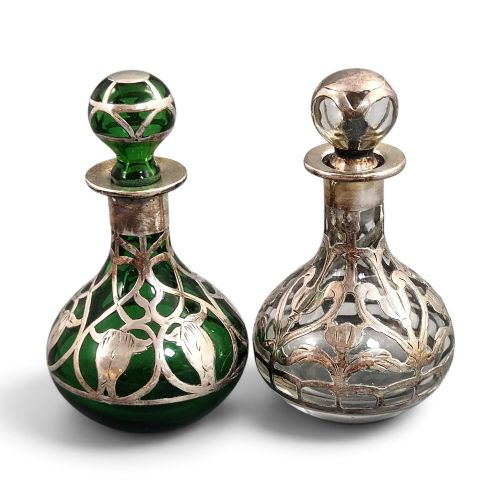
- A technique where decorative sterling silver is fused directly onto the surface of a glass vessel. It often creates intricate floral or geometric patterns characteristic of the Art Nouveau period.
- Double Ended Scent Bottle
- A container featuring stoppers at both ends, allowing the user to carry two different perfumes or smelling salts simultaneously. These typically date to the Victorian era.
- Snuff Bottle
- A small container used to hold powdered tobacco, or snuff. Chinese examples often feature meticulous interior painting or intricate rock crystal carving.
- Atomizer
- A mechanical spray device fitted to a perfume bottle. This mechanism disperses liquid fragrance in a fine mist.
Clear Glass Scent Flask: Frequently Asked Questions
How do I date a scent flask?
Dating relies primarily on hallmarks stamped onto the silver mounts, which indicate the year and assay office. Stylistic markers such as cut glass patterns or moulded signatures also point to specific periods.
For unmarked pieces, the silhouette, manufacturing technique, and type of glass provide reliable chronological clues.
Are original stoppers important?
Original glass or cork-backed metal stoppers maintain the integrity and completeness of the piece. Finding a flask with its matching internal stopper is desirable for collectors.
Replacements do not necessarily diminish utility as a decorative object, but original components affect historical completeness.
How were these flasks used?
Owners carried them in reticules or travel bags to refresh scents throughout the day. Victorian ladies often filled them with reviving smelling salts.
On dressing tables, they served as decorative containers for daily fragrances before spray atomizers became common.
What is silver overlay?
Silver overlay is a decorative method where molten silver is applied to glass surfaces in patterns. The metal grips the glass securely as it cools.
This technique reached peak popularity during the Art Nouveau and Edwardian periods, frequently featuring plant motifs.