


Silver Overlay Bottle
A silver overlay bottle fuses precious metal tracery with coloured or clear glass, offering a tactile piece of dressing table history.
Silver Overlay Bottle
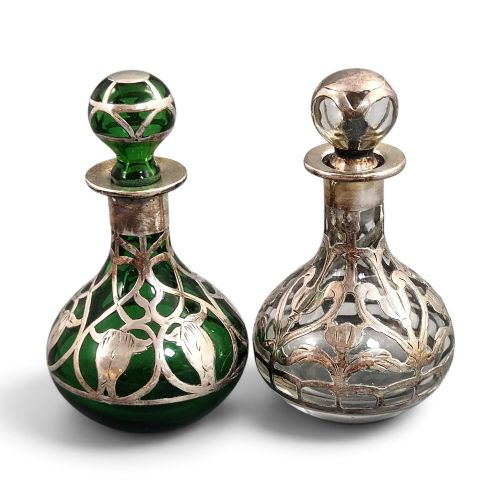
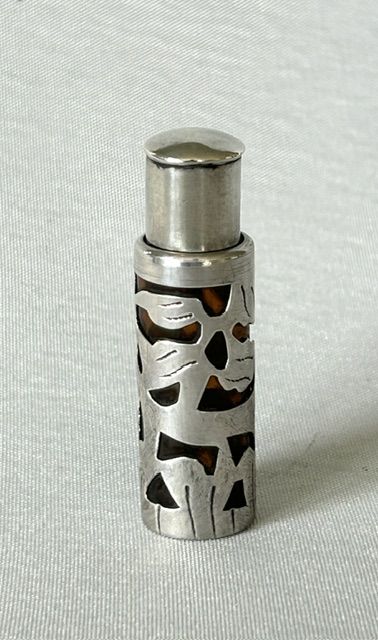
A silver overlay bottle combines a glass vessel with intricate pierced or solid silver decoration fused directly to the surface. These pieces range from small personal scent and perfume bottles to larger dressing table decanters and vanity ensembles.
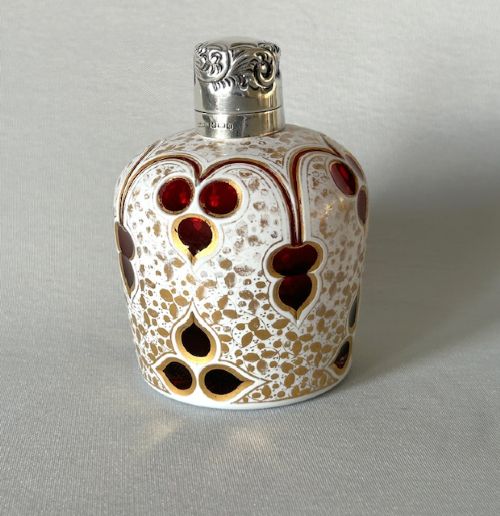
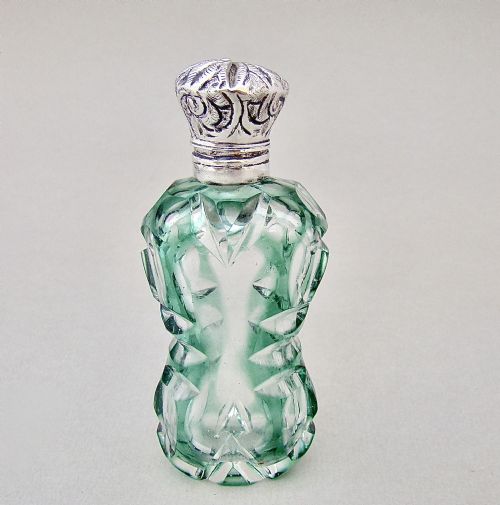
The version most commonly encountered on this page is the Victorian or Edwardian scent bottle, frequently featuring coloured Bohemian glass beneath sterling silver work. These functional containers often accompanied chatelaines or sat on late nineteenth century dressing tables.
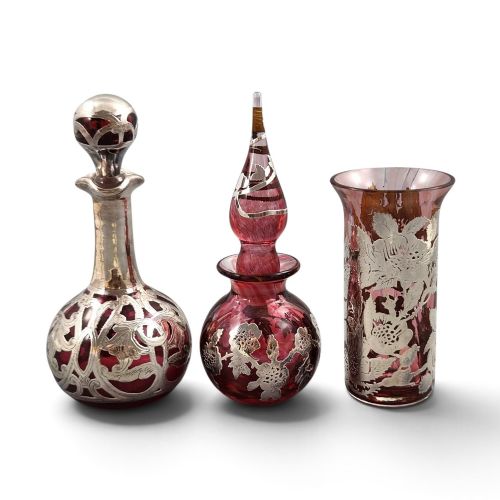
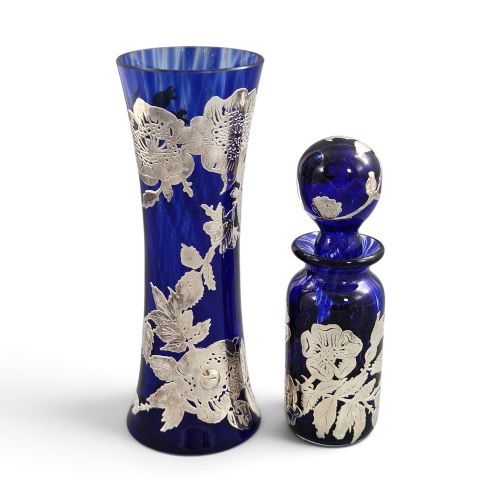
Beyond standard scent bottles, the selection occasionally yields decanters, vases and vanity glassware spanning the nineteenth century up to later twentieth century studio glass productions.
How they were made
Craftsmen applied molten silver or fitted sheet silver directly onto blown or cut glass vessels, often using chemical bonding or mechanical grip to secure the metal tracery. The glass body frequently underwent cutting, casing or flash-overlay techniques before the silver application.
Makers utilised distinct glass colours including cobalt, ruby, cranberry, green and amethyst, which provided vibrant contrast against polished sterling silver or silver plate. The metalwork itself was typically stamped, pierced or chased with floral, geometric or Art Nouveau organic motifs.
Listings span Victorian, Edwardian and late twentieth century periods, featuring sterling silver combined with cut, cased and studio glass.
What varies in quality
The standard of a silver overlay bottle depends heavily on the precision and depth of the metalwork relative to the glass body. Thick, securely anchored silver with detailed chasing or piercing commands greater regard than thin, flat metal sheets simply glued or poorly bonded to the surface.
The quality of the underlying glass vessel also dictates the piece, with hand-cut crystal, deep cased colours and clear, heavy lead glass representing the higher tier of production compared to simpler moulded alternatives.
Gorham·Laugharne Glass·Alvin Manufacturing Co·The Boots Company·Charles May·Mousley Brothers·Abrahams And Co
The Silver Overlay Bottle Glossary
- Silver overlay
- A technique where sterling silver or silver plate is applied in decorative patterns over glass or ceramic bodies. This method became particularly popular during the late Victorian and Art Nouveau periods.
- Cased glass
- Glass made from two or more distinct layers of different colours, often cut away to reveal the contrasting layer beneath. It provides the deep, layered background typical of nineteenth century overlay work.
- Chatelaine
- A decorative belt hook worn with suspended utilitarian items such as scent bottles, keys or sewing implements. Many smaller scent bottles feature loops specifically designed for this purpose.
- Sterling silver
- An alloy of silver containing ninety-two point five percent silver and seven point five percent other metals, usually copper. English pieces from this era typically bear hallmarks confirming this standard.
- Art Nouveau
- A stylistic movement characterised by organic, flowing lines, plant motifs and asymmetrical designs. It heavily influenced the silver tracery found on bottles from around nineteen hundred.
Silver Overlay Bottle: Frequently Asked Questions
Were these bottles used for perfume?
These vessels served primarily as luxury receptacles for scent, smelling salts and cologne on Victorian and Edwardian dressing tables. Their tight stoppers helped prevent the evaporation of precious volatile oils.
Smaller examples were often carried in handbags or suspended from chatelaines for personal freshening throughout the day. Larger decanters remained stationary in boudoir or bedroom settings.
How can I tell the period?
Dating relies on a combination of silver hallmarks, glass manufacturing techniques and stylistic clues such as floral Art Nouveau motifs versus geometric Victorian patterns. Hallmarks often include assay office symbols and date letters.
Unmarked pieces are assessed through glass colours, such as cranberry or Bristol blue, and the thickness of the metal overlay. Late twentieth century pieces display modern studio glass characteristics.
Are the stoppers usually original?
Original stoppers match the glass type and fit the neck precisely, though replacements are common due to the fragile nature of glass glassware over a century of handling. Checking for matching colour and wear patterns helps determine originality.
Many scent bottles retain internal glass daubers attached to the stopper. When a stopper fits securely and shows identical age patination to the bottle, it strengthens the integrity of the piece.