





Clear Glass Pharmacy Jars
Clear glass pharmacy jars are functional medical vessels from past centuries that bring clean lines and historic utility to modern interiors.
Clear Glass Pharmacy Jars
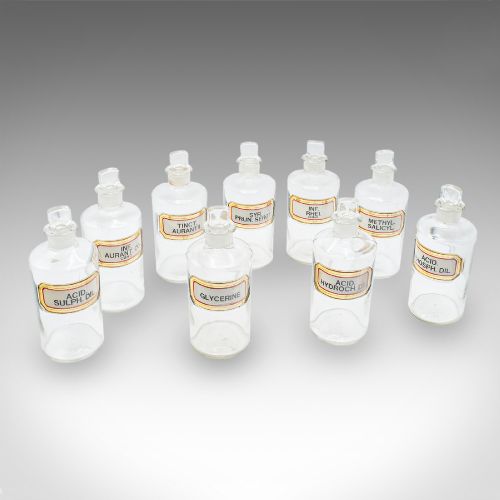
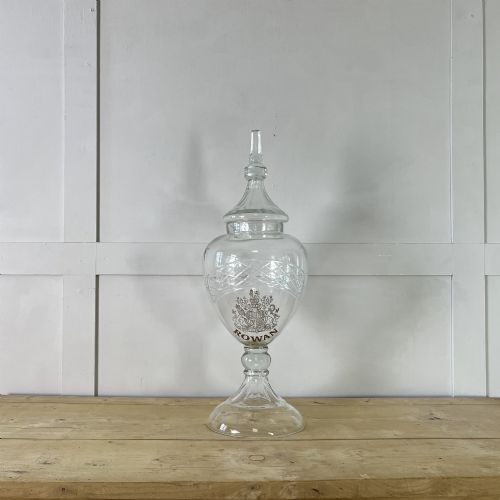
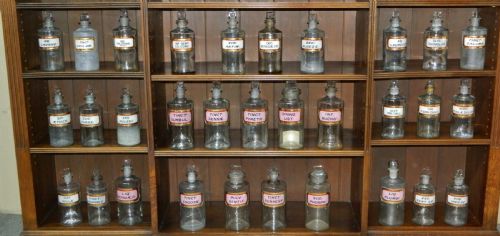
Clear glass pharmacy jars are storage vessels originating from chemist shops and dispensaries across the Georgian, Victorian, and Edwardian eras. These containers take the form of apothecary jars, chemist bottles, tincture bottles, and large display carboys.
Buyers browsing this selection will frequently encounter multi-item sets alongside large singular display vessels and paired jars. The inventory spans English and French origins, reflecting utilitarian and decorative styles from the nineteenth century up to 1900.
How clear glass pharmacy jars were made
These vessels rely primarily on blown glass techniques, producing thick walls and distinctive irregularities inherent to historical glass production. Workshops utilised clear glass alongside elements of gold leaf, paint, and paper labels.
Finishing touches on select pieces include cut glass facets and etched designs, while metal elements like brass appear alongside gilt accents. Covers and stoppers were fashioned to fit individual jar necks securely.
Clear Glass Pharmacy Jars Retail Price Guide 2026
Typical asking prices for clear glass pharmacy jars among the pieces listed under this phrase on Sellingantiques today, from the lower quarter to the upper quarter. They describe what is for sale here now, not the wider market.
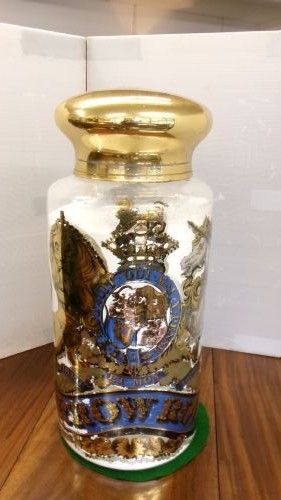
One jar carries the specific designation of arrowroot, preserving the exact dietary trade of a nineteenth-century kitchen or dispensary.
What varies in quality
Quality differences stem from the clarity and thickness of the glass, with heavier blown vessels and precise cut glass work sitting at the upper end of the range. Etched decoration and intact original covers add distinct visual refinement.
The presence of matching sets alters the character of a group, whereas individual bottles vary according to their scale, proportions, and the presence of period labels or painted detailing.
The Clear Glass Pharmacy Jars Glossary
- Apothecary jar
- A vessel used by historical practitioners to store medical ingredients, herbs, and compounds. These containers typically feature a wide mouth and a matching fitted cover.
- Carboy
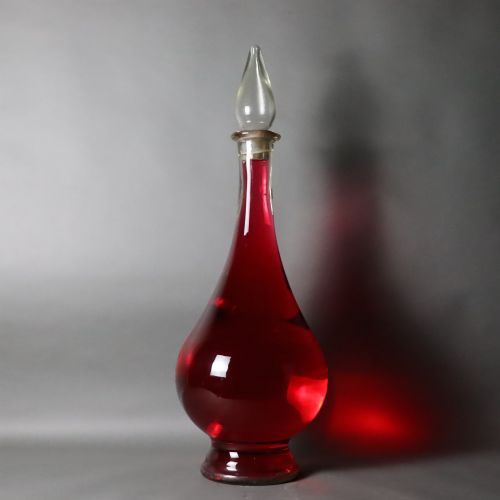
- A large, bulbous glass vessel designed for holding liquids in bulk quantities. In a pharmacy context, these large items served as window displays.
- Tincture bottle
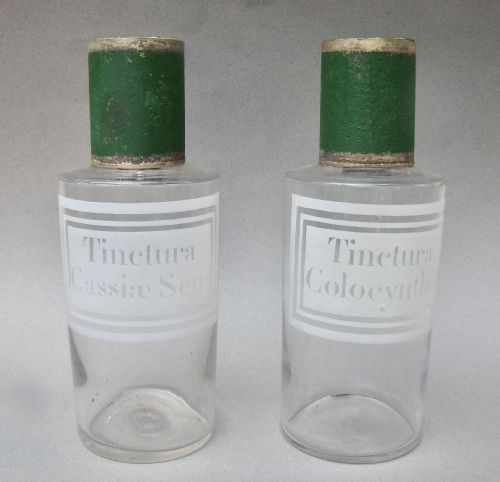
- A smaller medicine bottle specifically intended for holding alcoholic plant extracts. These items often possess narrow necks and ground glass stoppers.
- Blown glass
- Glass shaped by inflating molten material through a blowpipe. This traditional method produces bubbles and varied wall thicknesses unique to each piece.
Clear Glass Pharmacy Jars: Frequently Asked Questions
What were clear glass pharmacy jars used for?
Apothecaries and chemists utilised these jars to store dry drugs, herbs, chemicals, and liquid tinctures safely. Their clear walls allowed practitioners to inspect contents quickly while protecting them from moisture.
Larger vessels and carboys often stood in shop windows filled with coloured water to advertise the chemist's trade to passers-by.
How do I date an antique pharmacy jar?
Dating relies on observing manufacturing traits such as pontil marks, glass clarity, and the shape of the lip or rim. Georgian and Victorian pieces often show heavier glass walls and hand-finished stoppers.
Stylistic cues in etching, along with accompanying paper labels or painted lettering, help narrow down the period to specific decades.
How should I display pharmacy jars at home?
These jars suit placement on open shelving, sideboards, or deep windowsills where natural light can pass through the clear glass. Grouping sets together creates a stronger visual impact than isolated bottles.
Ensure shelves are sturdy enough to support the considerable weight of thick antique glass vessels.
Are the covers and stoppers original?
Many surviving jars retain their original matching covers or ground glass stoppers, which were individually fitted during manufacture. Checking the fit and matching wear patterns helps confirm originality.
Replacement lids do occur in this category due to centuries of handling, so examining the glass tone and age characteristics is wise.