



Vintage Medical Glass Bottles
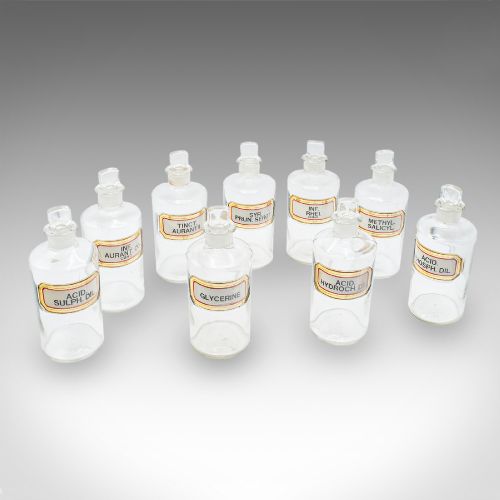
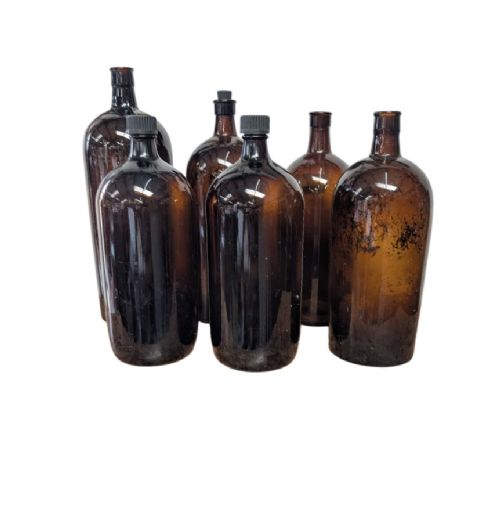
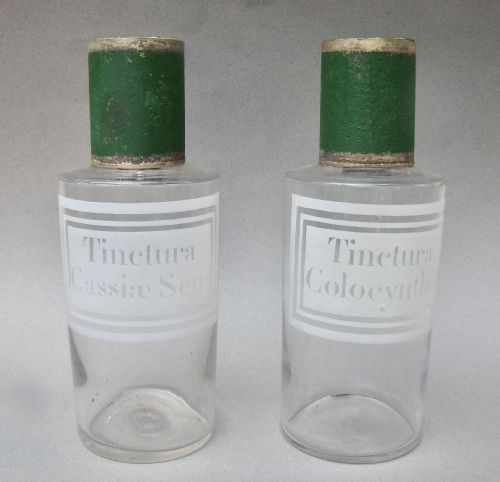
Vintage medical glass bottles are functional containers of the nineteenth and early twentieth centuries that bring utilitarian history and rich colour into a room.
Vintage Medical Glass Bottles
When you search for vintage medical glass bottles, you encounter a selection of apothecary jars, pharmacy bottles, carboys, and fitted travelling cases spanning the nineteenth century, the Victorian era, and the early twentieth century. These items originated in dispensaries and chemists, serving to store compounds, tinctures, and dry drugs before modern packaging.
You are most likely to meet clear or amber glass bottles, sometimes accompanied by matching glass covers or housed within mahogany boxes complete with drawers. The forms range from small chemist bottles to large display carboys designed for shop windows.
How they were made
The evidence shows pieces shaped through hand blowing and glassmaking techniques characteristic of nineteenth-century production. Many containers utilise amber glass or clear glass, sometimes featuring etched decoration or applied paper labels.
Encasing structures involve mahogany boxes and chests, occasionally inlaid and fitted with brass hardware, alongside velvet and gold leaf accents found within apothecary travelling cases.
Vintage Medical Glass Bottles Retail Price Guide 2026
Typical asking prices for vintage medical glass bottles among the pieces listed under this phrase on Sellingantiques today, from the lower quarter to the upper quarter. They describe what is for sale here now, not the wider market.
Listings feature mahogany, brass, paper, and velvet alongside amber and clear glass across Victorian, Regency, and Edwardian periods.
What varies in quality
Quality rests upon the preservation of the glass and the completeness of the set or housing. Surviving original covers, intact paper labels, and matching groups elevate a piece above single, unassociated bottles.
For fitted boxes and chests, the sophistication of the mahogany cabinetwork, the retention of internal drawers, and the inclusion of original glass bottles determine the standard of the piece.
The Vintage Medical Glass Bottles Glossary
- Carboy
- A large glass vessel used in laboratories and pharmacies for holding liquids. These were often placed in shop windows to attract custom.
- Apothecary
- A historical practitioner who prepared and sold medicines to physicians and patients. Their premises yielded the jars and boxes collected today.
- Winchester
- A standard size of heavy-duty glass bottle used for storing acids and chemical reagents. They typically feature narrow necks and sturdy bases.
- Gelatine jar
- A specialist glass container made to hold pharmaceutical preparations of gelatine. These pieces often retain fitted glass covers.
Vintage Medical Glass Bottles: Frequently Asked Questions
What were vintage medical glass bottles used for?
These vessels held chemical compounds, medicinal liquids, powders, and dry drugs in nineteenth and early twentieth-century pharmacies and dispensaries.
Larger carboys sat in shop windows as trade signs, while smaller bottles stood on shelves or travelled securely inside fitted mahogany cases.
How do I date vintage medical glass bottles?
Dating relies on manufacturing traits such as hand-blown pontil marks, glass colour, and associated storage boxes from periods like the Victorian era or Regency times.
Paper labels, etched surfaces, and the style of any accompanying mahogany cabinet also help place the piece within the nineteenth or early twentieth century.
Are apothecary boxes rare?
Apothecary boxes and travelling cases appear alongside loose bottles, offering a glimpse into portable medical equipment from the Georgian and Victorian periods.
Complete sets featuring their original fitted glass bottles and drawers command particular interest from collectors of medical antiques.
How do I display these bottles at home?
Amber and green glass bottles look effective when placed near natural light to highlight the depth and tone of the nineteenth-century material.
Matched sets and larger carboys can be positioned on open shelving or within cabinets to showcase their utilitarian forms.