






Clear Glass Candlesticks
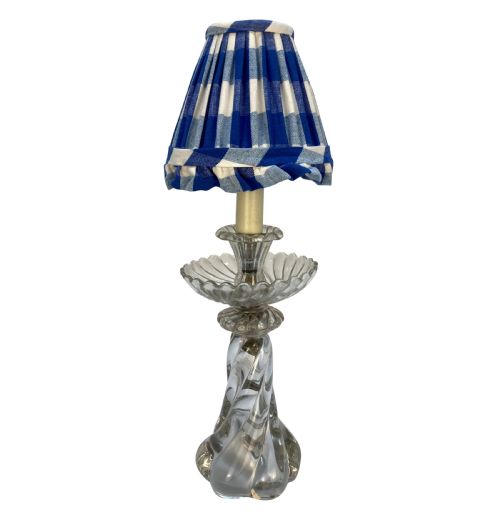
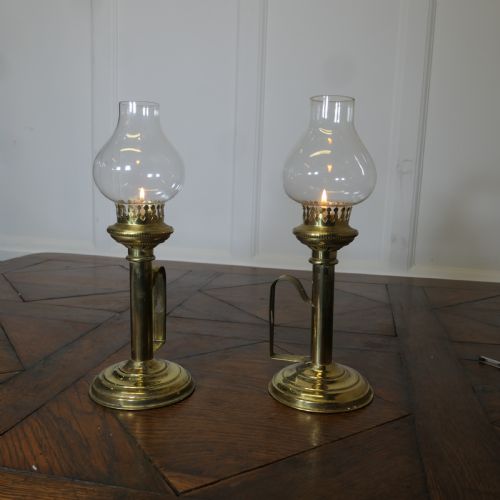
Clear glass candlesticks bring sparkling reflection to a room, spanning Victorian cut-glass lustres and Art Deco crystal designs.
Clear Glass Candlesticks
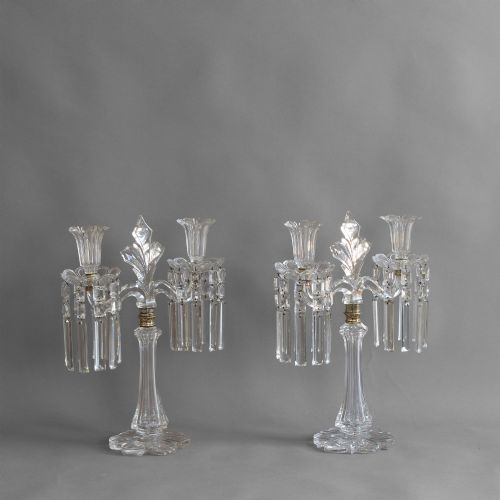
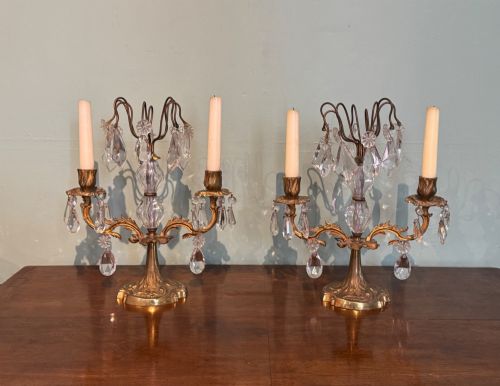
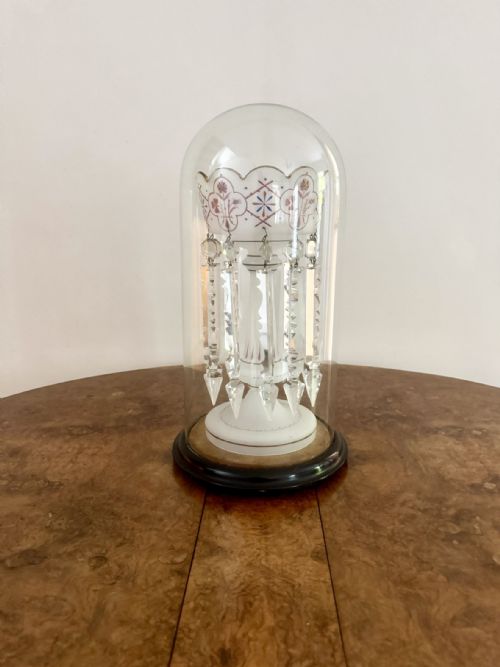
Clear glass candlesticks encompass a variety of lighting forms designed to hold candles securely while refracting candlelight through their transparent surfaces. The selection ranges from Victorian mantel lustres hung with glass prisms to pairs of twentieth-century table candleabra and simple candle holders.
Buyers will encounter several distinct periods represented among these items, stretching from nineteenth-century examples through Edwardian pieces to Art Deco creations. Forms include barley twist stems with domed and folded feet, hollow stem Nailsea designs, and specialised patented systems such as Clarke's Cricklite.
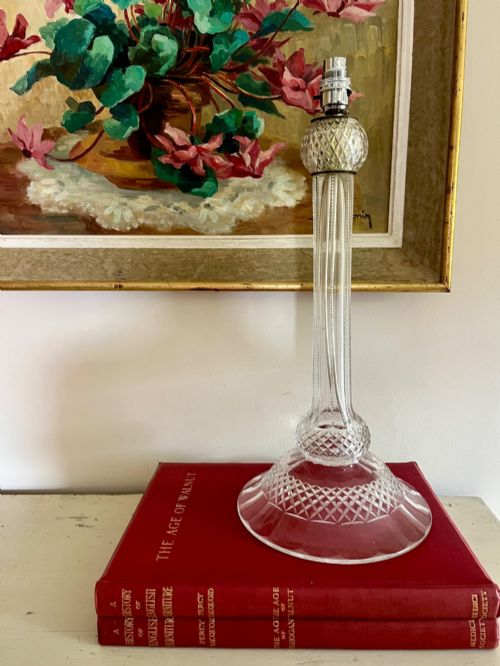
Many of the pieces appear in matched pairs, which were originally intended to balance symmetry on side tables, mantelpieces, or dining surfaces. Alongside standard candlesticks, the listings include related table lamps and elaborate multi-branch candelabra featuring brass fittings, frosted glass elements, and gilt accents.
How they were made
The manufacture of these objects relies primarily on clear glass, cut crystal, and frosted glass, occasionally combined with brass, gilt brass, and hanging lustres. Glassmakers shaped the material through blowing and moulding, often creating hollow stems or tactile surfaces like the distinctive barley twist.
Surface decoration was frequently achieved by wheel-cutting geometric patterns into the crystal to enhance its brilliance under candlelight. Specialised components such as glass chimneys and detachable lustres with crystal prisms were integrated to direct the light and catch reflections.
Clear Glass Candlesticks Retail Price Guide 2026
Typical asking prices for clear glass candlesticks among the pieces listed under this phrase on Sellingantiques today, from the lower quarter to the upper quarter. They describe what is for sale here now, not the wider market.
Listings span Victorian, Edwardian, Regency, and Art Deco styles, featuring cut crystal, frosted glass, and brass components.
What varies in quality
Quality in these items is determined by the clarity of the glass and the crispness of any cut facets, which distinguish heavy crystal from simpler moulded wares. Superior examples display precise symmetry, balanced proportions, and minimal internal bubbles or impurities within the material.
The preservation of original elements, such as matching sets of dangling glass prisms on lustres or intact brass and gilt mounts, significantly influences the integrity of a piece. Maker attributions, particularly works associated with notable glasshouses like Rene Lalique, introduce distinct craftsmanship and artistic design values.
Rene Lalique·Clarke
The Clear Glass Candlesticks Glossary
- Lustre
- A decorative tabletop ornament featuring a central candle holder hung with cut glass prisms or pendants. These pendants catch and refract the ambient light.
- Candelabra
- A branched candlestick designed to hold multiple candles simultaneously. They often incorporate elaborate arms and central stems.
- Cricklite
- A patented night light and candle lamp system developed by Clarke, utilising specialised glass shades and candlesticks. These assemblies provide shielded illumination.
- Barley twist
- A helical, spiral-turned stem resembling the twists of barley sugar. This decorative form appears frequently in twentieth-century crystal stems.
Clear Glass Candlesticks: Frequently Asked Questions
How do I clean antique glass candlesticks?
Clean these items gently using warm soapy water and a soft cloth to avoid scratching the surface or damaging delicate cut facets. Avoid harsh chemical cleaners that might affect older brass mounts or gilt details.
Ensure each piece is dried thoroughly with a lint-free cloth, paying particular attention to pendant drops and intricate crevices on lustres and candelabra.
Were these pieces meant for dining tables?
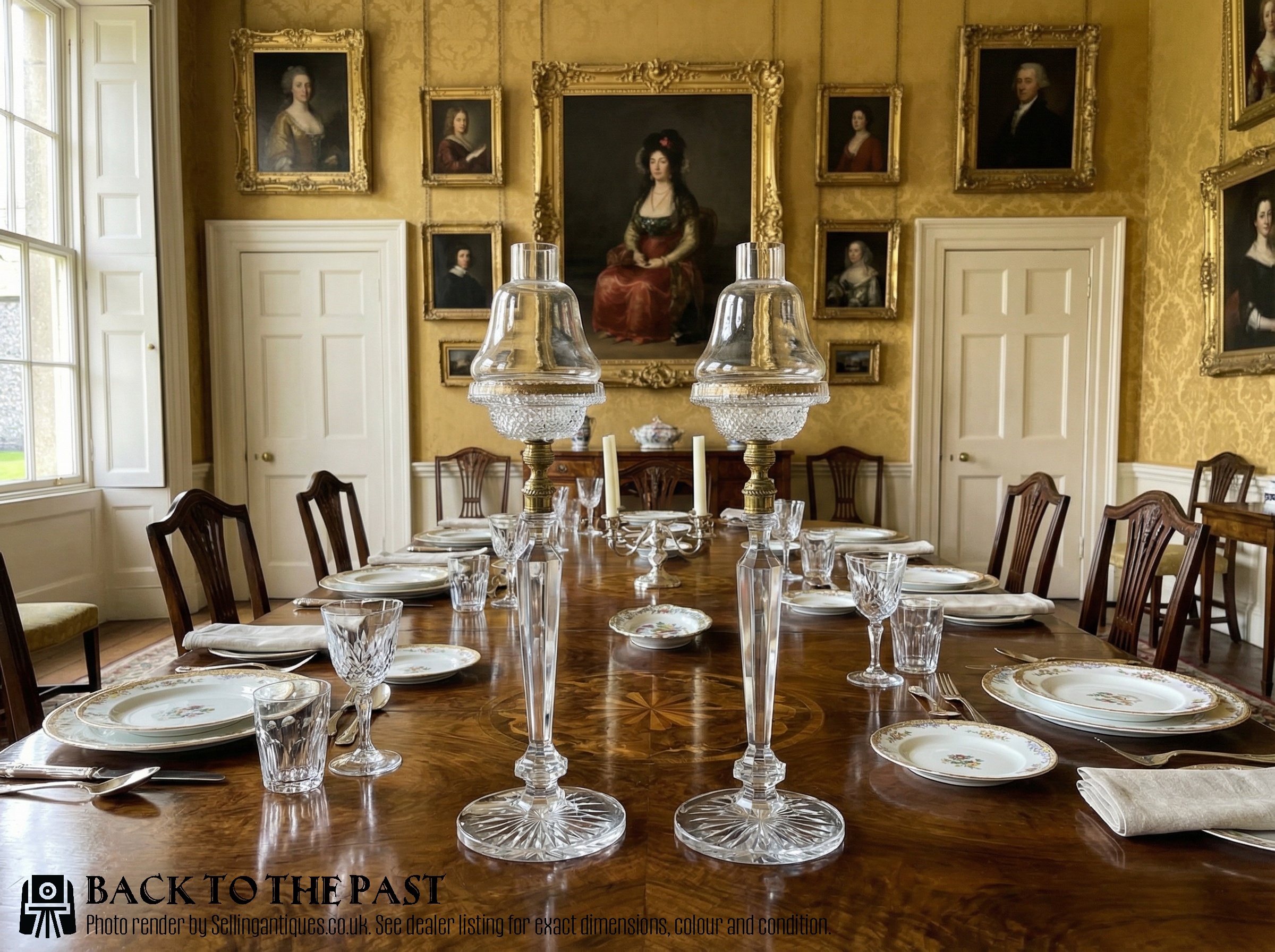
Many of these objects served as decorative illumination for dining surfaces, sideboards, and mantelpieces in period homes. Their reflective crystal properties maximised the impact of candlelight during evening meals.
Pairs were typically arranged symmetrically to create a balanced visual display across furniture surfaces.
What is the difference between a candlestick and a lustre?
A standard candlestick holds a single candle and relies on its own form and cut glass body to reflect light. A lustre includes a bowl or stem fitted with hanging glass prisms that amplify the sparkle.
Lustres often functioned as decorative mantel ornaments rather than purely functional light sources.
How can I tell a Victorian piece from a 1930s design?
Victorian examples often feature heavy cut crystal, elaborate lustre drops, or brass fittings, reflecting the ornate tastes of the nineteenth century. Pieces from the 1930s frequently showcase smoother geometric lines, frosted finishes, or modernist forms associated with Art Deco.
Examining the manufacturing techniques and any patent markings helps confirm the period of origin.