


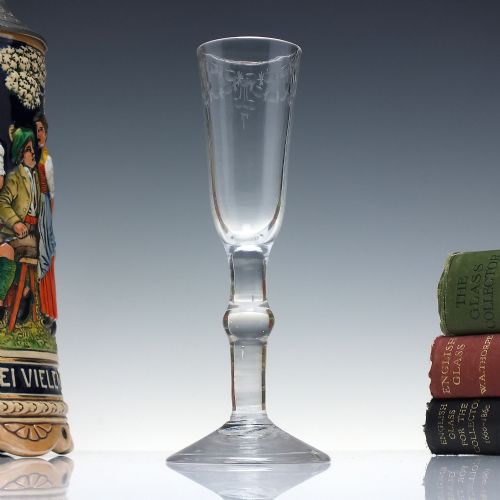

Clear Glass Balustroid Stem
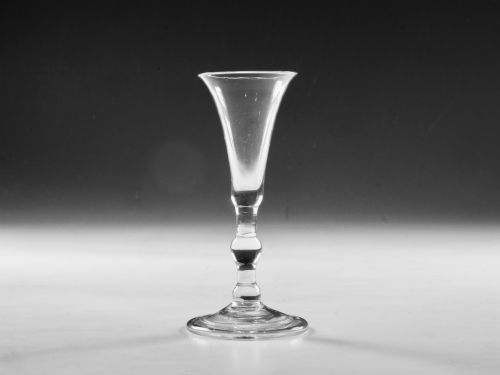
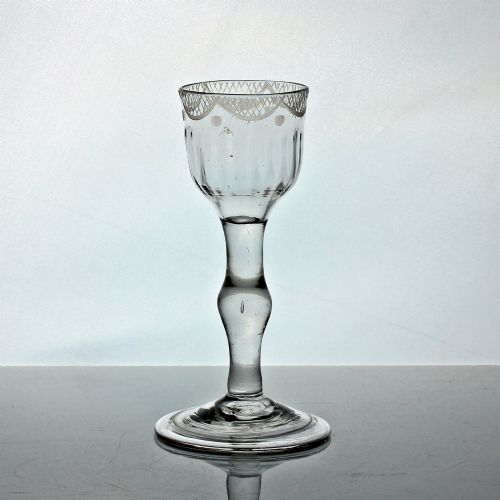
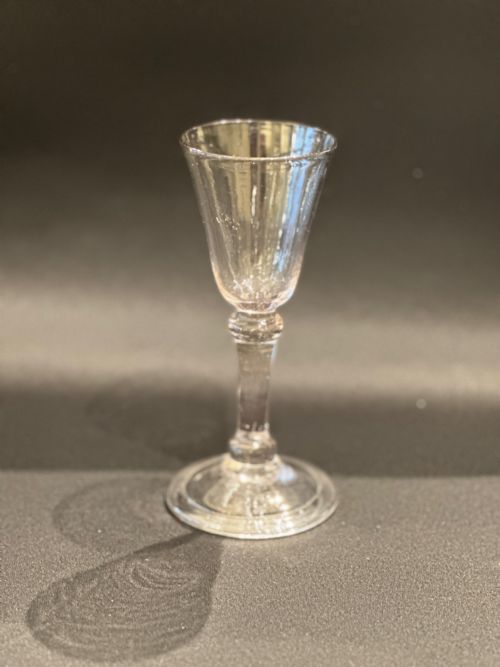
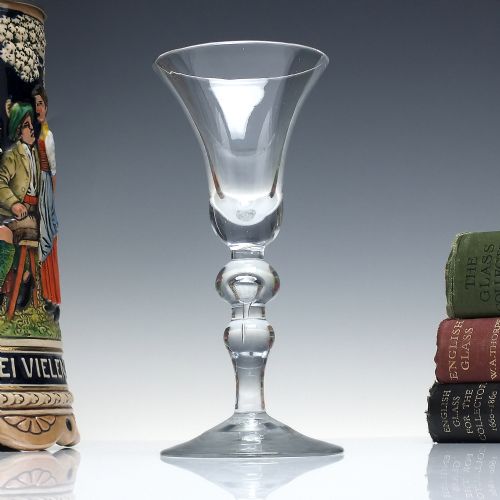
These clear glass balustroid stem pieces are eighteenth century drinking vessels with heavy, robust stems that anchor the hand.
Clear Glass Balustroid Stem
A clear glass balustroid stem sits in the hand with a reassuring weight inherited from early flint glass production. When you search for clear glass balustroid stem, you encounter drinking glasses and wine glasses shaped during the Georgian era.
The objects on this page span the early decades of the eighteenth century, including the reigns of George II. Most examples take the form of wine glasses, alongside occasional slender ratafia glasses designed for cordials.
Makers shaped these vessels with thick lower stems that taper towards the bowl, drawing on styles of the seventeen-thirties and seventeen-forties. Domed feet and engraved decoration appear across several pieces, showing the variety available within the period.
How they were made
Workshops utilised heavy lead glass and lead crystal to achieve the clear, refractive quality seen in these stems. This dense material permitted deep cutting and engraving on the bowl while supporting the substantial weight of the baluster form.
The stems were formed by drawing and applying hot glass, creating the characteristic nodes and swelling profiles associated with Georgian glassware. Artisans finished the feet by hand, often forming domed profiles that added stability to the heavy drinking vessel.
Every listed piece dates to the Georgian period, specifically the eighteenth century, fashioned from lead glass and lead crystal.
What varies in quality
Quality rests in the proportion between the heavy balustroid stem and the capacity of the bowl. Better examples display a confident balance where the weight of the foot matches the substance of the stem above.
The clarity of the lead crystal and the crispness of any engraved swag and tail decoration separate standard drinking glasses from superior specimens. Surface finish and the smoothness of the pontil mark reveal the care taken in the workshop.
The Clear Glass Balustroid Stem Glossary
- Balustroid
- A stem form derived from the architectural baluster, featuring swelling nodes and collars beneath the bowl. This heavier profile developed during the early eighteenth century.
- Flint glass
- An early British term for heavy lead glass developed during the late seventeenth century. It provided the high refractive index necessary for clear, brilliant drinking vessels.
- Pontil mark
- The rough scar left on the underside of a glass where the holding iron was snapped off after blowing. Skilled finishers often ground and polished this area smooth.
- Ratafia glass
- A tall, slender drinking glass designed for sweet fruit liqueurs and cordials. These narrow vessels retained the heavy balustroid stems of standard wine glasses.
- Domed foot
- A raised, conical base that slopes upward from the edge to the stem. This form adds visual height and physical stability to heavy Georgian glassware.
Clear Glass Balustroid Stem: Frequently Asked Questions
What is a balustroid stem?
A balustroid stem is a thickened glass support featuring nodes, knops, or collars directly beneath the bowl. It forms the defining characteristic of these Georgian drinking vessels.
The design evolved from larger architectural balusters, scaled down to fit comfortably in the hand during the first half of the eighteenth century.
How do I date these glasses?
Dating relies on the specific silhouette of the stem, the metal composition of the lead glass, and the shape of the foot. Pieces from the seventeen-thirties often display heavier, more pronounced baluster forms.
Engraving styles and foot shapes also provide reliable clues, as domed feet and specific cutting techniques correspond to distinct decades within the Georgian era.
Were these used for wine?
These vessels served primarily as wine glasses during elite dining and social gatherings of the Georgian period. Their small bowls reflect the stronger, sweeter wines consumed at the time.
Some slender variants functioned as ratafia glasses for cordials, while others held everyday beverages among prosperous households.
How should I care for them?
Wash eighteenth century lead glass by hand in warm water using a mild detergent, avoiding sudden temperature changes. Soft cloths prevent scratching the softer surface of antique lead crystal.
Display the glasses on stable shelves away from direct vibration, as their heavy stems make them top-heavy if knocked.