



Clear Etched Glass Mirror
These clear etched glass mirror pieces bring luminous reflection and intricate surface detail to any interior, offering both historical charm and practical brightness.
Clear Etched Glass Mirror
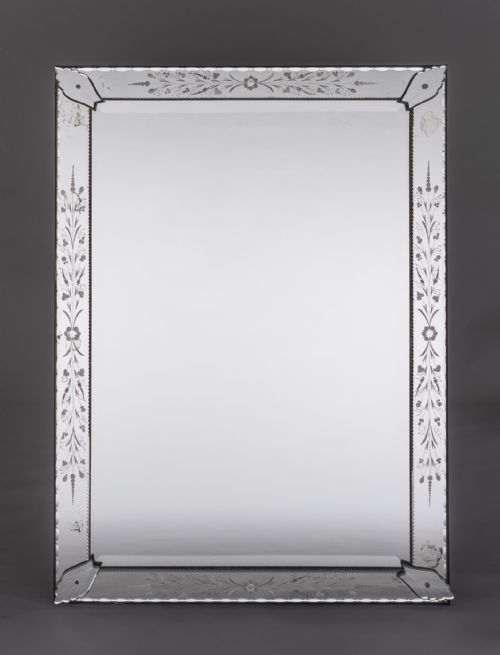
When you search for a clear etched glass mirror, you encounter decorative pieces primarily originating from the nineteenth and early twentieth centuries. These items range from grand overmantle installations to intimate wall hangings and tabletop trays.
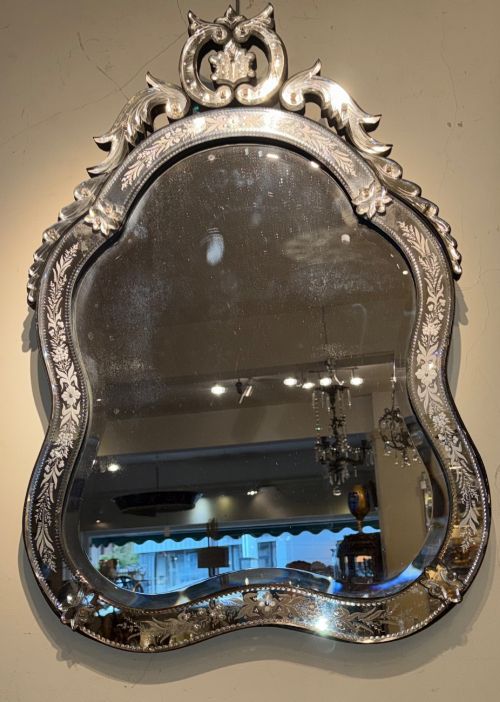
The most common examples on this page are Venetian in style and origin, often featuring cushion frames or engraved glass plates. You will also discover French Art Deco round wall mirrors alongside Edwardian and 1930s variations.
The forms encompass wall mirrors, mirror plateaus, and trays, utilising traditional craftsmanship to create reflective surfaces that double as decorative artworks. Each object reflects the aesthetic preferences of its specific decade, from Victorian elaboration to early twentieth-century geometry.
How they were made
The construction of these pieces relies on glass, mirrored glass, and silvered glass set within or mounted upon supporting structures of wood, brass, and metal. Artisans applied wheel-engraving and etching techniques directly onto the glass plates to produce delicate floral, geometric, or figurative motifs.
Venetian workshops utilised specialised framing methods where individual glass sections were secured over wooden backings using decorative brass clips or pins. Bevelled edges and foxed plates demonstrate the physical characteristics resulting from period manufacturing processes and the gradual oxidation of the silvering over time.
What varies in quality
Quality in these items is determined by the depth and precision of the surface engraving, alongside the integrity of the original glass plates. Finer pieces display crisp, deeply cut motifs that catch the light distinctly, whereas simpler examples feature shallower surface markings.
The complexity of the frame construction also separates standard examples from exceptional ones. Elaborate cushion frames composed of numerous individual glass pieces require greater skill than plain wooden or metal surrounds.
The Clear Etched Glass Mirror Glossary
- Cushion mirror
- A mirror featuring a convex, outward-curving frame made of mirrored glass sections. This design creates multiple reflective angles around the central plate.
- Foxed
- The natural ageing of the silver backing behind the glass, appearing as dark spots or cloudiness. It indicates genuine antiquity rather than modern production.
- Overmantle mirror
- A large horizontal mirror specifically designed to hang above a fireplace mantel. They typically anchor the proportions of a principal reception room.
- Mirror plateau
- A mirrored tray or tabletop base traditionally used as a centrepiece for displays of silver or porcelain. The reflective surface enhances objects placed upon it.
- Bevelled plate
- Glass whose edges are cut and polished to an angled slope, creating a framed effect within the glass itself. This technique adds depth to the reflection.
Clear Etched Glass Mirror: Frequently Asked Questions
Where should I hang a Venetian mirror?
These mirrors suit principal reception rooms, hallways, or above mantelpieces where they can capture and reflect natural light from windows.
Their decorative frames act as focal points, so they work best on plain walls without competing artwork nearby.
How do I clean antique mirrored glass?
Use a soft, dry microfibre cloth to gently remove dust from the surface and the engraved sections.
Avoid commercial chemical sprays, as moisture can seep behind the glass and accelerate the degradation of the silvered backing.
What does foxed glass mean?
Foxing refers to the natural oxidation process that occurs in older mirrors as the silver backing ages.
Collectors often value this characteristic because it confirms the genuine age of the piece.
How do I identify an Edwardian mirror?
Edwardian pieces often feature lighter frames and specific decorative motifs popular during the reign of King Edward VII.
They frequently draw inspiration from earlier Venetian and French styles while utilising contemporary manufacturing methods of the early twentieth century.