



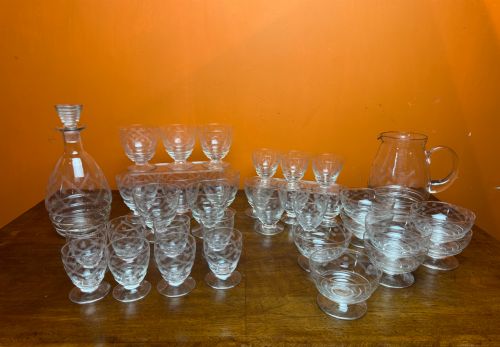
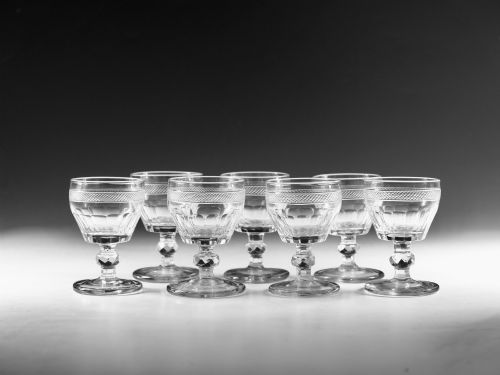
Clear Crystal Stemware Set
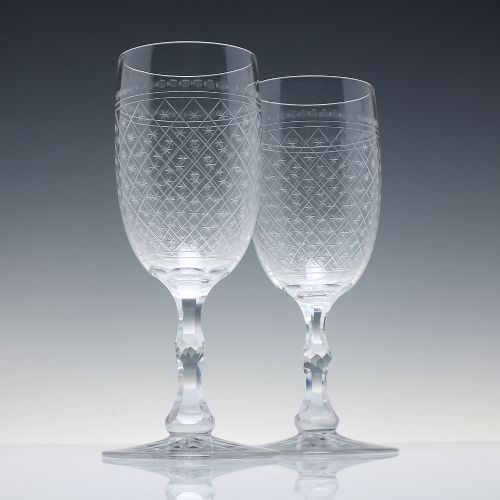
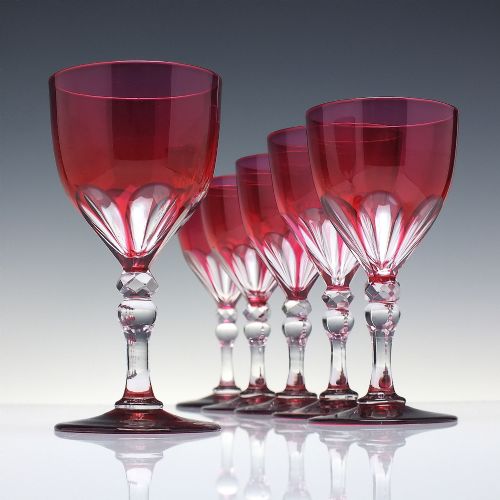
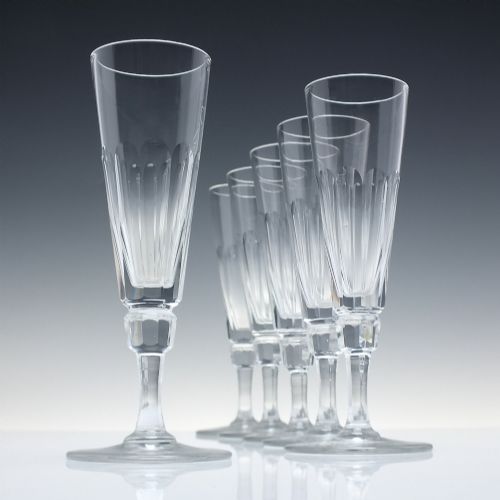
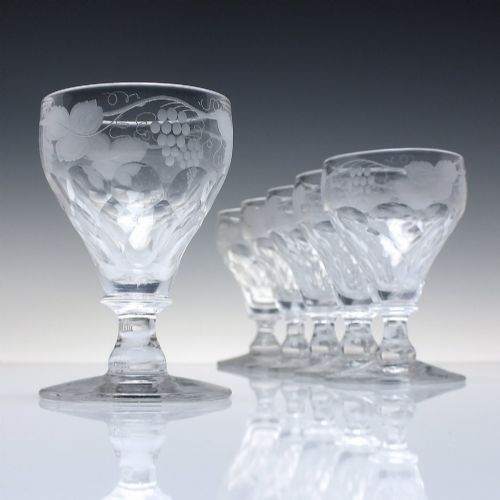
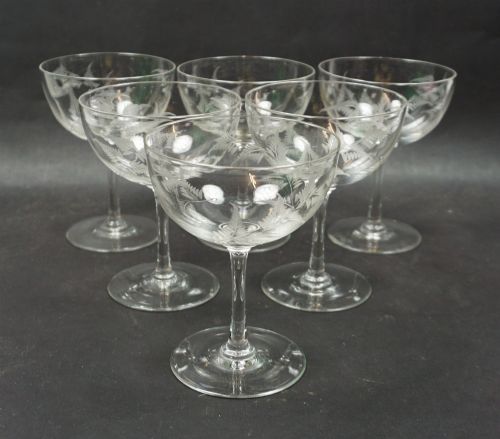
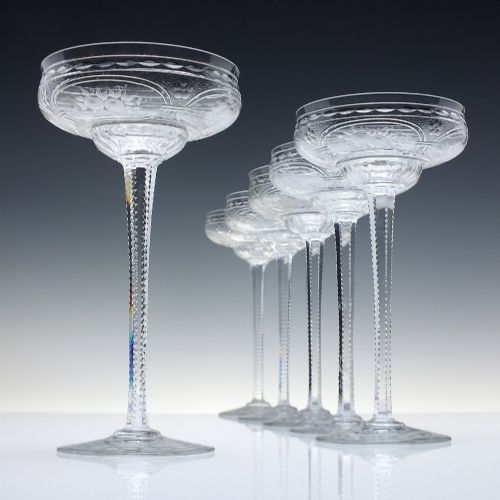
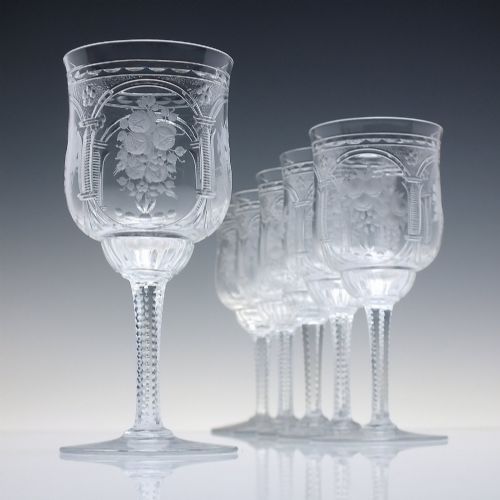
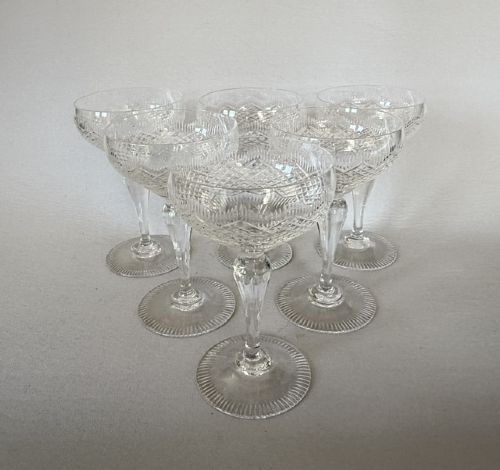
These clear crystal stemware set options bring period elegance to the table through cut, etched, and engraved glass vessels.
Clear Crystal Stemware Set
A clear crystal stemware set comprises matching drinking vessels raised on stems, designed for wine, champagne, port, and desserts. Buyers searching for a clear crystal stemware set will find matched groupings spanning the Georgian, Victorian, and Edwardian eras, alongside Art Deco suites.
The services range from intimate sets of four or six coupes and flutes to larger suites exceeding thirty pieces complete with pitchers and rinsers. Most examples met on this page showcase traditional British, Irish, and continental European production from the nineteenth and early twentieth centuries.
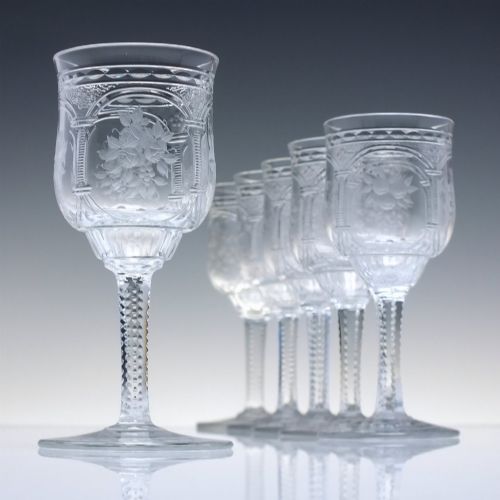
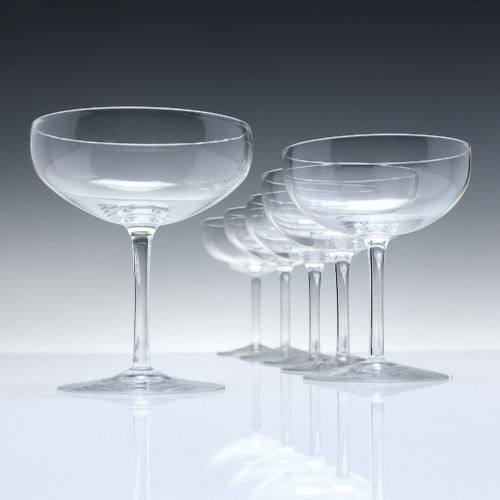
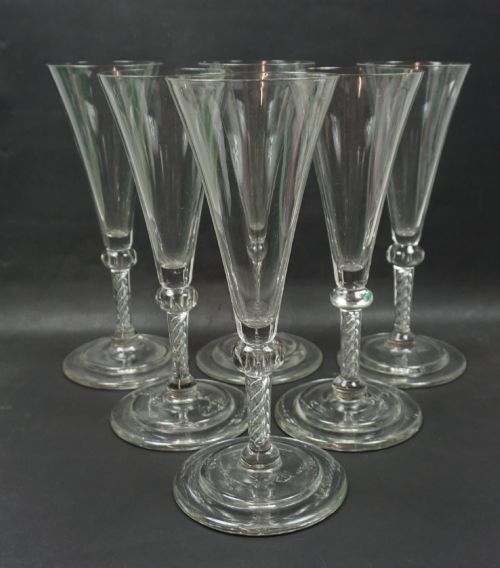
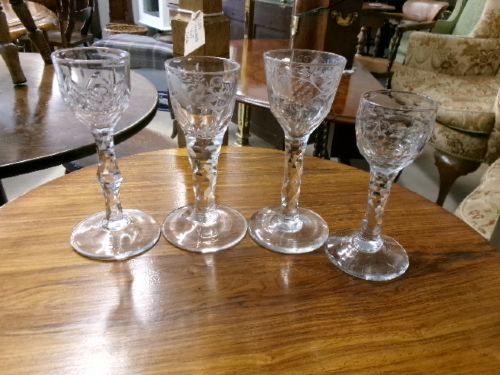
Forms vary from faceted port glasses and jelly glasses to tall air twist wine flutes and wide champagne bowls. Each service offers a uniform design across the vessels, whether plain, cut, etched, or enamel-decorated.
How they were made
The materials used across these listings include lead crystal, clear glass, and crystal glass, often shaped by blowing into moulds or free-blowing. Artisans then formed stems using techniques like air twists and opaque twists to trap air bubbles inside the glass column.
Decoration was applied through wheel-cutting, intaglio engraving, etching, and polychrome enamel work. Facet cutting created geometric patterns that caught the light, whilst skilled hands wheel-engraved botanical and abstract motifs onto the bowls.
Clear Crystal Stemware Set Retail Price Guide 2026
Typical asking prices for clear crystal stemware set among the pieces listed under this phrase on Sellingantiques today, from the lower quarter to the upper quarter. They describe what is for sale here now, not the wider market.
Some Victorian dessert wine sets come with matching finger rinsers for refreshing the palate between courses.
What varies in quality
Quality in a clear crystal stemware set rests upon the clarity of the metal and the crispness of the hand-cut or engraved decoration. Superior sets display sharp, clean facet edges and thin, evenly proportioned walls without distortion.
The uniformity of the set also dictates distinction, as larger suites require meticulous matching across every piece in height, weight, and decorative depth. Refinement in stem formation, such as tightly drawn air twists, marks higher execution.
Webb Corbett·Theresienthal
The Clear Crystal Stemware Set Glossary
- Lead crystal
- Glass containing lead oxide which increases weight, brilliance, and workability for cutting. It produces a clear, resonant ring when struck.
- Air twist
- A decorative stem formation created by drawing out threads of trapped air inside the molten glass into a spiral strand. This technique requires exceptional skill by the glassblower.
- Champagne coupe
- A shallow, broad-bowled stemmed glass traditionally used for sparkling wine. The wide rim allows the aromas to release quickly.
- Intaglio
- A technique where the design is carved deeply into the surface of the glass rather than raised in relief. It produces a frosted, detailed finish.
- Rinser
- A specialised bowl or vessel used at the table to wash or cool glasses between courses. They often match the decorative style of the accompanying glassware service.
Clear Crystal Stemware Set: Frequently Asked Questions
How do I clean antique crystal glassware safely?
Wash each piece by hand in warm water using a mild detergent, supporting the bowl and stem independently. Avoid sudden temperature changes to prevent thermal shock.
Dry immediately with a lint-free linen cloth to maintain the brilliance of the cut glass surface.
Can I use these antique glasses daily?
These pieces were made for use and handle everyday dining when treated with care. Hand washing is essential, and storage should prevent the rims from chipping against one another.
Larger services suit special occasions and formal dining settings.
What is the difference between a flute and a coupe?
A flute is tall and narrow, designed to preserve the carbonation and bubbles in sparkling wine. A coupe is wide and shallow, allowing aromas to disperse rapidly.
Both forms appear frequently in nineteenth and twentieth-century dining services.
How do I identify Georgian stemware?
Georgian pieces often feature heavy lead metal with darker tones, thicker foot bases, and hand-cut facets. Air twists and opaque twists in the stems are common diagnostic traits from this period.
Pontil marks on the underside indicate pontil-rod detachment during hand-blown production.