

Clear Crystal Georgian Glass
Clear crystal georgian glass brings tangible weight and brilliant refraction to the table, formed by centuries of hand-blowing and deep cutting.
Clear Crystal Georgian Glass
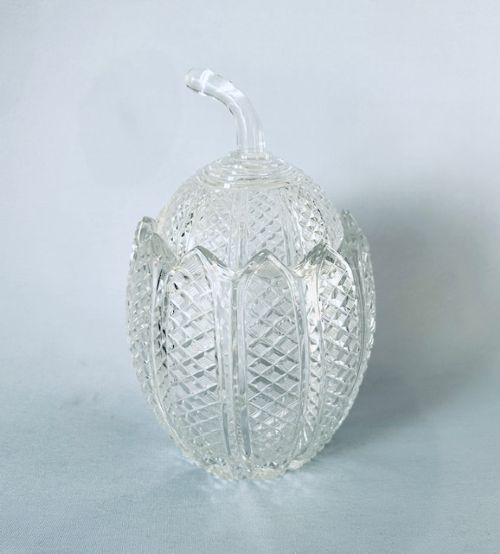
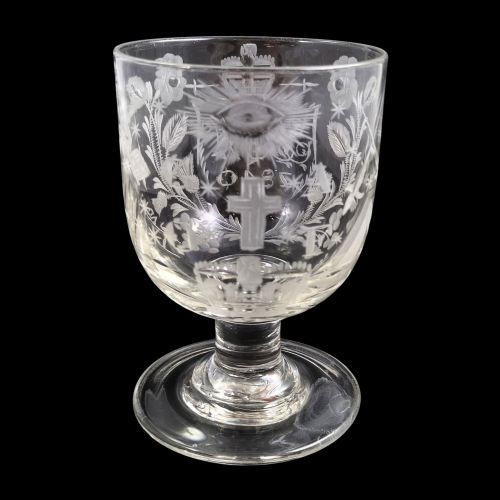
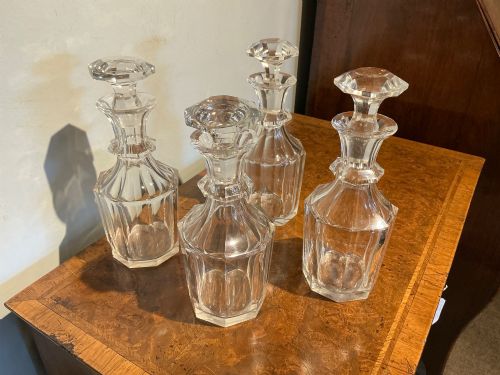
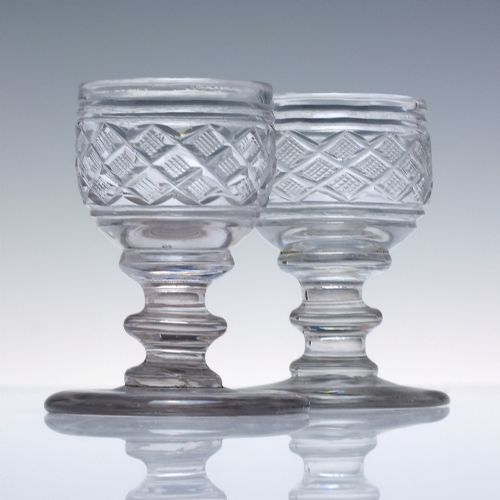
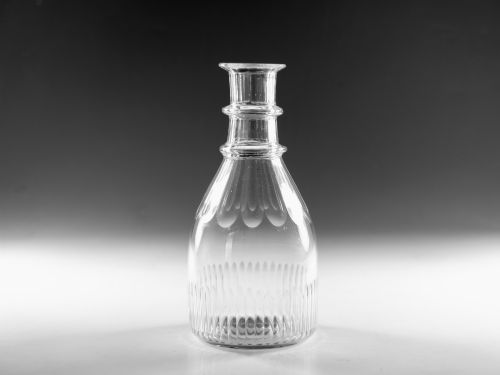
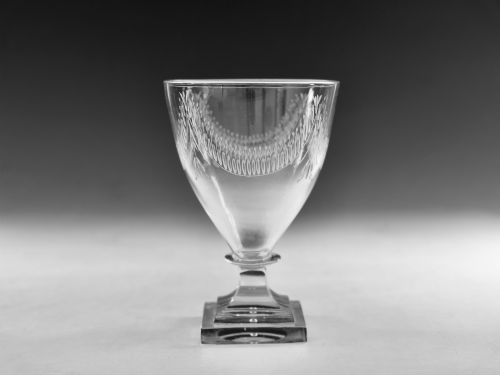
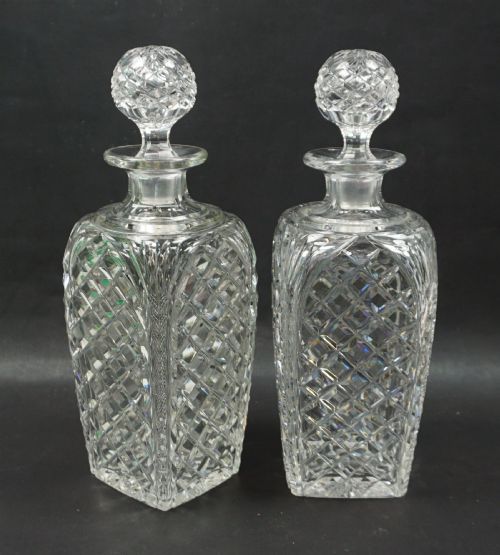
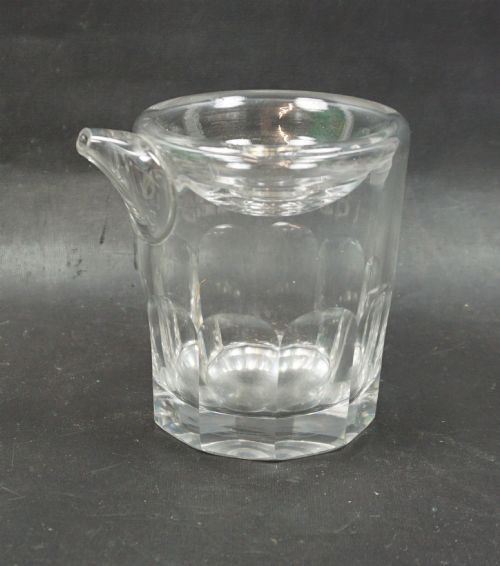
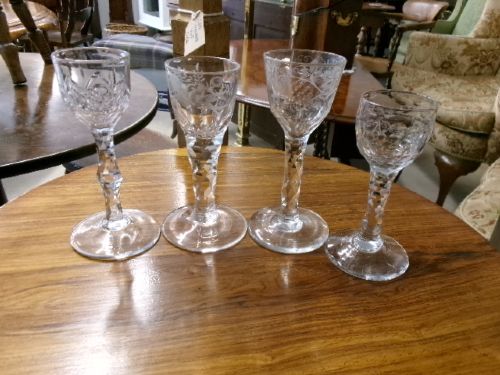
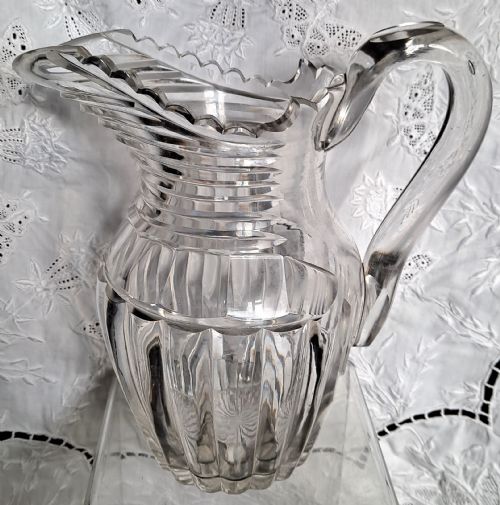
When searching for clear crystal georgian glass, collectors examine drinking vessels, decanters, and serving pieces spanning the eighteenth and nineteenth centuries. These items range from simple tavern tumblers and cordial glasses to heavily faceted water jugs and spirit carafes.
While most examples date to the Georgian and Regency eras, occasional later revivals from the twentieth century sit alongside the antique stock. Buyers encounter both plain stems and ornate pillar-cut vessels, each reflecting the shifting domestic habits of the period.
How they were made
Makers utilised heavy lead crystal and flint glass, which provided the dense substance necessary for deep wheel cutting and bright optical clarity. Artisans shaped these materials by hand-blowing molten glass into moulds or onto iron pontil rods.
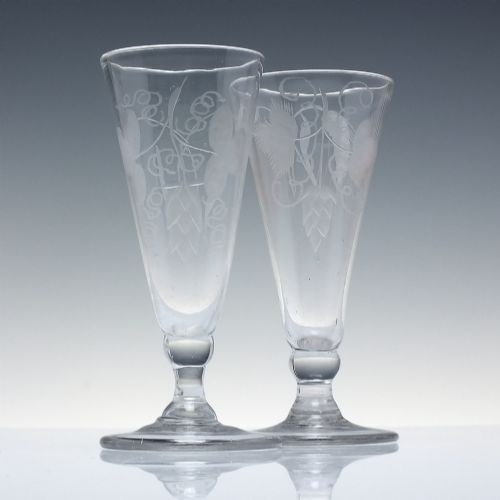
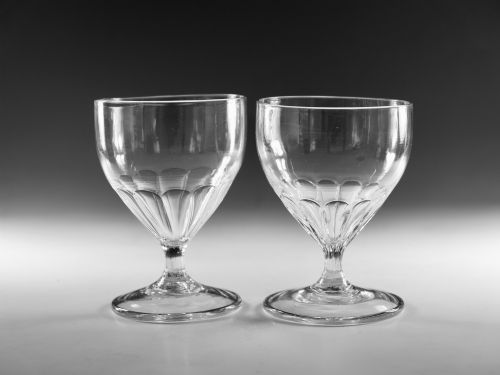
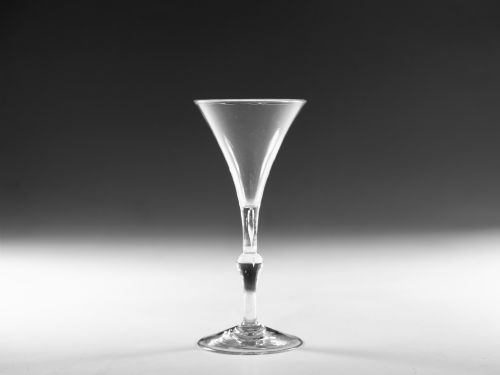
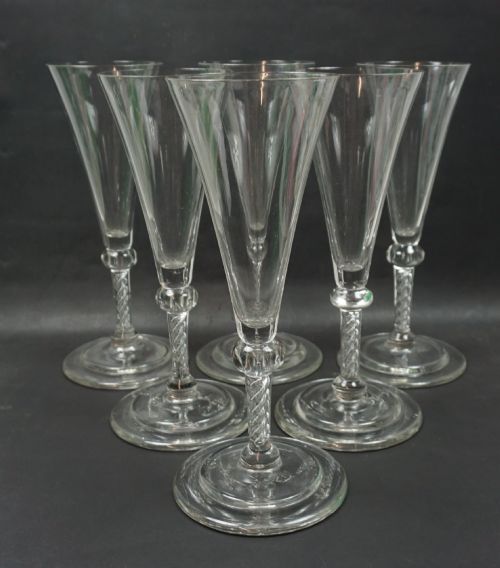
Surface decoration involved complex techniques including pillar and prism cutting, multi-spiral air twists, and wheel engraving with floral or hops and barley motifs. Stems were often formed with double knops, composite structures, or opaque twists drawn from white enamel threads.
What varies in quality
The distinction between standard domestic vessels and finer pieces rests upon the precision of the glasshouse execution and the weight of the metal. Heavier lead content grants superior ring and light dispersion, whereas lighter metal feels less substantial in the hand.
Artisanal skill shows clearly in the regularity of air twists, the depth and crispness of facet cutting, and the symmetry of foot bases. Pieces with unground pontil marks or uneven bowl walls sit lower in the range than those with balanced proportions and finely polished facets.
The Clear Crystal Georgian Glass Glossary
- Lead crystal
- A type of glass containing lead oxide, which increases weight, brilliance, and workability for cutting. This material became standard in British glasshouses during the eighteenth century.
- Air twist
- A decorative stem formation enclosing elongated bubbles or spirals of air trapped within the glass. Makers produced these by drawing and twisting heated cane.
- Opaque twist
- A stem variation incorporating fine white enamel threads twisted into linear or corkscrew patterns inside the clear glass. This technique originated around the mid-eighteenth century.
- Pontil mark
- The rough scar left on the base of a vessel where the punty iron was snapped off after blowing. Finer pieces often feature a ground and polished pontil.
- Rummer
- A large, sturdy drinking glass used for ale, wine, or punch during the eighteenth and nineteenth centuries. These vessels typically sat on a short stem with a wide foot base.
Clear Crystal Georgian Glass: Frequently Asked Questions
Are these pieces safe to use?
Most drinking glasses and decanters remain functional for occasional use, provided they are handled with care and washed gently. The lead content in antique glass is stable under normal conditions of use.
However, avoid storing acidic liquids or strong spirits in lead glass decanters for extended periods, and check older items for any structural hairline fractures before filling them.
How do I date a piece?
Examine the form, stem construction, and manufacturing marks to establish a period of manufacture. Eighteenth-century pieces often feature folded feet, plain stems, or air twists, while later Regency and nineteenth-century examples favour heavy facet cutting.
Look closely at the base for evidence of wear and pontil finish, which helps distinguish genuine antique production from later twentieth-century revivals.
What is the difference between flint glass and lead crystal?
Flint glass originally referred to high-quality glass made with calcined flints, though the term later became synonymous with clear lead glass in England. Both terms describe dense, bright material suited to cutting.
In practice, eighteenth-century British glasshouses used lead oxide extensively to achieve the heavy weight and refractive brilliance valued by collectors.