
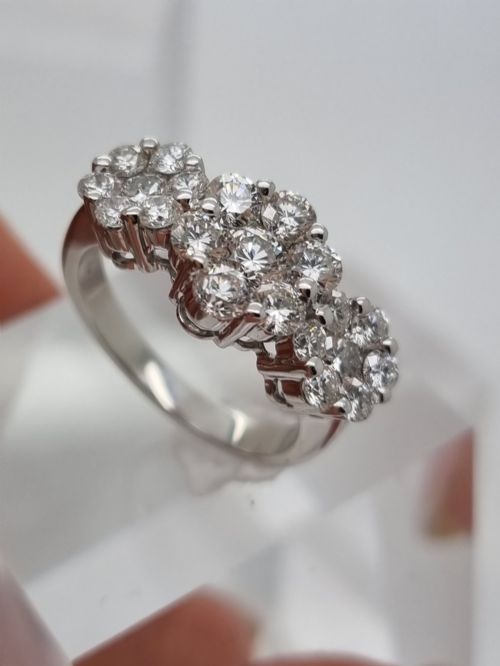
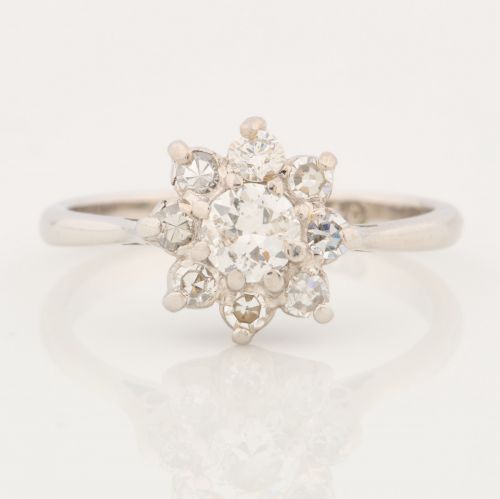
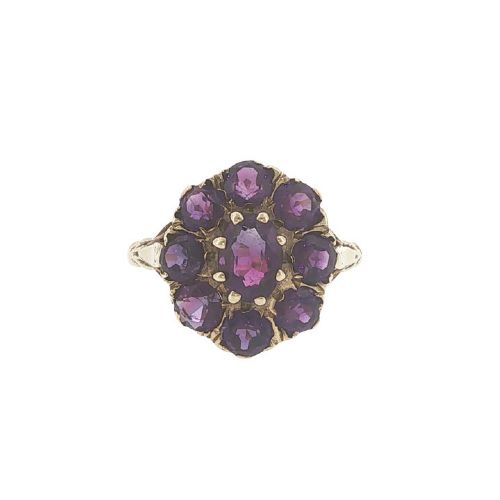


Claw Set Cluster Ring
A claw set cluster ring brings together central gemstones and surrounding stones held securely in individual claw mounts.
Claw Set Cluster Ring
A claw set cluster ring arranges a central gemstone encircled by smaller stones, creating a pronounced focal point on the hand. Collectors encounter designs spanning the Edwardian era, Art Deco period, and mid-twentieth century decades up to nineteen sixty.
The form encompasses traditional floral motifs, geometric arrangements, and tiered designs using gold and platinum bands. Gemstones span diamonds alongside coloured stones including amethysts, emeralds, sapphires, rubies, aquamarines, garnets, and tanzanites.
How they were made
Goldsmiths shaped bands from nine carat gold, eighteen carat yellow gold, eighteen carat white gold, twenty-two carat gold, and platinum, setting stones using individual metal claws to secure each gem. This technique allowed maximum light entry beneath the stones to enhance brilliance.
Craftsmen mounted diamonds alongside coloured gemstones such as emeralds, rubies, and amethysts in structured clusters, often incorporating intricate gallery work beneath the settings to support the multi-stone arrangement.
The inventory incorporates diverse gemstone combinations, pairing diamonds with amethysts, emeralds, sapphires, rubies, aquamarines, garnets, and tanzanites.
What varies in quality
The distinction lies in the precision of the claw work, the symmetry of the stone arrangement, and the weight and purity of the precious metal used for the band and setting. Superior examples display balanced proportions between the central stone and the surrounding cluster.
Quality also rests on the grade and cut of the diamonds and coloured gems selected, alongside the integrity of the hallmarking and the durability of the structural mountings securing each individual stone.
The Claw Set Cluster Ring Glossary
- Claw setting
- A mounting style where small metal prongs hold a gemstone securely in place while allowing light to pass through the stone. This method maximises brilliance by exposing the pavilion.
- Cluster ring
- A ring design featuring a central stone surrounded by a group of smaller stones. The arrangement creates the visual impact of a larger single gem.
- Old cut
- A diamond cutting style prevalent in earlier periods featuring a smaller table, higher crown, and open culet. These stones exhibit a distinctive chunky facet pattern under candlelight.
- Trilogy ring
- A ring set with three stones symbolising the past, present, and future. They frequently combine diamonds with coloured gems such as rubies or emeralds.
- Hallmark
- Official stamps applied to precious metals indicating purity and origin. These marks provide evidence of the metal standard and assay office.
Claw Set Cluster Ring: Frequently Asked Questions
How do I wear a cluster ring daily?
Pair your ring with plain bands to prevent friction between adjacent settings. Remove the piece during heavy manual tasks to protect the delicate claw mounts.
Store the ring in a fabric-lined box separately from other jewellery. Regular gentle cleaning maintains the sparkle of the clustered stones.
What periods do these rings represent?
The selection includes Edwardian pieces alongside Art Deco designs from the nineteen thirties and mid-century examples up to nineteen sixty. Each era brings distinct metal choices and geometric or floral motifs.
Examination of the hallmarks and setting styles reveals the specific period of origin. Edwardian designs often feature platinum work, while later decades show preference for yellow and white gold.
Which gemstones appear in these clusters?
Diamonds form the primary stones or surround accents in numerous pieces. Coloured gems such as sapphires, emeralds, rubies, amethysts, aquamarines, garnets, and tanzanites also feature prominently.
Combinations vary from all-diamond floral arrangements to contrasting coloured centre stones bordered by brilliant cut diamonds. Each gemstone brings unique colour saturation to the cluster design.
What metals were used for the bands?
Goldsmiths utilised platinum, nine carat gold, eighteen carat yellow gold, eighteen carat white gold, and twenty-two carat gold. Platinum gained favour in Edwardian workshops for its strength and bright finish.
Yellow and white gold variants appear across the vintage and mid-century items. The choice of metal often coordinates with the era and the tone of the set gemstones.