


Floral Engagement Ring
A floral engagement ring brings together precious stones in a botanical cluster, offering a timeless alternative to the single solitaire.
Floral Engagement Ring
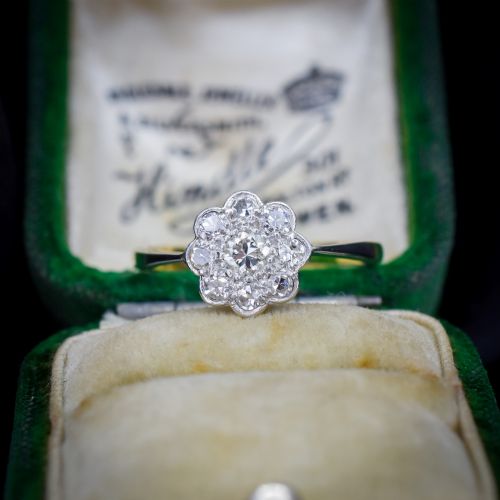
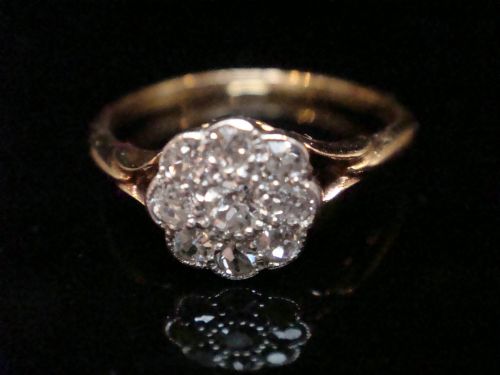
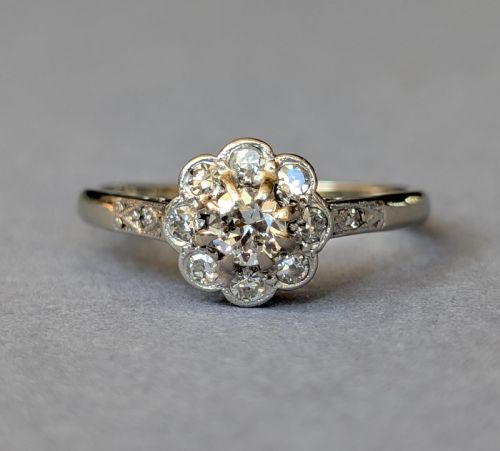
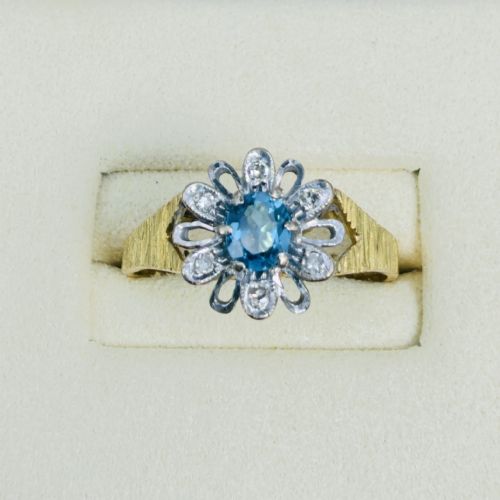
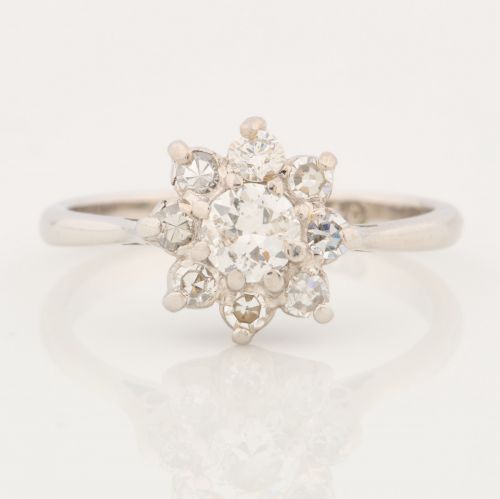
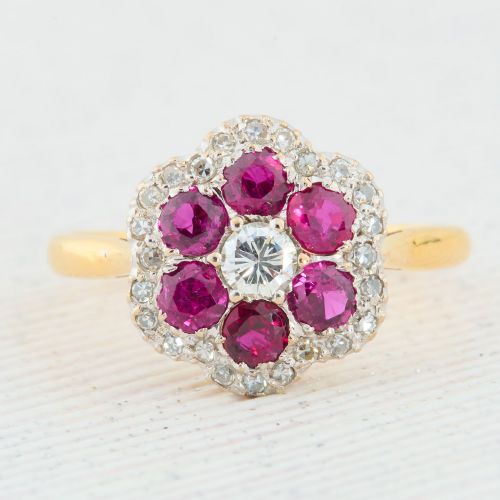
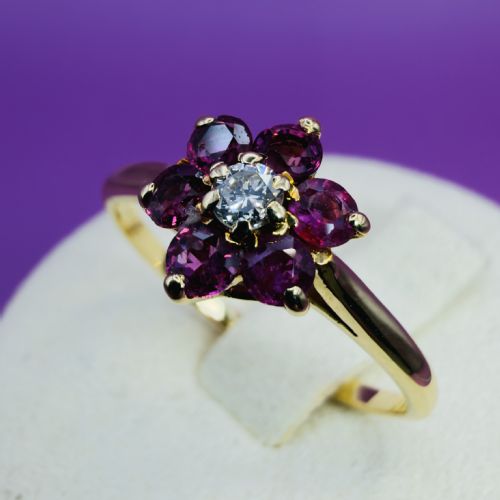
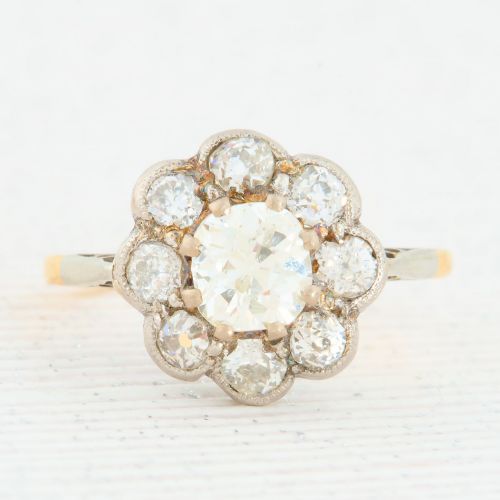
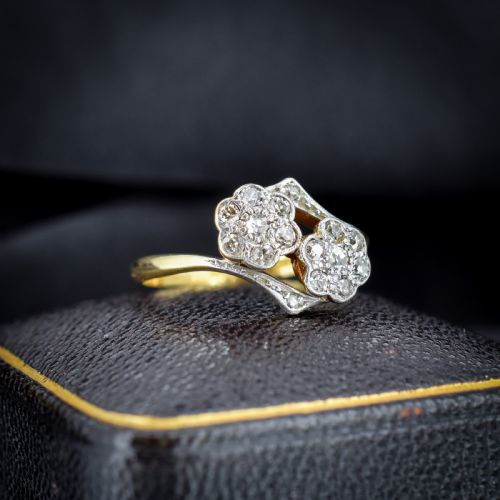
A floral engagement ring centres on a central stone surrounded by smaller gems to form a botanical motif. These pieces typically take the form of a daisy cluster, with periods ranging from Victorian and Edwardian through to Art Deco and mid-century designs.
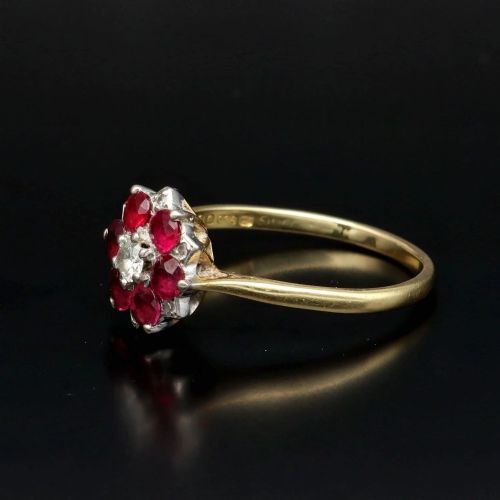
Buyers encountering this selection will frequently find Edwardian and vintage clusters utilising diamond, sapphire, ruby, and turquoise. The underlying structures combine yellow gold, white gold, and platinum to support the floral arrangements.
Materials and Construction
Goldsmiths constructed these rings using combinations of 18ct yellow gold, 18ct white gold, and platinum. Platinum settings frequently secure diamond clusters to enhance the brilliance of old cut stones against a bright white metal.
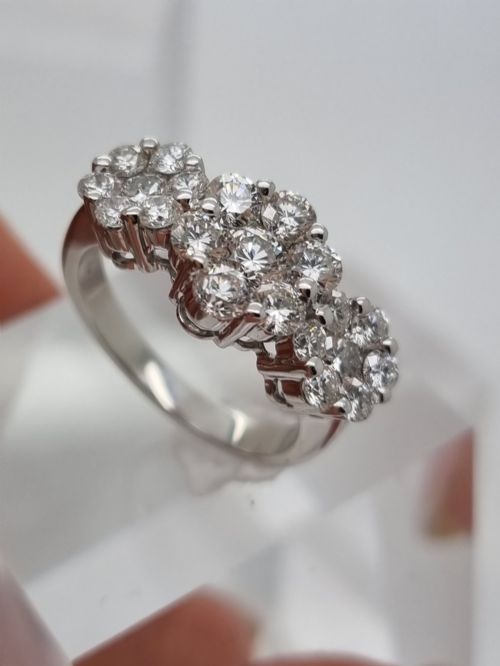
The mounting techniques rely on cluster settings where petal stones encircle a larger centre gem. Gemstones such as diamonds, sapphires, rubies, and turquoise are secured in claw or bezel arrangements to define the floral shape.
Evaluating Quality
Quality in these rings rests on the match and cut of the surrounding stones that form the petals. Uniformity in stone size and colour creates a coherent floral silhouette that holds the eye.
The precision of the metalwork defines the construction standard. Fine claw work and well-balanced proportions between the central stone and the surrounding cluster distinguish superior examples.
The Floral Engagement Ring Glossary
- Cluster ring
- A ring setting where multiple smaller gemstones surround a larger central stone. This configuration forms the structural basis for floral and daisy designs.
- Old cut diamond
- A diamond cut by hand before modern machine methods were standardised. These stones feature smaller tables and larger culets that create a softer, deep-set sparkle.
- Daisy ring
- A specific cluster configuration featuring white petal stones, typically diamonds, arranged around a central stone to mimic a daisy flower.
- Platinum
- A dense, durable white metal utilised in jewellery manufacturing. It provides strong claw security for delicate stone settings without adding yellow tones.
Floral Engagement Ring: Frequently Asked Questions
What periods do these rings come from?
The pieces span multiple eras, with strong representation from Victorian, Edwardian, Art Deco, and mid-century periods.
Each era brings distinct characteristics in gold colour and stone arrangement to the floral motif.
What gemstones are used in floral rings?
Diamonds form the primary stone or surround coloured gems like sapphires, rubies, and turquoise.
Combinations of diamonds with deep blue sapphires or red rubies create high contrast within the flower clusters.
How do I identify an Edwardian floral ring?
Edwardian examples frequently combine yellow gold shanks with platinum-topped settings for the diamonds.
Lighter, intricate gallery work often characterises the metal structure of this period.
Are these rings suitable for daily wear?
Cluster rings in 18ct gold and platinum offer solid durability for everyday use.
Regular checks on the claw settings help maintain the security of the smaller stones forming the petals.