
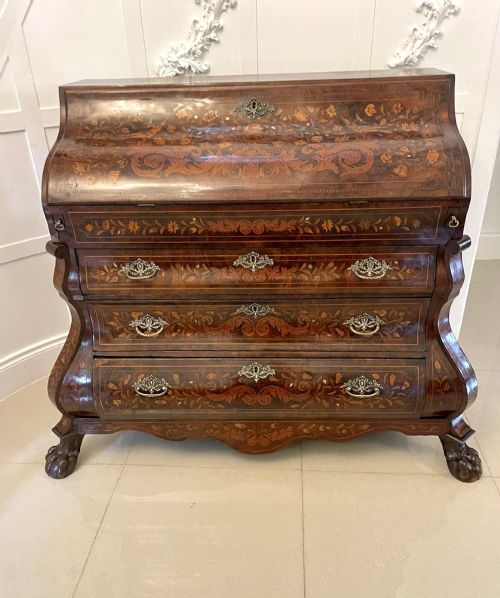
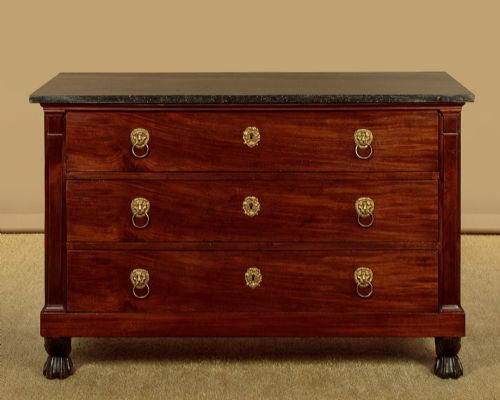
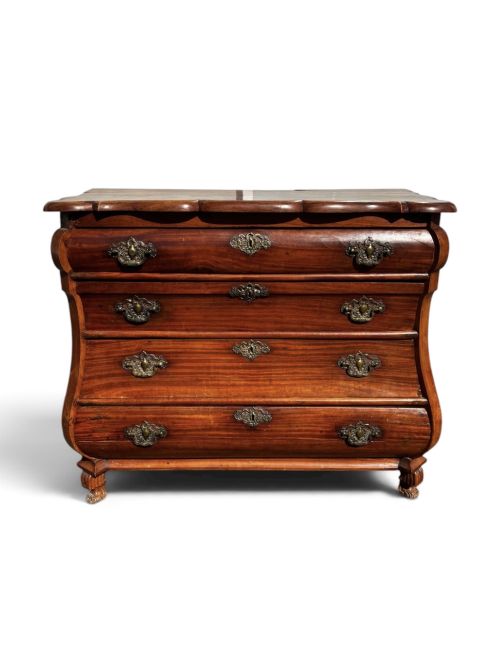
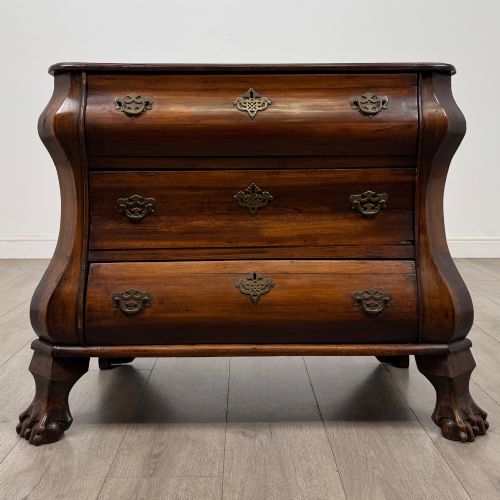



Claw Foot Chest Drawers
These claw foot chest drawers bring grounded presence to a room, offering robust storage shaped by centuries of cabinet-making.
Claw Foot Chest Drawers
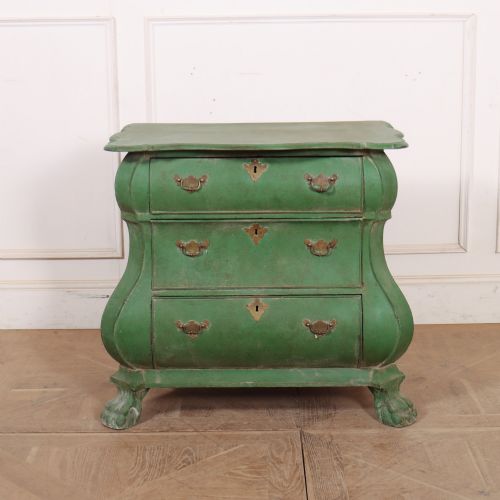
A claw foot chest drawers unites practical storage with the distinctive punctuation of carved feet, most frequently appearing in mahogany, walnut, or pine forms. The selection ranges from substantial Georgian and Victorian pieces to dramatic Dutch bombe commodes and bureaux.
Makers shaped these chests across multiple eras, including the eighteenth and nineteenth centuries, alongside Edwardian interpretations and Georgian style revivals. Buyers encounter standard drawer configurations as well as bureau desks, lowboys, and chests on stands.
The regional variety spans British mahogany designs to Dutch colonial satinwood, rosewood, and floral marquetry inlaid examples. Formats vary from straight-fronted proportions to curved bombe silhouettes resting upon prominent paw or ball and claw feet.
Materials and construction
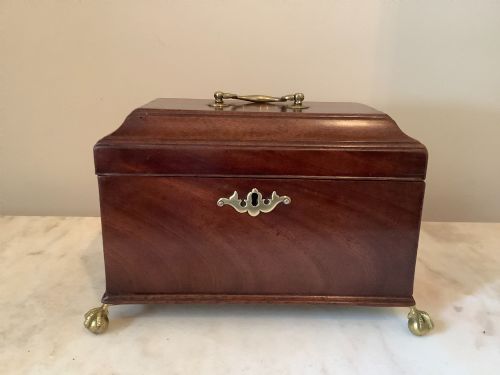
Cabinet-makers relied upon solid timbers and figured veneers, selecting mahogany, walnut, burr walnut, fruitwood marquetry, and satinwood to build these carcasses. Brass handles and escutcheons punctuate the facades, while occasional marble tops provide durable surfaces.
Construction involved joining carcases with traditional dovetail joints for stability, mounting drawers within frames that accommodated movement in the timber. Skilled hands carved detailed ball and claw or paw feet directly from the primary wood or attached them firmly to the base.
Materials documented include solid satinwood, rosewood, fruitwood marquetry, marble, and painted wood.
Differentiating quality
The grade of a piece rests upon the crispness of the carved feet and the selection of figured timbers used for the primary surfaces. Finer examples display meticulous floral marquetry inlay and balanced proportions across bombe curves.
Depth of craftsmanship shows in the internal timber choices, the preservation of original brass hardware, and the seamless integration of secondary woods like pine in regional vernacular pieces.
Muirhead Moffat & Co
The Claw Foot Chest Drawers Glossary
- Bombe
- A swelling, bulging front and side profile characteristic of continental furniture. This contoured shape demands advanced woodworking skill to maintain structural integrity.
- Marquetry
- Decorative veneer patterns formed by fitting together thin slices of various coloured woods. Craftsmen assemble floral and geometric motifs to adorn drawer fronts and surfaces.
- Lowboy
- A small side table featuring a low bank of drawers supported by four legs. These compact pieces often share stylistic traits with contemporary chests.
- Commode
- A European term for a low chest of drawers or cabinet. They frequently stand on prominent legs and feature decorative mounts.
- Bureau
- A desk fitted with a sloping flap that opens to reveal a writing surface and small compartments. Many incorporate internal secret drawers beneath the fitted interior.
Claw Foot Chest Drawers: Frequently Asked Questions
How do I date a mahogany chest?
Dating relies on examining construction methods, timber selection, and hardware styles across the carcass. Eighteenth-century pieces typically show hand-cut dovetails and native timber framing.
Later Victorian and Edwardian examples incorporate machine assistance, standardised fixings, and distinct revival design motifs.
Where were claw foot chests used?
These chests served primarily in bedchambers and parlours to store garments, linens, and personal documents. Their decorative feet ensured they were displayed prominently.
Grand reception rooms also housed ornate marquetry and bombe variants to signal status and taste.
Are pine chests genuine antiques?
Pine variants from the Victorian era represent authentic utilitarian furniture built for robust domestic service. They were frequently finished with wax or paint.
Regional workshops produced these simpler chests alongside high-end hardwood commissions for different households.