

Claw and Ball Tea Table
A claw and ball tea table brings structured 18th-century design to a room, offering a sturdy surface shaped for hosting or display.
Claw and Ball Tea Table
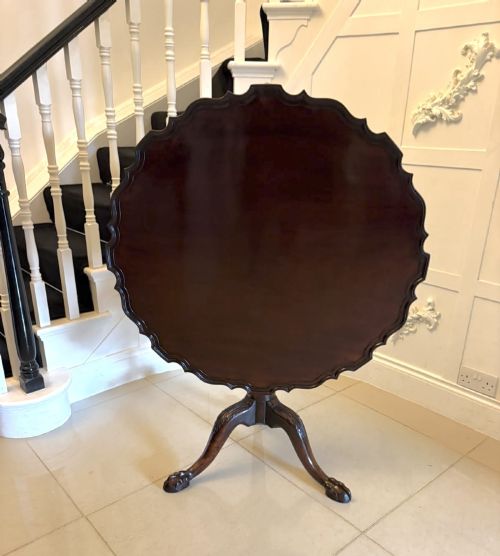
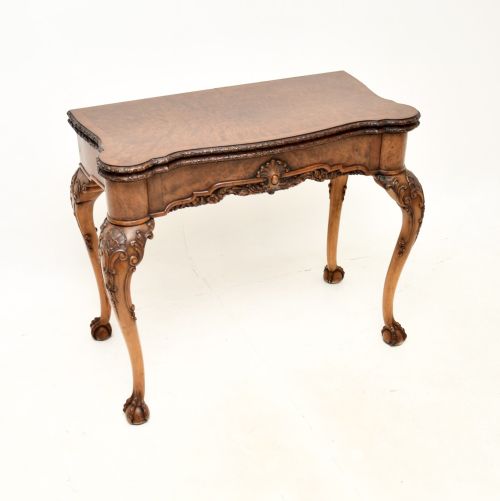
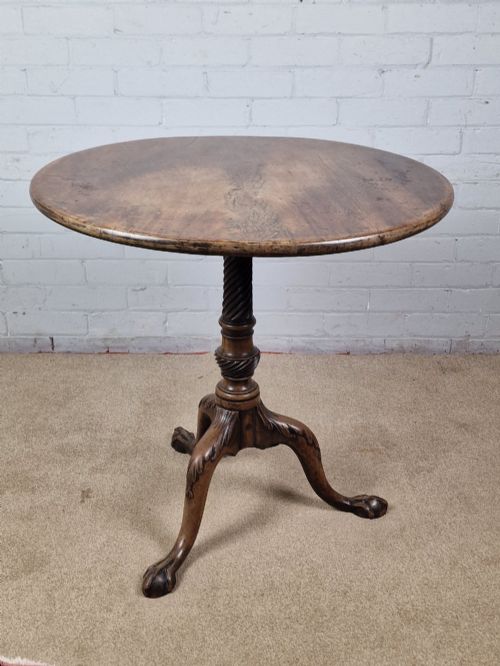
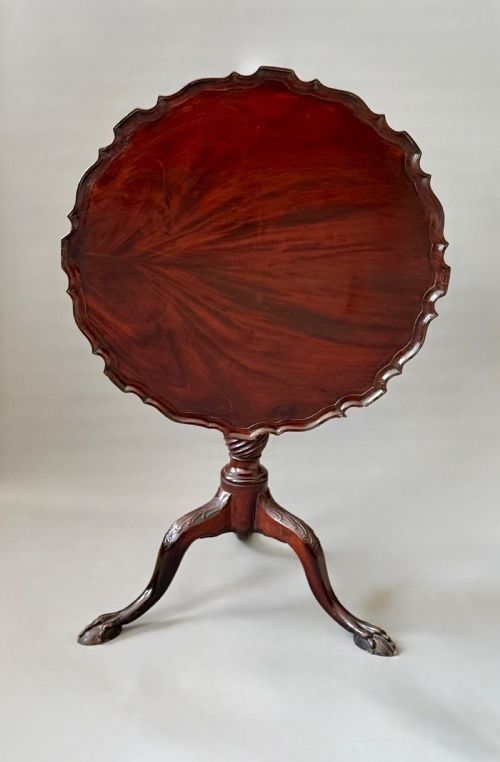
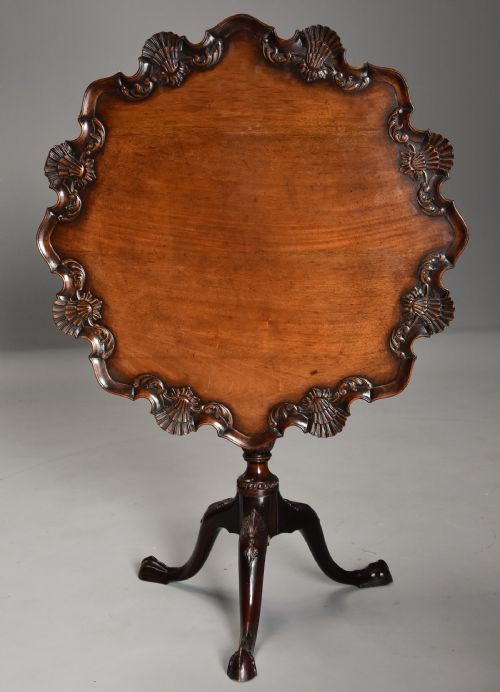
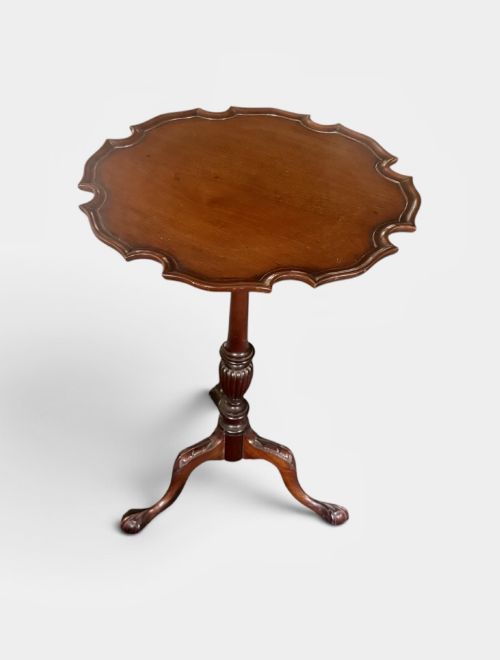
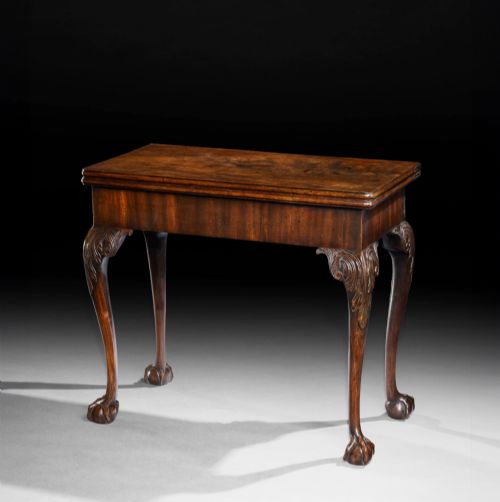
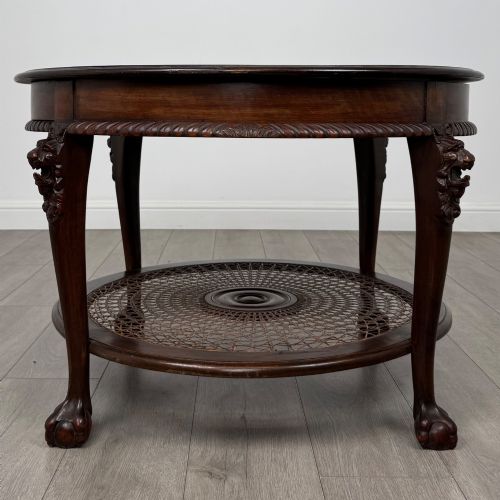
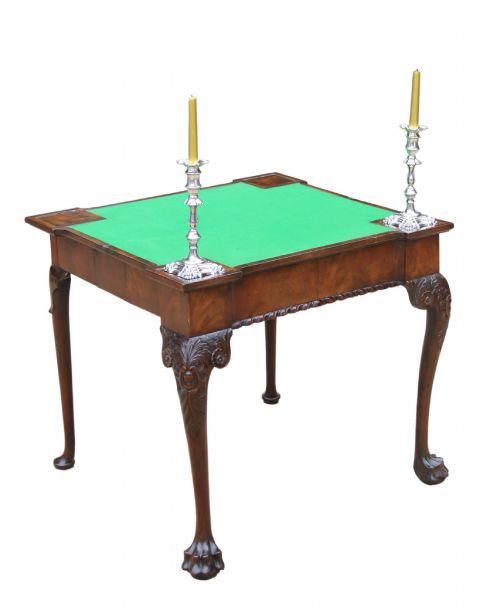
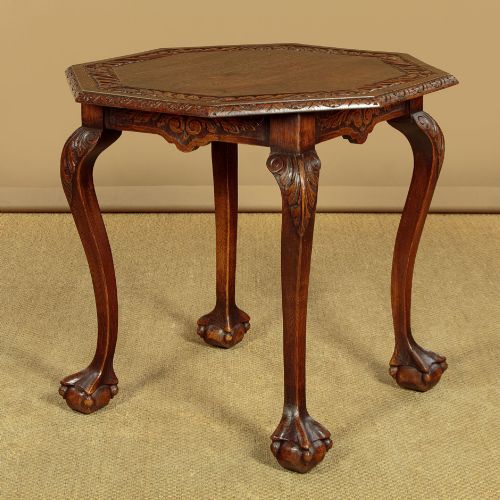
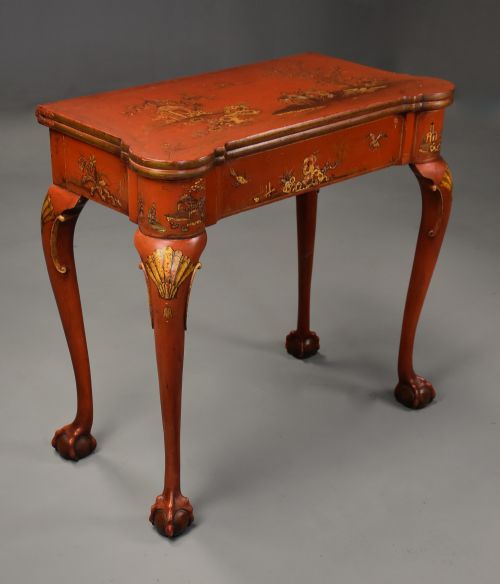
A claw and ball tea table is a functional antique surface designed for hospitality, commonly found in mahogany and walnut across 18th-century and revival periods. These pieces include tripod tea tables, card tables, and occasional tables featuring carved foot details.
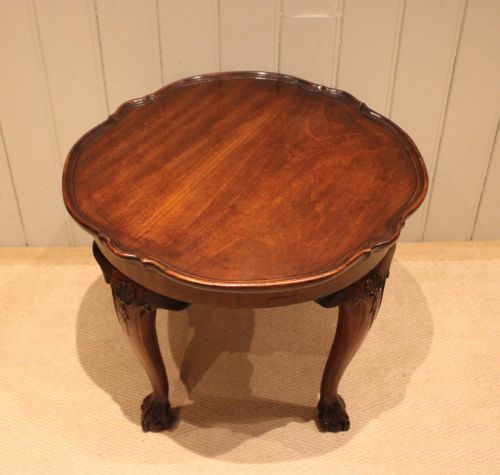
The selection here ranges from George II and George III originals to later Chippendale Revival, Edwardian, and 20th-century interpretations. Occasional tables and tilt-top formats appear alongside concertina action card tables and games tables.
How they were made
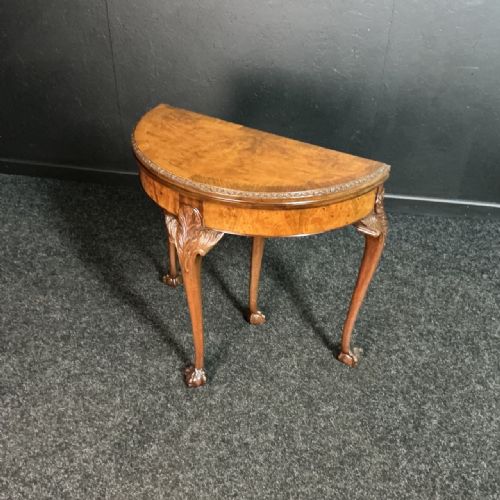
Cabinetmakers constructed these tables primarily from solid mahogany and walnut, frequently utilising burr walnut veneer for figured surfaces. Oak and brass hardware appear on structural and mechanical elements.
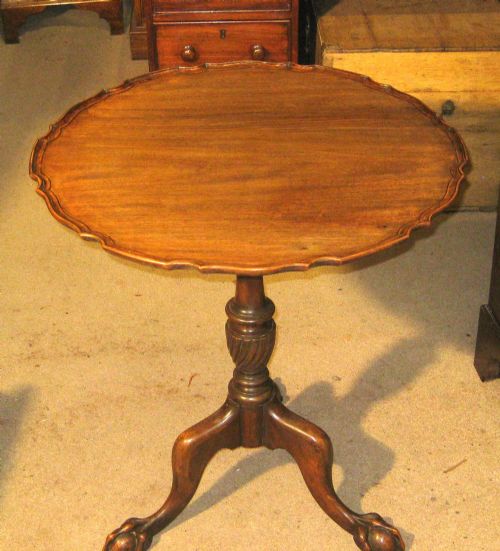
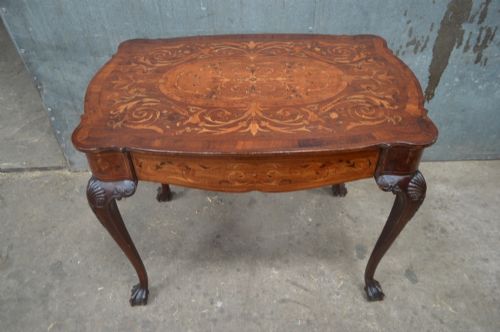
Carving defines the style, from shaped piecrust rims to the intricate bird inlay and tripod legs terminating in characteristic claw and ball feet. Concertina actions and tilt mechanisms required precise joinery to function smoothly.
Object forms span tea tables, card tables, tripod tilt-top tables, and low coffee tables using solid timbers and burr walnut veneers.
What varies in quality
The crispness of the carved details on the feet and borders sets superior examples apart from simpler pieces. Deeply defined talons grasping the ball demonstrate skilled hand-carving.
Original timber patination and rich grainfiguration elevate an object, particularly where burr walnut veneer or solid mahogany has aged naturally over centuries.
Giles Grendey
The Claw and Ball Tea Table Glossary
- Claw and ball
- A furniture foot design representing a bird's talon clutching a spherical object, popular in 18th-century cabinet making. It originates from eastern motifs adapted through European trade.
- Piecrust rim
- A raised, decorative edge carved with undulating curves resembling a pastry crust. This detail guards against items sliding off tilt-top tables.
- Tilt top
- A table mechanism allowing the surface to pivot vertically for storage against a wall when not in use. It is commonly supported on a central pillar and tripod base.
- Concertina action
- An expandable frame mechanism used on card tables that extends outwards like an accordion to support folded leaves. This allows four legs to remain balanced when open.
- Tripod base
- A central pedestal supported by three diverging legs. This configuration provides stability on uneven floors without wobbling.
Claw and Ball Tea Table: Frequently Asked Questions
What is a claw and ball tea table?
A claw and ball tea table is a sturdy wooden table featuring distinct carved feet where talons grasp a sphere. They were built for serving tea or general parlour use.
Over time, cabinetmakers adapted these forms into various formats including tilt-top dining surfaces and expandable card tables.
How do I date a mahogany tea table?
Dating relies on examining the timber species, joinery construction, and stylistic clues such as carving depth. 18th-century originals display hand-cut joinery and rich natural patination.
Revival pieces from the Edwardian era or 19th century often use machine-prepared timber and display different secondary woods inside the frame.
What is a tilt top table used for?
A tilt top table allowed households to save floor space by pivoting the surface flat against a wall when the room was needed for other activities.
In daily use, the central pillar and tripod base provided a stable eating or writing surface that could be moved easily.
How do concertina action card tables work?
Concertina action card tables utilise an expanding wooden frame that stretches outwards when the top leaf unfolds. This mechanical cleverness provides structural support to the open corners.
When closed, the frame collapses neatly back into a standard console or side table profile.