

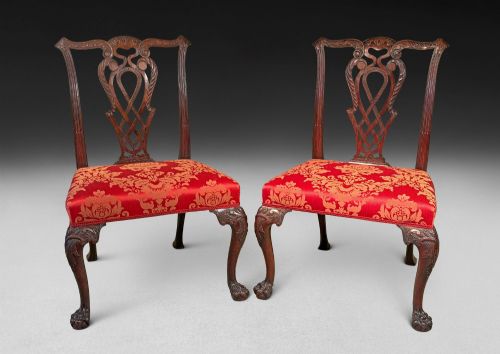
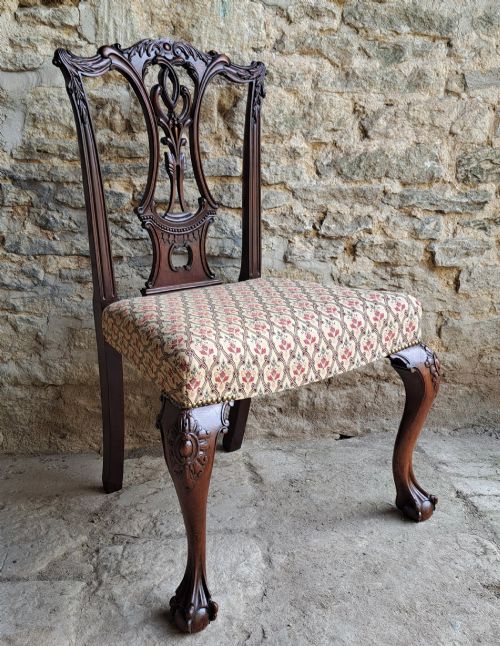
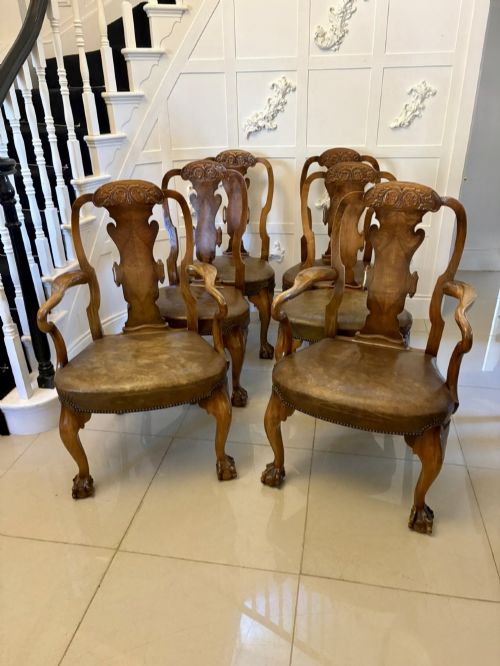
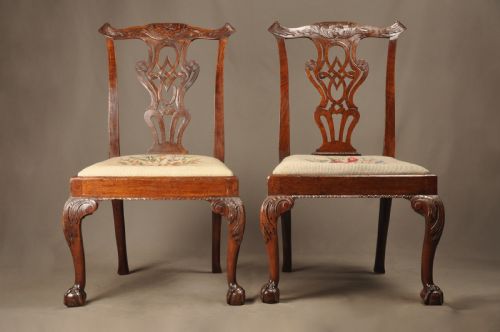
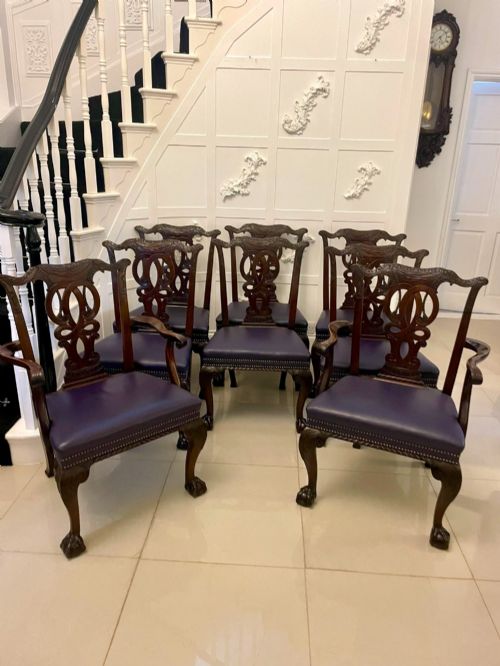
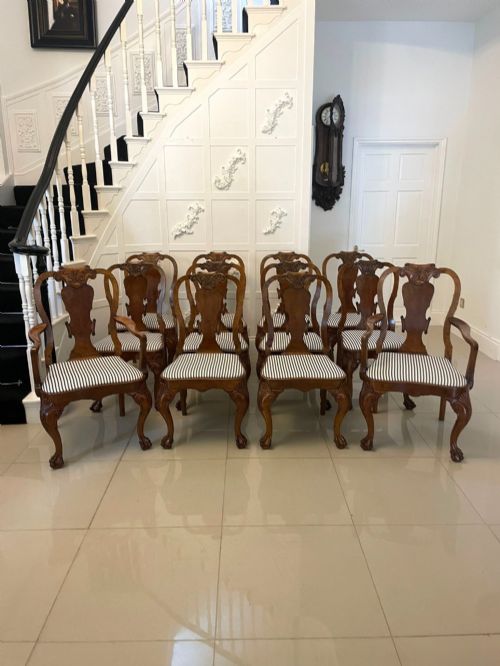
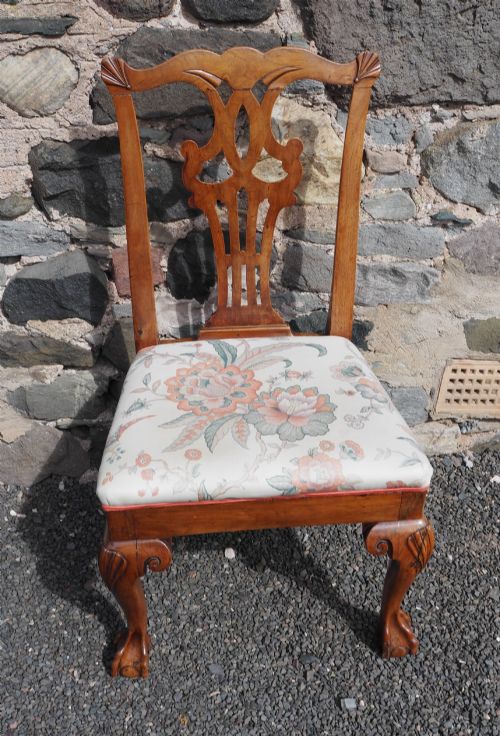
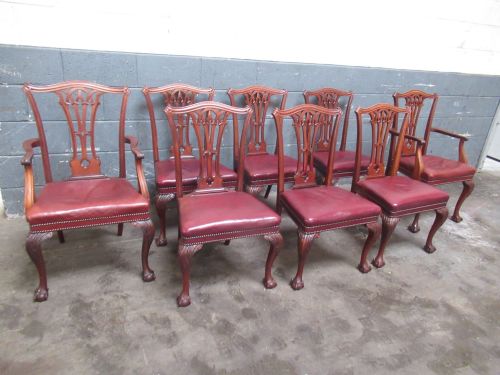
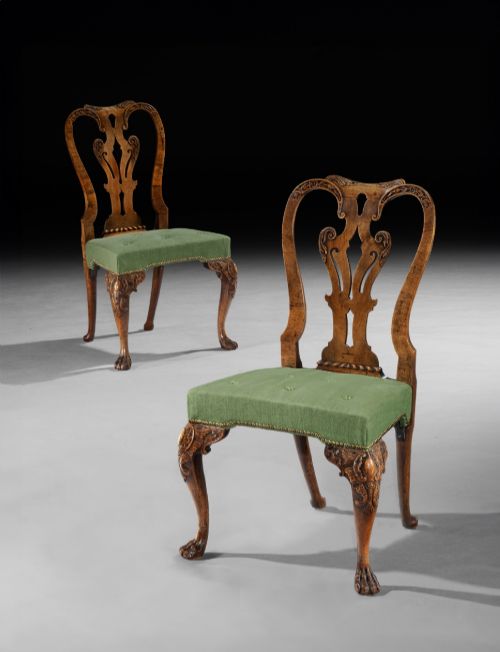
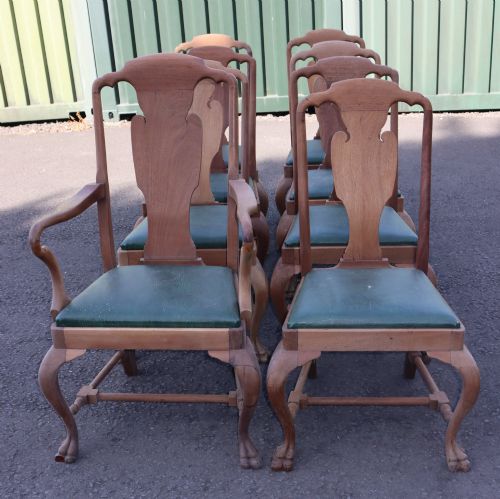
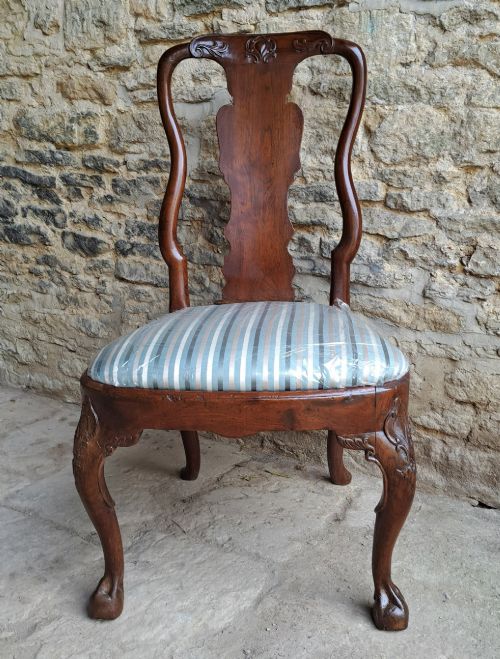
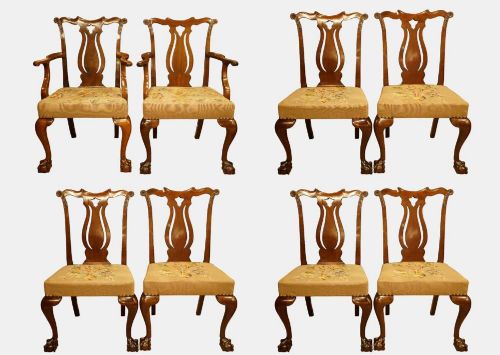
Claw and Ball Side Chair
These claw and ball side chair options bring robust joinery and bold carved feet to the dining room.
Claw and Ball Side Chair
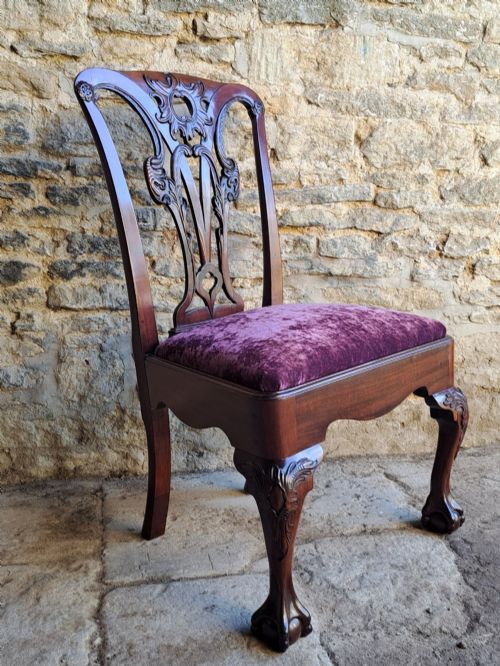
A claw and ball side chair is a seat designed without arms, featuring the distinctive motif of a bird's talon grasping a spherical ball upon each front foot. When searching for a claw and ball side chair, buyers encounter pieces spanning from the mid-eighteenth century up through extensive revival periods in the nineteenth and early twentieth centuries.
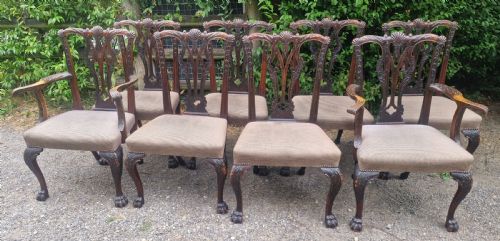
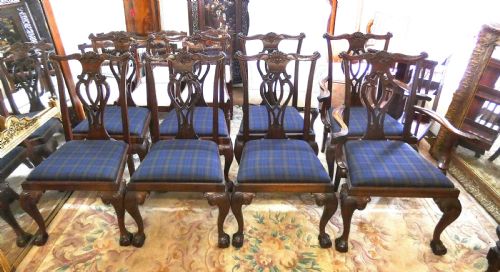
The form appears frequently in dining sets, single pairs, and occasional furniture rather than solitary seating. Construction typically draws on durable hardwoods shaped into cabriole legs that sweep downward to terminate in the carved foot.
Most examples found on this page reflect either Georgian origins or later revivals inspired by Chippendale and Queen Anne aesthetics. These variations range from modest single pieces to large dining sets created in mahogany or walnut.
How they were made
Cabinetmakers constructed these frames primarily using dense timbers such as mahogany and walnut, which provided the structural integrity required for carved details. Selected woods often displayed rich grain patterns that were polished to a deep lustre.
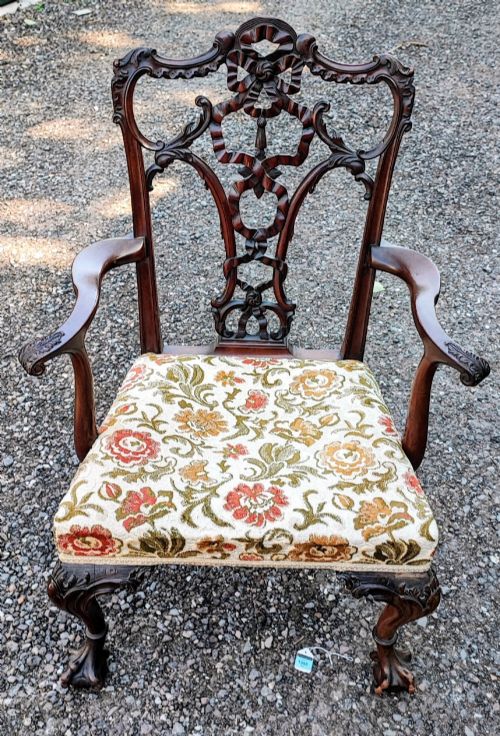
Carving formed the central technique for shaping the knees of the cabriole legs, the splats of the chair backs, and the talons themselves. Artisans utilised hand chisels to define the knuckles, sinews, and ball shapes of the feet.
Seat frames were typically upholstered over webbing or drop-in foundations, utilising materials like leather, velvet, fabric, or tapestry to complete the seating surface.
Claw and Ball Side Chair Retail Price Guide 2026
Typical asking prices for claw and ball side chair among the pieces listed under this phrase on Sellingantiques today, from the lower quarter to the upper quarter. They describe what is for sale here now, not the wider market.
Listings feature mahogany and walnut as the primary woods, spanning the eighteenth century through the Edwardian period.
What varies in quality
The depth and crispness of the carving distinguish finer examples from standard production, particularly in the definition of the talons and the proportion of the ball. Superior pieces display smooth, confident curves along the cabriole leg without abrupt transitions.
Timber selection dictates much of the visual character, with figured mahogany and burr walnut commanding greater presence than plainer grain. Joinery execution beneath the seat rail and at the crest joint determines the structural longevity of the chair.
Warings·Whytock and Reid
The Claw and Ball Side Chair Glossary
- Cabriole leg
- A furniture leg that curves outward at the knee and tapers inward toward the ankle, mimicking the leg of an animal. This form underpins the stance of most chairs featuring the grip foot.
- Splat
- The vertical wooden strip down the centre of a chair back that provides lumbar support. These elements often feature pierced or carved ribbon designs in revival pieces.
- Drop-in seat
- A removable wooden frame upholstered separately and dropped into a recess within the chair seat rails. This construction allowed for straightforward reupholstering without dismantling the main frame.
- Irish walnut
- A regional timber variety noted for its deep red coloration and distinctive figuring. Chairs fashioned from this material often display robust proportions and heavy carving.
Claw and Ball Side Chair: Frequently Asked Questions
What periods do these chairs date from?
The selection includes genuine eighteenth-century pieces alongside nineteenth- and early twentieth-century revival examples.
Craftsmen across these eras reproduced the distinctive foot motif using period-appropriate timbers and hand-carving methods.
Are these chairs suitable for daily dining?
These seats function well for regular dining use when the underlying joinery remains firm and stable.
Proper maintenance of the wooden frame ensures these chairs withstand daily gatherings.
What is the difference between walnut and mahogany versions?
Walnut examples predominantly align with earlier periods or Queen Anne designs, displaying softer brown tones and prominent grain.
Mahogany chairs frequently connect to Chippendale styles, offering a denser timber capable of sharper, deeper carving.
How do I identify a revival piece from an eighteenth-century original?
Original pieces display tool marks, timber shrinkage, and wear consistent with age across internal frame components.
Revival furniture from the Victorian and Edwardian eras typically exhibits machine-assisted preparation alongside nineteenth-century construction methods.