




Claw and Ball Foot Desk
These claw and ball foot desk pieces combine sturdy timber with traditional craftsmanship, offering a functional workspace rooted in historical periods.
Claw and Ball Foot Desk
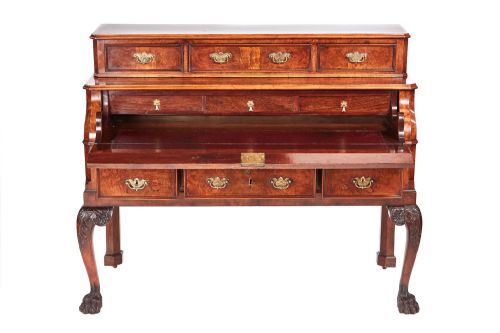
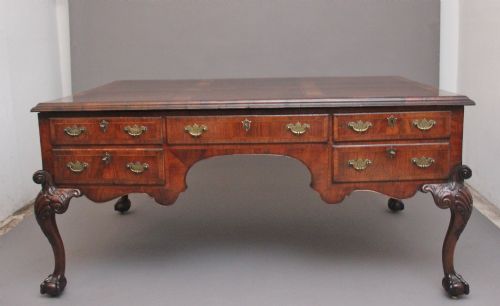
A claw and ball foot desk brings together solid wood construction and distinctive carved supports associated with earlier cabinet making traditions. When searching for a claw and ball foot desk, buyers encounter forms that span several centuries, including styles from the eighteenth century onwards.
The selection ranges from revival interpretations made in the early twentieth century to earlier examples shaped from mahogany and walnut. These items serve as functional writing surfaces while carrying decorative carving on the lower terminals.
How they were made
Makers shaped these items using primary hardwoods such as mahogany and walnut, frequently applying timber veneers over secondary woods. Workshops employed traditional joinery methods to construct the carcasses and drawers.
Carvers shaped the terminal supports by hand to form the distinct bird or beast claw clutching a sphere. Brass hardware such as handles and escutcheons were fitted to drawers, alongside inset leather writing surfaces on specific desk forms.
Listings feature woods such as mahogany, walnut, burr walnut, and oak across eighteenth and nineteenth-century periods.
What varies in quality
Quality rests in the crispness of the hand carving on the wooden terminals and the selection of timber veneers used across the main body. Superior pieces demonstrate balance in proportions and well-figured grain patterns.
The integrity of the structural joints and the handling of secondary woods distinguish standard production items from more accomplished workshop output.
The Claw and Ball Foot Desk Glossary
- Claw and ball
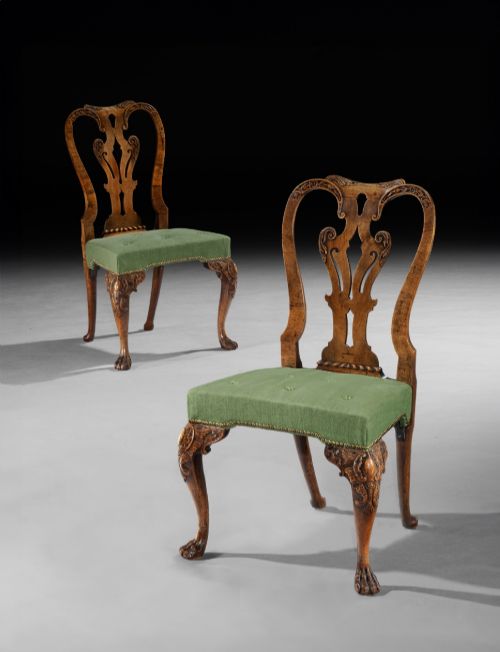
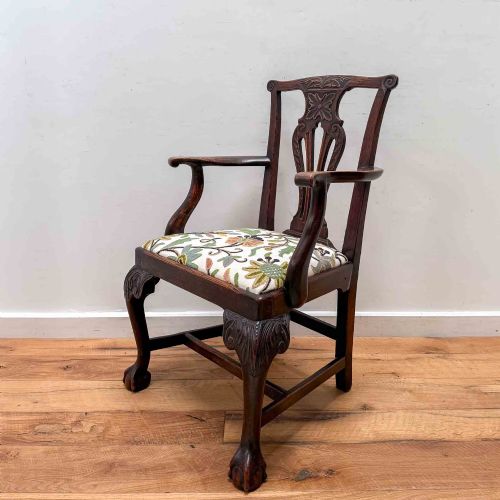
- A carved furniture foot representing a bird talon or beast paw gripping a spherical object. This motif appears frequently on eighteenth-century seating and desk supports.
- Mahogany
- A durable tropical hardwood imported from the West Indies and Central America. It gained widespread favour among cabinet makers for its reddish-brown colour and stability.
- Walnut
- A dense timber utilised for furniture carcasses and decorative veneers before mahogany rose to prominence. Burr walnut exhibits intricate, swirling grain patterns formed at tree junctions.
- Veneer
- A thin sheet of figured wood applied over a secondary timber base. This technique allowed workshops to display decorative grain patterns without using solid costly boards.
Claw and Ball Foot Desk: Frequently Asked Questions
What periods do these desks date from?
The pieces span multiple eras, including eighteenth-century originals and later revival interpretations from the nineteenth and early twentieth centuries.
Craftsmen across these periods replicated traditional forms while utilising contemporary tools and timber stocks available to their workshops.
How do I identify the wood type?
Close inspection of the grain colour and weight helps distinguish between mahogany, walnut, and oak surfaces. Each timber possesses distinct natural hues and cellular structures visible under natural light.
Secondary woods used inside drawer constructions often provide further clues regarding the origin and age of the piece.
Are all claw and ball feet hand carved?
Earlier examples feature hand-chiselled details where the artisan shaped each talon individually. Later revival pieces may show machine-roughed shaping finished with hand tools.
Depth and anatomical definition separate skilled carving work from simpler production methods.
How should I care for leather writing surfaces?
Leather inserts require gentle cleaning with appropriate conditioning products to prevent drying and cracking over time. Avoiding direct sunlight helps preserve the dye colour and suppleness of the material.
Regular dusting maintains the surface without introducing moisture into the surrounding timber frame.