
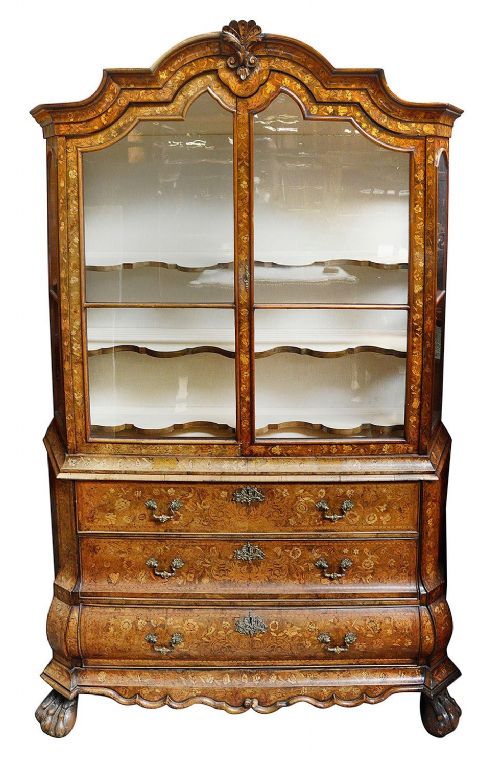


Claw and Ball Bureau
A claw and ball bureau brings a fitted writing compartment and substantial cabriole legs ending in carved talons, offering practical workspace alongside centuries of cabinetmaking tradition.
Claw and Ball Bureau
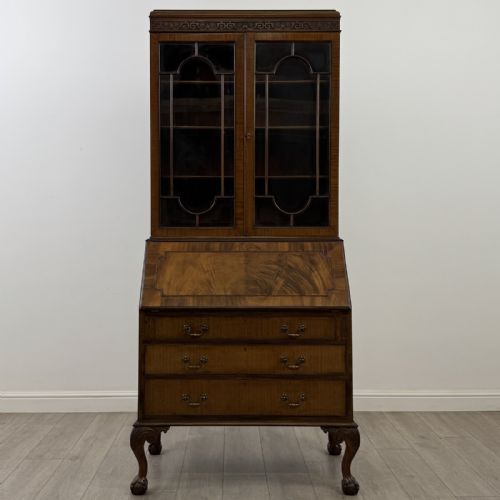
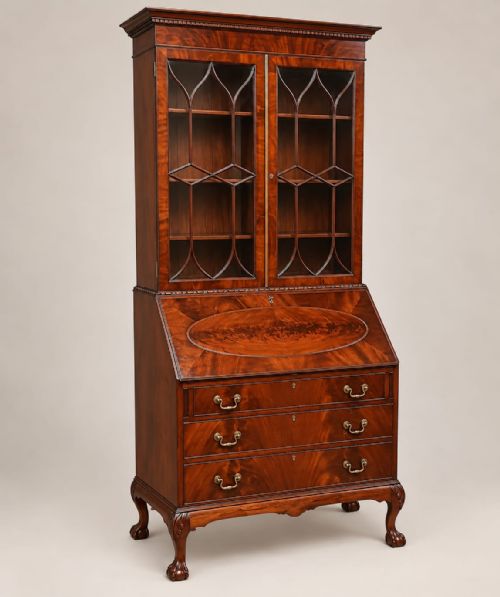
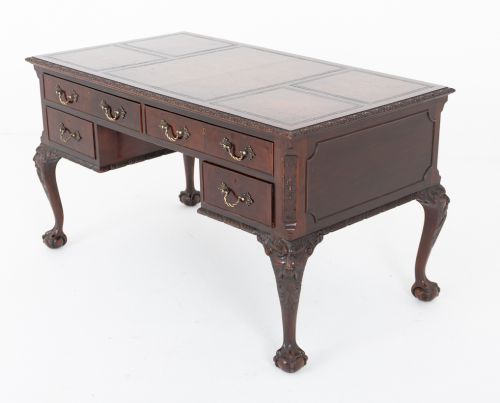
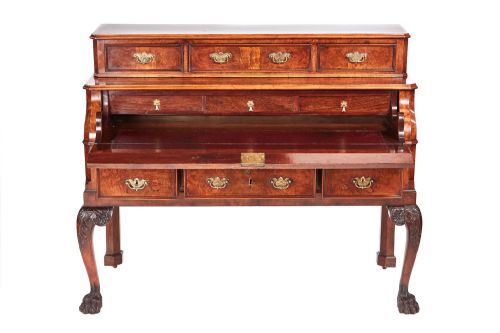
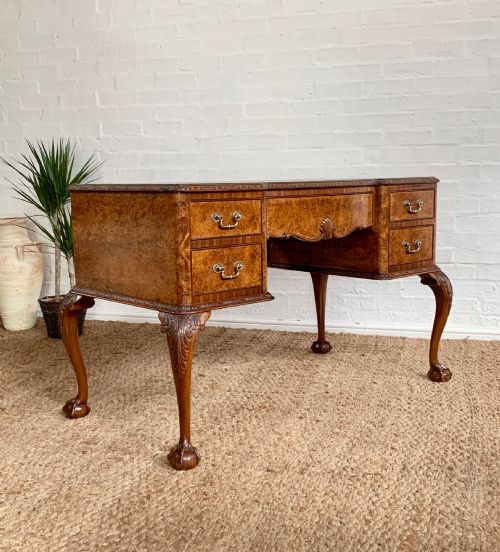
A claw and ball bureau provides a slant-front writing surface that drops down to reveal internal pigeonholes and small drawers, supported by distinct carved feet. The selection draws primarily from the twentieth century, Edwardian era, and eighteenth century, featuring substantial forms in mahogany, walnut, and burr walnut.
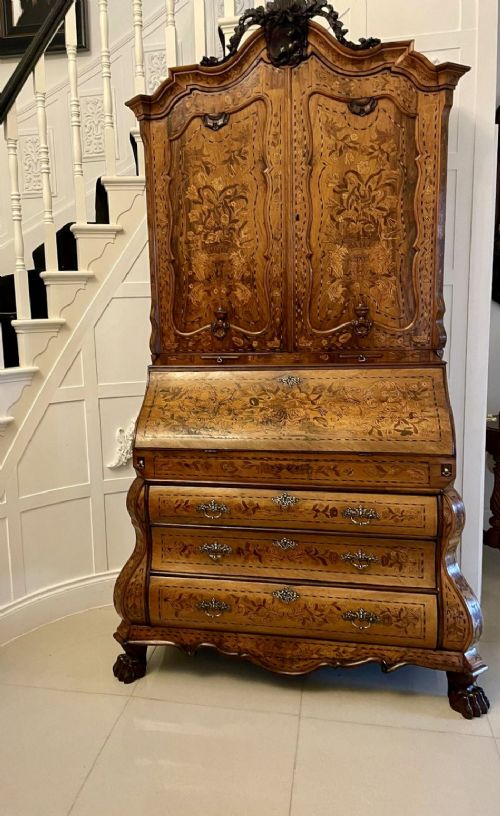
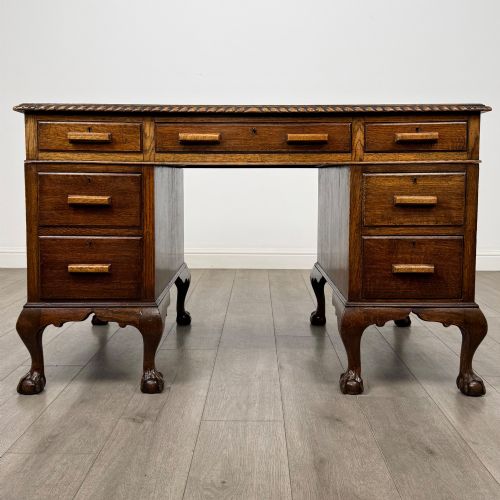
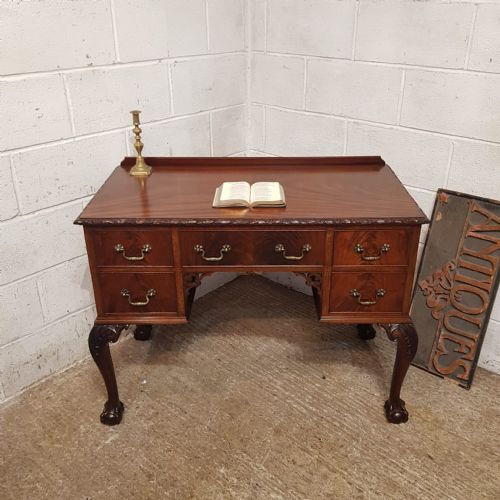
Beyond standard writing desks, the forms include pedestal desks, kneehole desks, writing tables, and bureaux with bookcase tops, reflecting diverse English, Dutch, and revival tastes. Makers such as Gillows and Morison of Edinburgh appear among these pieces, alongside Dutch marquetry examples and Georgian period library tables.
Revival pieces dominate the selection, heavily influenced by Chippendale and Queen Anne styles, alongside Victorian burr walnut variations. Buyers encounter everything from simple oak pedestal desks to exhibition quality marquetry cabinets incorporating brass and glass elements.
Materials and construction
Cabinetmakers utilised dense timbers like mahogany, walnut, burr walnut, and oak to build the primary structures, often incorporating marquetry inlay for decorative surface patterns. Brass hardware supports the drawers and internal fittings, while selected surfaces feature tooled leather writing inserts.
The characteristic feet are hand-carved directly from the timber of the cabriole legs to grip a rounded sphere, demanding high skill from the woodcarver. Secondary techniques include fine dovetailing on drawer construction and complex veneering to display the natural grain of burr walnut.
Listings span the eighteenth, nineteenth, and twentieth centuries, uniting Georgian library tables with Edwardian Chippendale revival desks and Dutch marquetry pieces.
Assessing quality in writing furniture
Quality rests in the crispness and depth of the hand-carved foot detail, where sharp talons gripping the ball indicate skilled execution rather than a soft, hurried outline. The choice of timber grain, particularly matched burr walnut or figured mahogany veneers, dictates the visual elegance of the exterior.
Internal joinery and the complexity of the fitted desk interior distinguish standard workshop production from exhibition pieces. Superior examples maintain smooth drawer operation, tight marquetry alignment, and intact original brass furniture without modern replacement parts.
Gillows·Morison of Edinburgh
The Claw and Ball Bureau Glossary
- Claw and ball
- A furniture foot carved to represent a bird's talon or animal's paw grasping a spherical object. This motif gained widespread popularity during the eighteenth century and saw revival use in later periods.
- Bureau
- A desk featuring a sloping hinged lid that folds down to create a writing surface while concealing internal compartments. Older examples typically sit atop chest bases or dedicated stands.
- Marquetry
- Decorative patterns formed by fitting together thin veneers of various woods and other materials onto a structural carcass. Dutch makers frequently applied this technique to floral and pictorial designs.
- Cabriole leg
- A furniture support curving outward at the knee and tapering inward toward the ankle, mimicking animal limbs. It forms the structural foundation for the carved feet on these pieces.
- Pedestal desk
- A heavy freestanding desk consisting of two independent pedestals of drawers supporting a wide writing top. Central kneehole spaces often feature recessed cupboards or drawers.
Claw and Ball Bureau: Frequently Asked Questions
How do I date a claw and ball bureau?
Dating relies on examining the timber species, construction methods, and secondary woods used inside the drawer linings. Eighteenth-century pieces display hand-cut dovetails and native construction traits, while later revival items from the Edwardian period or twentieth century show uniform machine-assisted precision.
Style revivals often mix decorative motifs from different decades, making secondary wood analysis and wear patterns essential for determining true age. Examining the underside and back panels reveals the original tool marks and fastening techniques specific to each era.
What is the difference between a bureau and a secretary?
In British terminology, a bureau refers specifically to a slant-front desk with internal compartments, whereas a secretary often denotes a larger cabinet combining a writing section with upper bookcases or display shelving. Both forms provide enclosed workspace that conceals paperwork when not in use.
Regional vocabulary heavily influences these labels, as American collectors frequently use secretary for items Britons call bureau bookcases. The presence of glazed upper doors typically classifies the furniture as a bureau bookcase or vitrine hybrid.
How do I care for leather writing surfaces?
Leather inserts require gentle cleaning with a damp cloth followed by specialised leather balms to prevent drying and cracking over time. Excessive moisture and direct sunlight cause fading and shrinkage, which damages the gold toolwork bordering the writing panel.
Avoiding harsh chemical cleaners preserves the natural patina developed through daily use. Professional leather dressing applied sparingly maintains flexibility across antique desk surfaces.
Are these desks suitable for daily computer work?
Slanted writing flaps offer limited depth for modern keyboards and monitors, making them better suited for laptops and occasional correspondence. The internal compartments accommodate stationery rather than modern office equipment.
Pedestal desks and writing tables provide flat working areas that easily support modern peripherals while retaining traditional aesthetics. Careful measurement of kneehole clearances ensures comfortable seating posture during extended work periods.