
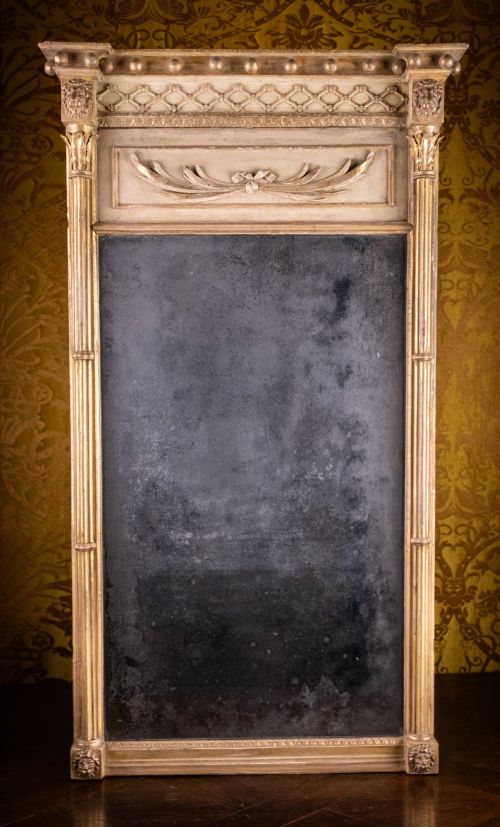
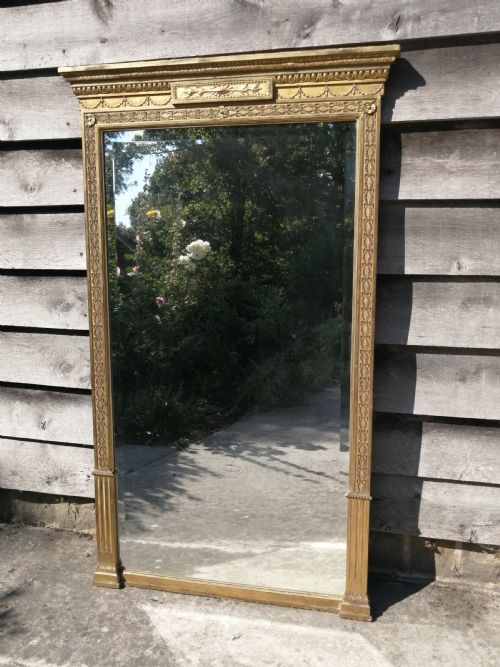
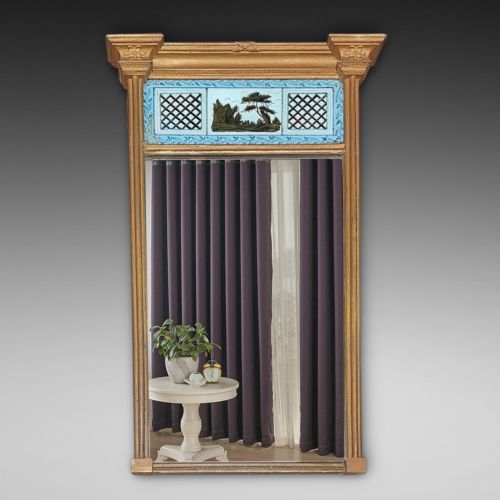
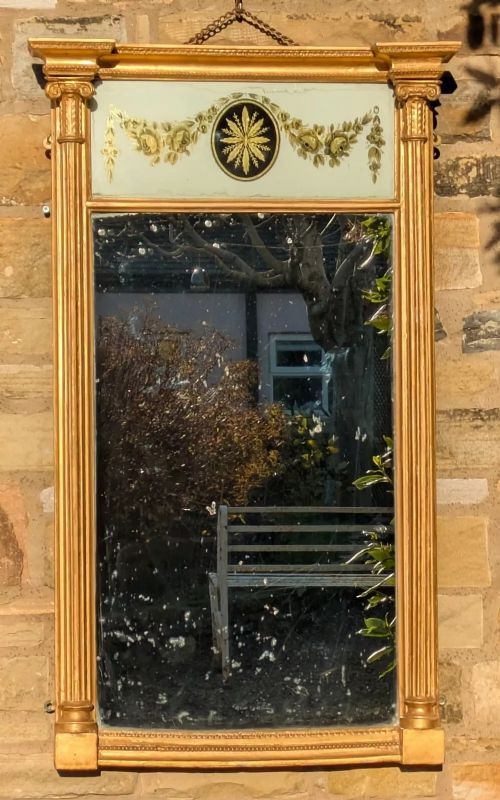
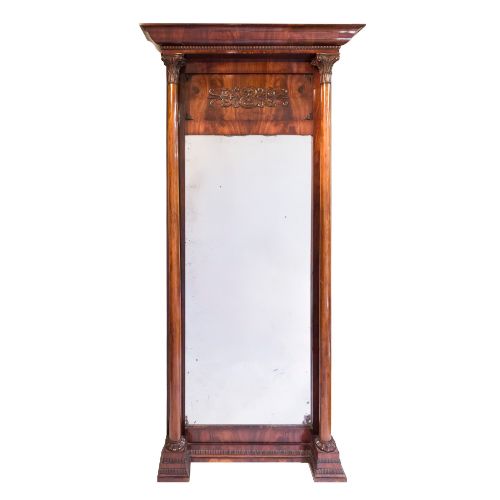


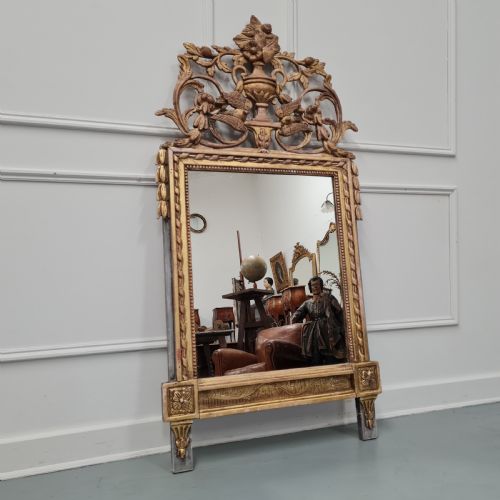


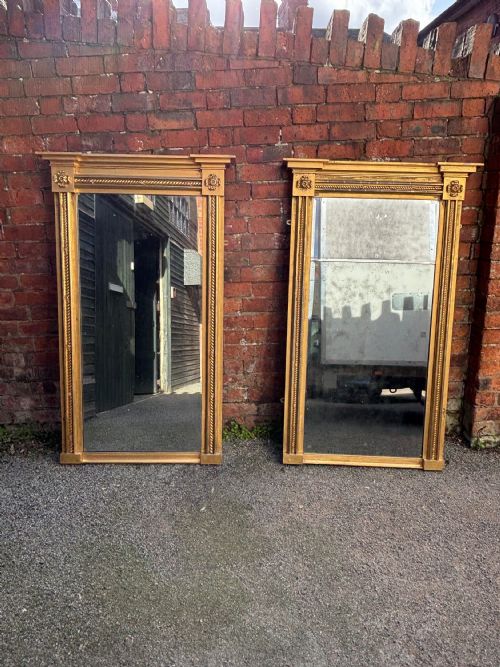


Classical Trumeau Mirror
A classical trumeau mirror brings architectural dignity to a room, combining a large plate glass with an upper decorative panel.
Classical Trumeau Mirror
When you search for a classical trumeau mirror, you encounter tall wall-mounted pier mirrors and overmantel looking glasses designed to sit between windows or above fireplaces. These furnishings combine traditional mirror plates with upper artistic sections, frequently incorporating painted panels or decorative relief scenes.
The versions most common on this page date predominantly from the nineteenth century, spanning Regency, French Empire, Louis XVI Style, and Georgian periods. These pieces incorporate architectural elements such as carved columns, giltwood moulding, and painted wood frames.
Originating largely from French and British workshops, these mirrors function simultaneously as sources of reflected light and as major decorative artworks. Their scale ranges from domestic wall glasses to monumental grand-scale pieces reaching over two metres in height.
How they were made
Frames rely on timber foundations including mahogany, walnut, and painted wood, which receive coats of gesso to build up intricate surface details. Artisans then apply leaf gilding or paint directly to the prepared woodwork to achieve the desired finish.
Upper panels utilise canvas, oil paint, or verre eglomisé reverse-glass painting techniques to display classical scenes, figures, and decorative motifs. Mirror glass is set into the lower frame, occasionally retaining original plates with natural foxing and age spots.
Listings for a classical trumeau mirror frequently feature nineteenth-century French and Regency origins, utilising giltwood, gesso, painted wood, and oil paint.
What varies in quality
The standard of carving determines much of the visual distinction, separating sharply defined acanthus leaves, lion masks, and column capitals from softer, less detailed moulding work. The sophistication of the upper panel artwork, whether an oil painting on canvas or a verre eglomisé scene, also dictates the piece's artistic merit.
Originality of components plays a central role, distinguishing pieces that retain their primary mirror plates and integrated upper panels from those with later replacements. The overall proportion and scale of the frame relative to the glass plate demonstrate the design confidence of the original maker.
The Classical Trumeau Mirror Glossary
- Trumeau
- An architectural term for the wall space between two doors or windows, which gave its name to these specific mirrors designed to fill that exact gap. They frequently incorporate an integrated painting or relief panel above the glass plate.
- Verre Eglomise
- A cold decoration technique involving gilding and painting on the reverse side of glass to create a shimmering, reflective panel. This method appears frequently in the upper sections of Regency pier mirrors.
- Pier Mirror
- A tall looking glass specifically proportioned to hang on the solid pier of wall between windows. These mirrors often match console tables positioned directly below them.
- Overmantel Mirror
- A wide looking glass designed to hang on the wall directly above a fireplace mantelpiece. They share decorative traits with trumeau mirrors but prioritise horizontal span over vertical height.
- Gesso
- A plaster-like mixture applied to wooden frames as a smooth base for subsequent gilding or painting. Its build-up allows craftsmen to carve crisp decorative relief details.
Classical Trumeau Mirror: Frequently Asked Questions
Where should a trumeau mirror hang?
These mirrors suit locations where they can capture and reflect natural light, most traditionally between two windows on a pier wall. They also function effectively above a fireplace mantel or paired with a console table.
Because many examples reach a monumental scale, adequate wall space and secure fixings are essential for proper installation.
How do you clean an antique mirror plate?
Cleaning requires a soft, dry microfibre cloth to remove dust from the glass and the surrounding giltwood frame without causing abrasion. Liquid cleaners should be avoided to prevent moisture seeping behind the silvering or damaging the gesso.
Original mirror plates often display foxing and dark spots, which represent natural ageing rather than defects requiring removal.
What is the difference between a pier mirror and an overmantel mirror?
Pier mirrors are traditionally tall and narrow to fit the narrow wall space between windows, frequently accompanied by matching console tables. Overmantel mirrors are constructed with a wider horizontal format to span the width of a fireplace.
Both forms frequently incorporate the upper decorated panel characteristic of trumeau mirrors.
Are the painted panels usually original?
Many nineteenth-century examples retain their original oil paintings on canvas, verre eglomisé panels, or carved relief scenes depicting classical figures such as Bacchus and cherubs. Assessing originality involves looking at the integration of the panel within the frame structure and the uniformity of ageing across the entire object.
Documentation and period specificities like Regency or French Empire styling help confirm whether elements belong together.