



Classical Slate Clock
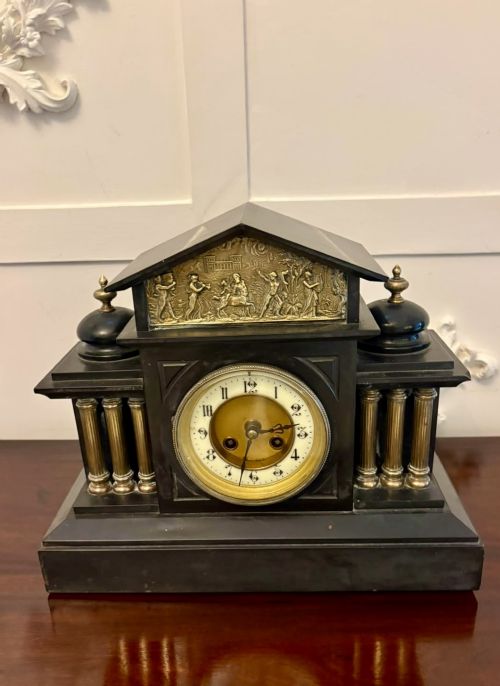
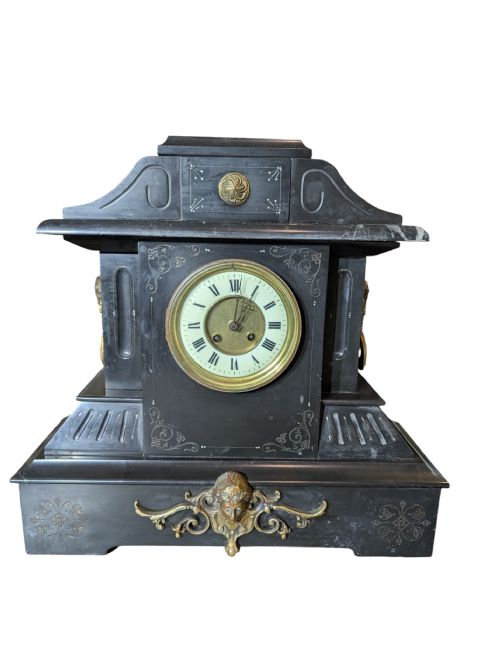
These pieces of classical slate clock design bring heavy architectural presence and striking neoclassical form into any room.
Classical Slate Clock
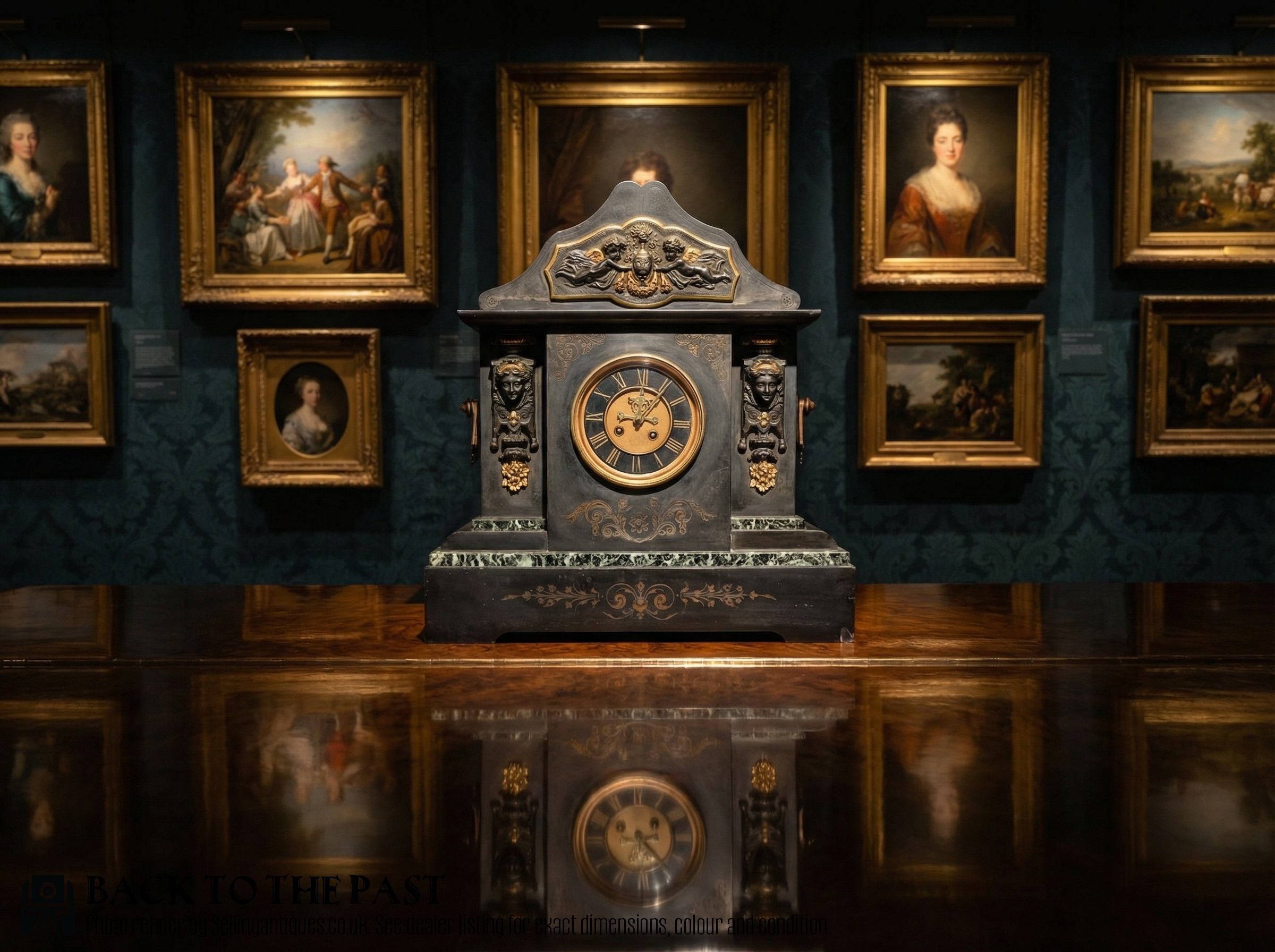
The dominant style on this page is Victorian Classical Revival, taking the form of architectural structures that echo ancient temples and facades. You also find simpler marble formats, alongside garniture sets that include matching side ornaments.
Origin plays a part too, with French makers contributing heavily to the selection through architectural designs and neoclassical details. Buyers seek these out for their severe, monumental silhouettes and contrasting stone inlay.
How they were made
Makers cut and polished dense black slate and marble to build heavy architectural cases, incorporating glass bezels to protect enamelled dials. Gilt brass and bronze mounts provide structural contrast and relief against the dark stone body.
Movements within these cases rely on eight day technology, often produced by continental workshops to keep reliable time behind classical facades.
Classical Slate Clock Retail Price Guide 2026
Typical asking prices for classical slate clock among the pieces listed under this phrase on Sellingantiques today, from the lower quarter to the upper quarter. They describe what is for sale here now, not the wider market.
Several clocks weigh enough to double as doorstoppings if you lose your keys.
What varies in quality
Quality rests in the architectural ambition of the case and the crispness of the bronze or gilt brass mountings. Faux marble versions sit at a different level of craftsmanship compared to solid stone bodies inlaid with contrasting mineral veins.
The presence of a complete clock set with matching garnitures elevates the stature of the piece significantly. Maker signatures on the movement or dial also separate standard workshop output from exceptional signed examples.
Philippes Paris·Baby and Jannings
The Classical Slate Clock Glossary
- Slate
- A fine-grained metamorphic rock used for the solid dark bodies of these architectural timepieces. It takes a high polish and mimics the weighty appearance of ancient stone.
- Garniture
- A set consisting of a central clock flanked by matching decorative side pieces such as urns or obelisks. These sets create a balanced display on a mantelpiece.
- Architectural
- A style describing clock cases built to resemble miniature classical buildings, complete with pediments, columns, and porticos. This design language draws directly from ancient Greece and Rome.
- Enamel
- A glassy substance fused to metal dials to create a smooth, white background for painted numerals. It offers a crisp contrast against dark slate and marble cases.
- Neoclassical
- An artistic movement reviving the forms, proportions, and motifs of classical antiquity. It governs the restrained, symmetrical lines of these clocks.
Classical Slate Clock: Frequently Asked Questions
How do I date a classical slate clock?
Dating relies on stylistic clues, movement types, and any signature stamps on the backplate or dial. Victorian examples from the mid to late nineteenth century often combine architectural slate bodies with eight day mechanical movements.
Examining the bronze mounts and marble inlay styles helps narrow down the decade of production. French workshops frequently marked their works, providing a clearer paper trail.
Were these clocks made in France?
Many of these timepieces originated in France before being imported for the British market. French makers excelled at combining heavy slate cases with neoclassical bronze gilt mounts and reliable movements.
British retailers then retailed these architectural pieces to wealthy Victorian households seeking continental elegance.
What is a clock garniture set?
A garniture set includes a central clock accompanied by two matching side ornaments, such as decorative urns or architectural columns. These pieces were designed to be displayed together on a mantelpiece to create a unified focal point.
The materials and motifs on the side pieces directly mirror the central clock case.
How do I care for a slate clock?
Keep the heavy stone case out of direct sunlight and away from rapid temperature changes that could affect the marble or slate. Dust the surface gently with a dry, soft cloth without using harsh chemical polishes.
Mechanical movements require professional servicing every few years to keep the eight day spring operating smoothly.