

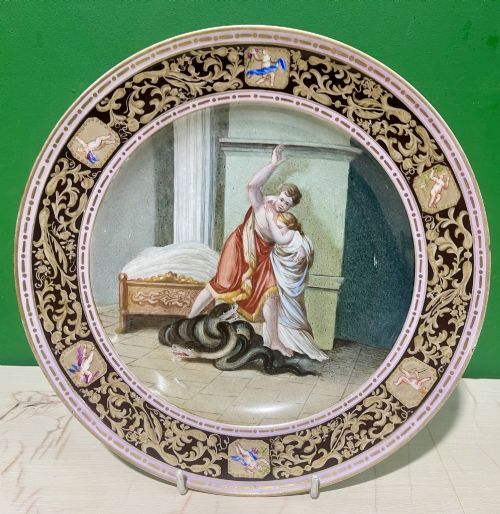


Classical Scene Porcelain Painting
These classical scene porcelain painting pieces bring mythological subjects and figures into domestic interiors through detailed enamel work on porcelain.
Classical Scene Porcelain Painting
A classical scene porcelain painting comprises decorative plates, chargers, caskets, urns, and vases decorated with mythological or historical subjects. These items emerge from nineteenth-century production centres and reflect revivals of neoclassical and rococo styles.
Buyers will most frequently encounter Vienna porcelain chargers and urns featuring hand-painted mythological narratives alongside cobalt blue grounds and gilt detailing. Pieces from this group date predominantly to the nineteenth century, including specific years such as 1850, 1880, and 1890.
Forms extend beyond flat plates to include mantle clock garniture sets, lidded vases, ewers, and framed porcelain plaques on stands. Makers applied subjects like Caesar at the grave of Alexander the Great and the birth of Adonis to porcelain supports.
How they were made
These items use porcelain as the primary body, painted with enamel pigments to render figurative classical scenes. Craftsmen then applied gold leaf and gilding to accentuate borders and structural elements.
Mounts and supports incorporate brass, glass, and gilt bronze, particularly on clock garnitures and caskets. Such materials provide structural framing for the fragile porcelain plaques and vessels.
Classical Scene Porcelain Painting Retail Price Guide 2026
Typical asking prices for classical scene porcelain painting among the pieces listed under this phrase on Sellingantiques today, from the lower quarter to the upper quarter. They describe what is for sale here now, not the wider market.
Listings feature nineteenth-century items utilising porcelain, enamel, gold leaf, gilding, brass, glass, and gilt bronze across neoclassical and rococo revival styles.
What varies in quality
The refinement of the painted scene dictates the standard of the piece, particularly the precision in rendering human figures and classical narratives. Signed works demonstrate individual painterly skill above standard factory output.
The integration of cobalt blue grounds with gilding and gold leaf determines visual depth and decorative success. Structural components such as gilt bronze mounts and brass fittings also influence the overall standard of caskets and garnitures.
Capodimonte·Vienna·Royal Vienna·Dresden·Berlin KPM
The Classical Scene Porcelain Painting Glossary
- Charger
- A large decorative plate intended for display rather than table use. These items often feature detailed historical or mythological scenes painted across the central well.
- Garniture
- A matching set of three or more ornamental vases, urns, or figures designed to be displayed together on a mantelpiece or sideboard.
- Gilt
- A thin layer of gold applied to the surface of porcelain or bronze mounts. This technique adds reflective highlights to frames and vessel borders.
- Enamel
- Opaque vitreous material fused to porcelain surfaces through firing to create permanent painted imagery. It allows for rich colouration in figurative scenes.
- Neoclassical
- A style drawing inspiration from the art and culture of classical antiquity. It appears frequently in nineteenth-century decorative arts through architectural motifs and heroic subjects.
Classical Scene Porcelain Painting: Frequently Asked Questions
What subjects appear on these porcelain paintings?
Painters drew upon classical mythology and history for their compositions. Common depictions include mythological narratives and ancient figures.
Specific examples feature scenes such as Caesar at the grave of Alexander the Great and the birth of Adonis. These subjects reflect nineteenth-century academic interests.
How do I identify Vienna porcelain?
Vienna porcelain pieces typically exhibit rich cobalt blue grounds combined with extensive gilding. They often incorporate hand-painted classical figures and mythological scenes.
Many examples take the form of large chargers, urns, cabinet plates, and ewers dating to the nineteenth century. Signature marks and specific subject titles frequently accompany these works.
Where were these pieces displayed?
Owners placed these decorative items on mantelpieces, tables, and cabinets within nineteenth-century interiors. Garniture sets and urns served as focal points for room decoration.
Caskets and small boxes functioned as desk accessories or display objects. Plates and chargers were typically exhibited on stands or hung on walls.
How do I care for gilt porcelain?
Gilt porcelain requires gentle handling to preserve the delicate enamel painting and gold leaf details. Cleaning should involve soft, dry dusting rather than liquid solvents.
One must protect the gilded surfaces and brass or gilt bronze mounts from moisture and abrasive materials. Proper placement avoids direct sunlight which can affect enamel colours over time.