



Classical Revival Statuette
A classical revival statuette brings the sculpture of antiquity and the Renaissance into the Victorian interior as bronze, marble, and porcelain figures.
Classical Revival Statuette
A classical revival statuette represents figures from mythology, history, and classical art, ranging from allegorical putti and Roman gladiators to portraits of Diana de Poitiers and the Medici. These pieces take the form of small sculptures, figurines, and busts designed for tabletop display rather than monumental installation.
The versions most commonly met on this page date from the nineteenth century, including specific years such as eighteen sixty, eighteen eighty, and eighteen ninety, alongside broader Victorian and late nineteenth century periods. Originating from English and continental makers, these works often reflect Grand Tour souvenirs purchased by travellers abroad.
Makers drew directly upon antique precedents, including works after Michelangelo and ancient Greek prototypes like the Discobolus and Athena Promachos. Such statuettes capture the nineteenth-century enthusiasm for classical antiquity through varied interpretations in bronze, marble, and porcelain.
Materials and construction
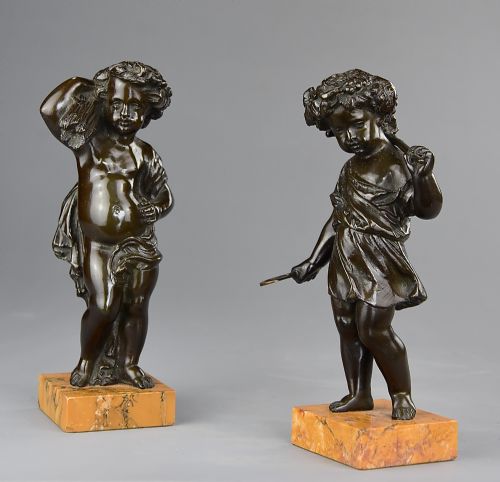
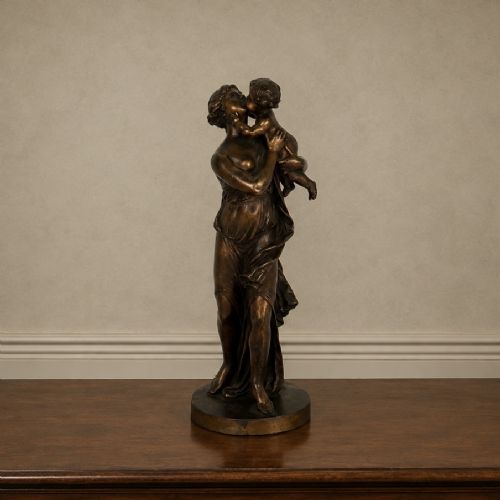
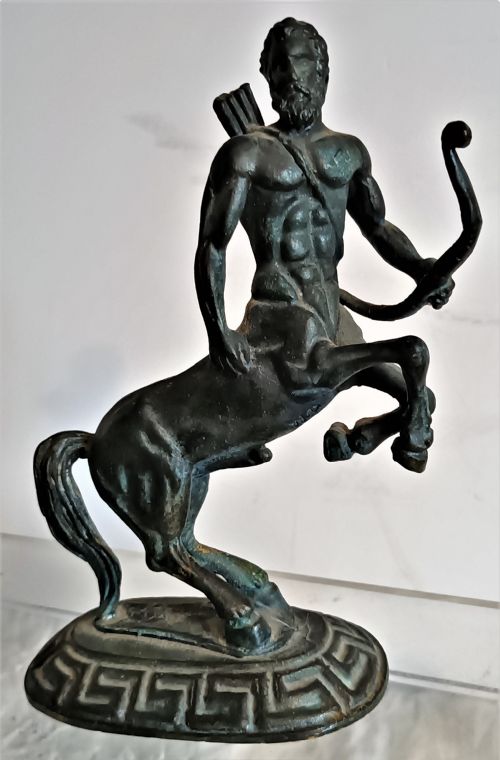
Foundries and studios utilised cast bronze and brass, often applying patinated or gilt finishes to highlight the sculptural details of figures such as Bacchus, centaurs, and classical mothers with children. These bronze and brass statuettes frequently incorporate bases carved from contrasting stones like Rosso Levanto marble and alabaster.
Alternative mediums include carved marble and painted porcelain with enamel detailing, seen in figurative works produced by European factories such as Volkstedt in Germany. Craftspeople combined these materials to create tactile miniature monuments that mirror the weight and presence of larger classical sculpture.
Materials across these listings include bronze, marble, gilt bronze, patinated bronze, alabaster, Rosso Levanto marble, porcelain, and enamel.
Assessing quality and execution
The choice and preparation of associated materials also define the object, such as the selection of richly veined Rosso Levanto marble for a base or the subtlety of a patinated bronze finish versus simple gilding. Superior examples demonstrate a careful balance between the metallic figure and its stone support.
Volkstedt·Eden Antony Paul Noel·Claude Michael Clodion
The Classical Revival Statuette Glossary
- Grand Tour
- A traditional trip through Europe undertaken by upper-class young men in the eighteenth and nineteenth centuries to study classical art and antiquities. Souvenirs collected on these journeys heavily influenced nineteenth-century miniature sculpture.
- Patinated bronze
- Bronze that has been treated with chemicals to produce a specific surface coloration or sheen. This technique was frequently utilised on nineteenth-century statuettes to simulate aged metal.
- Rosso Levanto marble
- A deep reddish-purple Italian marble marked with white calcite veins. It is commonly found as the base material for nineteenth-century Grand Tour sculptures.
- Putto
- A representation of a human infant, usually winged, appearing as an angel or cupid in classical and Renaissance art. Pairs of allegorical harvest putti appear in nineteenth-century bronze casting.
- Gilt bronze
- Bronze coated with a thin layer of gold or gold-coloured alloy to impart a bright metallic finish. Also known asormolu, this treatment enhanced decorative objects during the nineteenth century.
Classical Revival Statuette: Frequently Asked Questions
What is a classical revival statuette?
A classical revival statuette is a small nineteenth-century sculpture modelled after ancient Greek, Roman, or Renaissance masterpieces.
These pieces were produced in bronze, marble, and porcelain for domestic display and collection.
Were these figures made as travel souvenirs?
Many nineteenth-century bronze statuettes were purchased as Grand Tour souvenirs by travellers visiting cultural sites in Italy and France.
Such objects allowed collectors to bring miniature representations of famous classical sculptures back to their homes.
How do I identify the materials used?
Listings record materials such as patinated bronze, gilt bronze, brass, Rosso Levanto marble, alabaster, and porcelain.
Closer inspection reveals the weight and surface texture characteristic of cast metal or carved stone.
Who are the subjects depicted?
Subjects include mythological figures like Bacchus and Athena Promachos, historical portraits such as Diana de Poitiers, and classical athletes.
Artists also reproduced well-known Renaissance sculptures, including works after Michelangelo.