
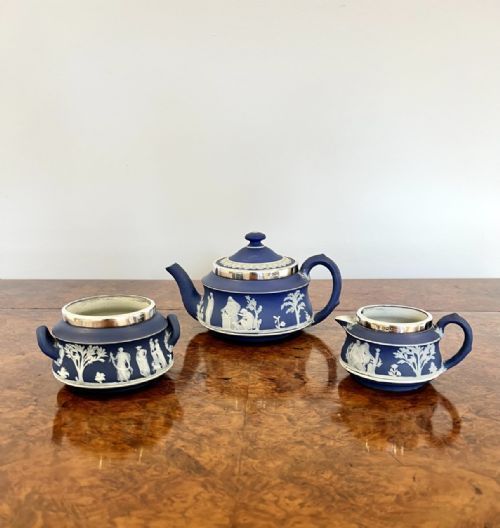


Classical Relief Ceramic
Classical relief ceramic pieces bring ancient myth and neo-classical design into domestic spaces through crisp moulded figures on fine bodies.
Classical Relief Ceramic
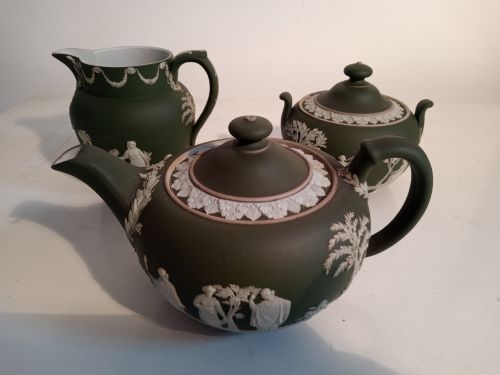
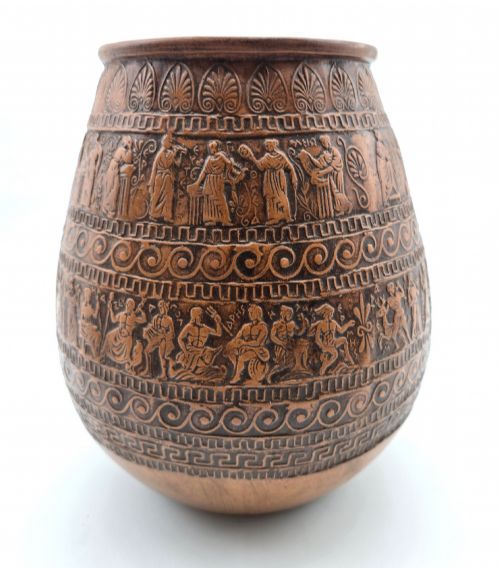
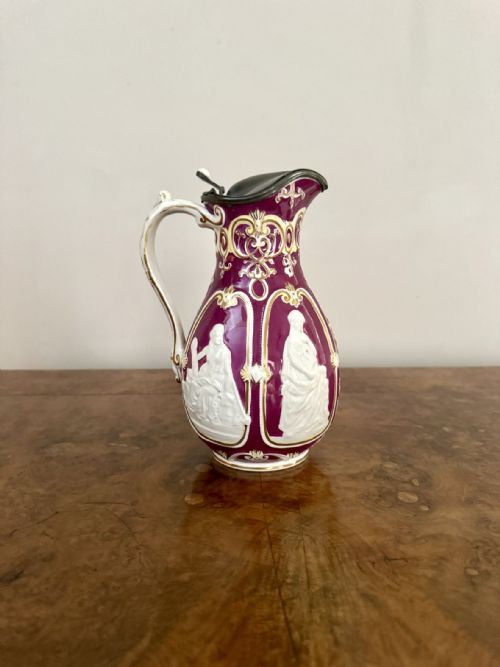
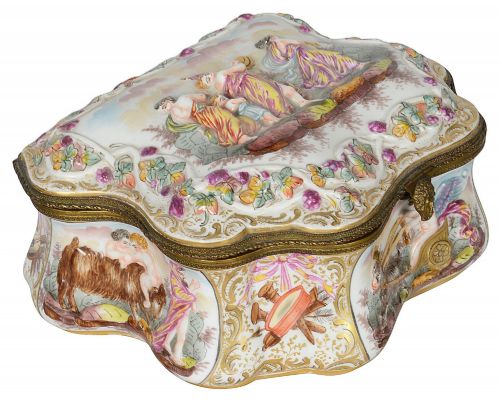
Classical relief ceramic pieces encompass tea sets, vases, urns, pitchers, jugs, wall plaques, jewellery boxes, and caskets drawing on ancient Greek and Roman motifs. The selection centres heavily on nineteenth-century production, particularly Victorian examples featuring crisp white figures set against contrasting coloured grounds.
Makers utilised stoneware, jasperware, porcelain, earthenware, and terracotta to achieve different textural effects, ranging from unglazed matte surfaces to glossy glazed finishes. Forms span from utilitarian vessels like water jugs and biscuit barrels to decorative items including framed cameos, tondos, and candlesticks.
Pieces frequently display neoclassical, Greek revival, and rococo revival styles alongside later nineteenth-century interpretations. Buyers encounter items ranging from miniature teapots and patch boxes to large jardiniere urns and table lamps.
How they were made
Potters employed stoneware, jasperware, porcelain, and terracotta, often combining ceramic bodies with metal mounts in brass, silver, pewter, or copper lustre. Relief decoration was typically cast separately in moulds and applied by hand to the damp body before firing.
Firing techniques varied according to the medium, with biscuit ware and matte stoneware requiring precise kiln temperature control to achieve uniform colour across large surfaces. Coloured jasper bodies relied on metallic oxides mixed directly into the clay paste during preparation.
The selection includes utilitarian vessels like teapots and water jugs alongside decorative objects including wall plaques, caskets, and candlesticks.
What varies in quality
Quality rests in the crispness of the moulded relief and the precision with which applied figures adhere to the curved body of a vessel. Finer examples maintain sharp contours and clean borders without blurring or pooling of slip around the edges of the decoration.
The subtlety of the ground colour and the evenness of the matte or glazed finish distinguish superior pieces from standard production. Weight, balance, and the integration of metal collars or lids also mark the distinction between everyday domestic items and exceptional display pieces.
Wedgwood·Charles Meigh·P. Ipsens Enke·Mintons
The Classical Relief Ceramic Glossary
- Jasperware
- A fine-grained, unglazed stoneware developed in the eighteenth century, commonly coloured blue, green, or white. It provides a contrasting background for applied white classical reliefs.
- Bas-relief
- A sculptural technique where figures project only slightly from a flat background. This method creates the signature layered appearance seen on neoclassical plaques and vases.
- Pate-sur-pate
- A ceramic decoration method where successive layers of liquid clay are painted onto a body to build up a translucent cameo relief. Mintons specialised in this meticulous technique during the late nineteenth century.
- Campana urn
- A bell-shaped vessel with a footed base, frequently decorated with classical motifs and handles. This classical form appears widely across nineteenth-century ceramic production.
- Terracotta
- A porous, unglazed fired clay ranging in colour from buff to deep orange-red. It serves for both decorative garden urns and grand tour vases.
Classical Relief Ceramic: Frequently Asked Questions
What is jasperware?
Jasperware is an unglazed stoneware developed by Josiah Wedgwood, characterised by its fine matte texture and contrasting applied white reliefs. The body achieves its distinctive blue or green shades through the incorporation of metallic oxides.
This material formed the basis for many nineteenth-century teapots, vases, and decorative plaques, prized for its resemblance to carved ancient cameos.
How do I date these ceramics?
Dating relies on body composition, stylistic markers, and any impressed factory marks or registration ciphers found on the base. Nineteenth-century pieces often reflect Victorian revivals of classical, rococo, or art nouveau aesthetics.
Changes in colour palettes, such as the introduction of multiple coloured jasper slips or sage greens, also help narrow down the period of manufacture.
Were these pieces used daily?
Many items, including teapots, water jugs, and biscuit barrels, served practical functions in nineteenth-century households alongside purely decorative plaques and caskets. Their durable stoneware and porcelain bodies suited regular service during formal dining and tea rituals.
Over time, handling patterns and metal mounts such as pewter or silver collars developed natural signs of age that indicate functional history.
What is a grand tour vase?
Grand tour vases reference ancient pottery forms collected by travellers exploring classical sites in Italy and Greece during the nineteenth century. Potters produced terracotta and ceramic replicas to satisfy the demand for portable antiquities.
These pieces capture archaeological motifs and mythological scenes popular among nineteenth-century collectors seeking to emulate classical refinement at home.