



Classical Regency Sofa
A classical regency sofa brings monumental neoclassical lines and scroll-end elegance into a drawing room, offering structured comfort shaped by early nineteenth-century design.
Classical Regency Sofa
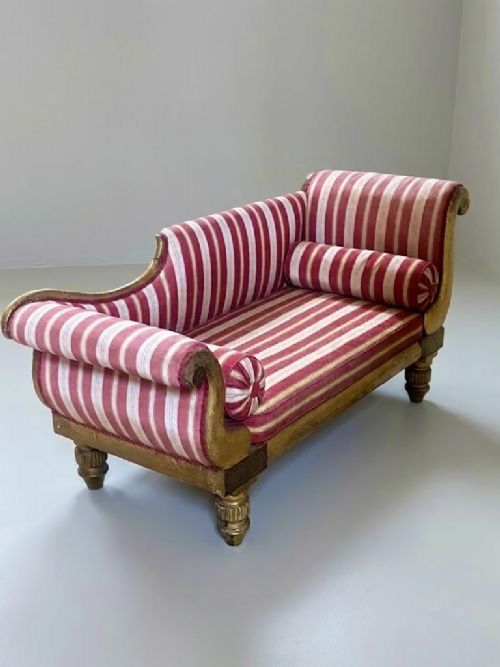
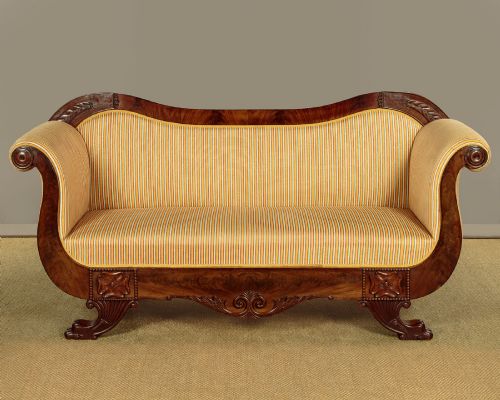
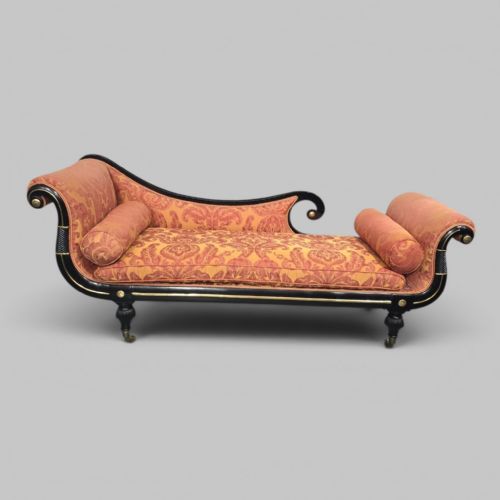
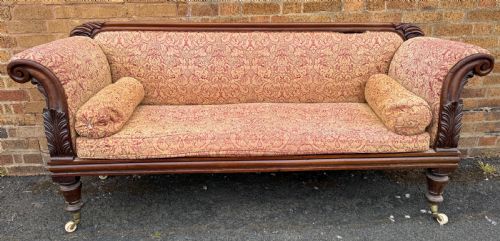
A classical regency sofa combines architectural proportions with scrolling ends, taking form as a settee, daybed, or double scroll-ended sofa across the Regency period and the wider nineteenth century. These seating pieces draw on classical antiquity through carved woodwork, curved frames, and historically inspired silhouettes.
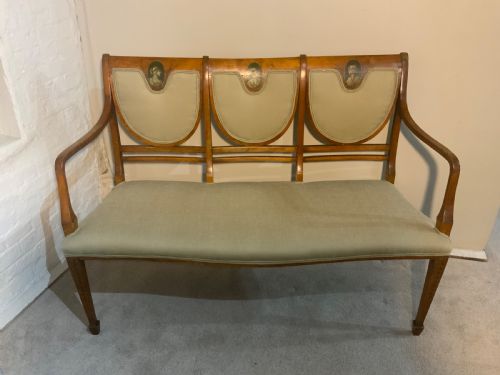
The versions most frequently met on this page span solid mahogany, simulated rosewood, and giltwood frames, often paired with traditional upholstery or caning. Pieces range from grand scrolled couches to lighter satinwood settee forms influenced by neoclassical taste.
How they were made
Cabinetmakers constructed these frames using dense timbers like mahogany, oak, and satinwood, frequently employing simulated finishes such as ebonised wood or painted decoration to mimic exotic grains. Decorative surfaces relied on giltwood enrichments and fine brass mounts, uniting structural carpentry with classical ornament.
Upholstery techniques involved traditional stuffing and webbing secured to shaped wooden rails, accommodating silk, fabric, or caned panels. Carved scroll arms and double-ended frameworks required precise joinery to handle the outward tension of the curves.
Listings feature mahogany, satinwood, and simulated rosewood alongside giltwood and brass details across the nineteenth-century periods.
What varies in quality
Quality rests upon the crispness of the carved details, the choice and figure of the timber veneer, and the structural integrity of the scrolling frame. Superior pieces demonstrate balanced proportions and deliberate use of giltwood or fine mahogany.
Lesser examples show simpler turning, heavier timber framing with less refined carving, or secondary woods lacking the select grain patterns found in finer workshop production.
The Classical Regency Sofa Glossary
- Scroll-end
- A furniture arm or terminal curving outward and downward in a continuous scroll. This profile defines the classic silhouette of many nineteenth-century couches.
- Giltwood
- Timber coated with a thin layer of gold leaf or gesso and gold paint. It provides brilliant reflective highlights on neoclassical frames.
- Simulated rosewood
- A painted or stained wood finish imitating the dark grain and rich colour of genuine rosewood. It allowed makers to achieve an exotic appearance using native timbers.
- Caning
- Woven rattan strips forming a light, patterned seat or back panel. This technique adds textural contrast to wood-framed settees.
- Satinwood
- A pale, hard tropical timber featuring a lustrous, light-reflective grain. It was prized for decorative veneers in high-style seating.
Classical Regency Sofa: Frequently Asked Questions
What defines a classical regency sofa?
These sofas are characterised by classical architectural lines, scroll-ended wooden frames, and symmetrical proportions influenced by ancient Greek and Roman design.
They appear in forms ranging from solid mahogany daybeds to giltwood settees upholstered in silk.
Where were these sofas placed originally?
Historically, they stood in principal drawing rooms, libraries, and reception spaces where guests gathered and neoclassical interior schemes predominated.
Their finished backs often allowed them to sit away from the walls in the centre of a grand room.
How do I care for the wood and fabric?
Protect antique wood surfaces with occasional light waxing and keep them away from direct sunlight and sudden temperature changes.
Upholstered sections benefit from gentle vacuuming with a soft brush attachment and professional cleaning when necessary.
Can these sofas fit modern interiors?
Their strong architectural lines and low profiles allow them to anchor contemporary living spaces as statement seating pieces.
They blend effectively with minimalist surroundings or traditional period room settings.