





Classical Putti Artwork
Classical putti artwork captures winged infants in oil, bronze, and giltwood, bringing mythological tradition into domestic spaces.
Classical Putti Artwork
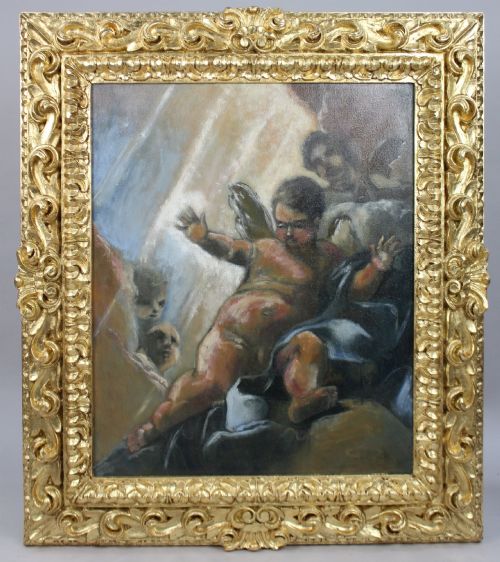
Buyers seeking classical putti artwork encounter oil paintings and bronze sculptures depicting winged infants, cupids, and cherubs. These pieces draw on Renaissance, Baroque, Neoclassical, and Rococo traditions.
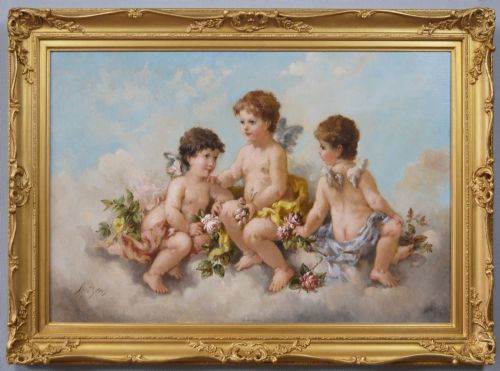
The objects on this page span the eighteenth and nineteenth centuries alongside later twentieth-century interpretations. Canvases range from framed wall art to large oil paintings set in carved giltwood frames.
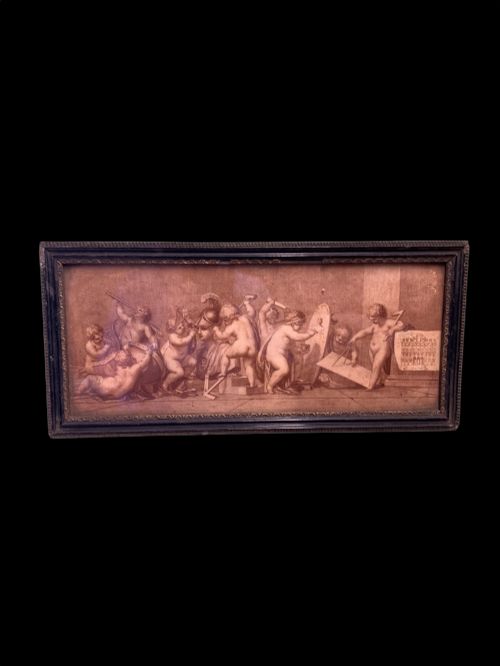
Subjects include children sitting with roses, mythological scenes with Bacchus, and trompe l'oeil compositions. Artists depicted these figures through French camaieu bleu grisaille techniques and Italian Renaissance styles.
How these pieces were made
Painters applied oil paint to canvas and paper, creating detailed portraits and genre scenes of cherubs. Frames utilised carved wood with giltwood finishes to complement the painted surfaces.
Sculptors cast bronze to form figures of putti, maidens, and mythological groupings. These metallic and canvas works reflect traditional craftsmanship from French and Italian workshops.
Classical Putti Artwork Retail Price Guide 2026
Typical asking prices for classical putti artwork among the pieces listed under this phrase on Sellingantiques today, from the lower quarter to the upper quarter. They describe what is for sale here now, not the wider market.
Several cherubs appear moderately distracted by flowers while supposed to be paying attention.
What varies in quality
Quality depends on the precision of the brushwork in oil paintings and the clarity of detail in bronze sculptures. Finer pieces demonstrate mastery in anatomy and compositional depth.
The execution of surrounding elements, such as carved giltwood frames and trompe l'oeil effects, distinguishes standard decorative items from superior works of fine art.
Domenico Zampieri·Charles Augustus Henry Lutyens
The Classical Putti Artwork Glossary
- Putti
- Winged infants derived from classical art, frequently depicted in Renaissance and Baroque painting and sculpture. They often appear as cupids or cherubs in mythological scenes.
- Giltwood
- Wood carved and treated with gold leaf or gold paint to create a decorative metallic finish. This material is commonly found on frames housing oil paintings.
- Camaieu Bleu
- A monochrome painting technique executed entirely in shades of blue. French artists utilised this method for decorative wall art and grisaille effects.
- Trompe L'oeil
- An artistic technique designed to create an optical illusion of three-dimensional space on a flat surface. Painters used this method to depict cherubs playing.
Classical Putti Artwork: Frequently Asked Questions
What are putti in art?
Putti are depictions of chubby, winged infants that originated in classical antiquity and saw a revival during the Renaissance and Baroque periods. Artists used them to represent divine or mischievous spirits.
In these artworks, they frequently appear alongside mythological figures, animals, and floral arrangements in oil paintings and bronze sculptures.
How do I date a cherub painting?
Dating relies on examining the canvas preparation, the style of the carved wood frame, and the painting technique. Eighteenth-century examples often display specific regional palettes like French camaieu bleu.
Nineteenth-century works frequently reflect revival styles such as Neoclassical or Rococo, mirroring earlier artistic traditions with distinct material ageing.
Where should I hang an oil painting?
Oil paintings on canvas require stable indoor environments away from direct sunlight and excessive moisture to protect the pigment and ground. Placing them on interior walls preserves the integrity of the canvas.
Heavier works set in carved giltwood frames need secure wall fixings to support the combined weight of the artwork and frame.
What is the difference between putti and cherubs?
Putti specifically refer to secular winged infants drawn from classical mythology, whereas cherubs historically belong to a celestial order of angelic beings. Over time, artists used the terms interchangeably.
Both forms appear across the listed paintings and bronze sculptures, capturing playful or classical narrative scenes.